High security · Wilmot
Safe Installation & Servicing
The accountant's office keeps a decade of client files in cardboard boxes because the only safe in the building is a small drawer safe meant for a laptop, nowhere near large enough for binders of paper.
In plain words
Businesses call for this service for two different reasons that sometimes overlap: protecting cash held overnight, and protecting paper records that would be enormously slow to recreate. The two priorities point toward different construction, since a cash-rated body resists tools while a document-rated interior resists heat and holds its temperature down through a timed fire test. Servicing an existing unit follows the same split: bolt-work and lock mechanics get physical attention, while any fire-rated lining is checked for the trapped moisture that builds up behind an airtight seal.
How the visit goesA dinner service ends with a stack of bills and a handful of credit slips, and right now they sit in an unlocked cash box on a shelf until morning, because nobody has gotten around to anything sturdier.
Safe Installation & Servicing
How the visit goes
The floor or wall it will sit against
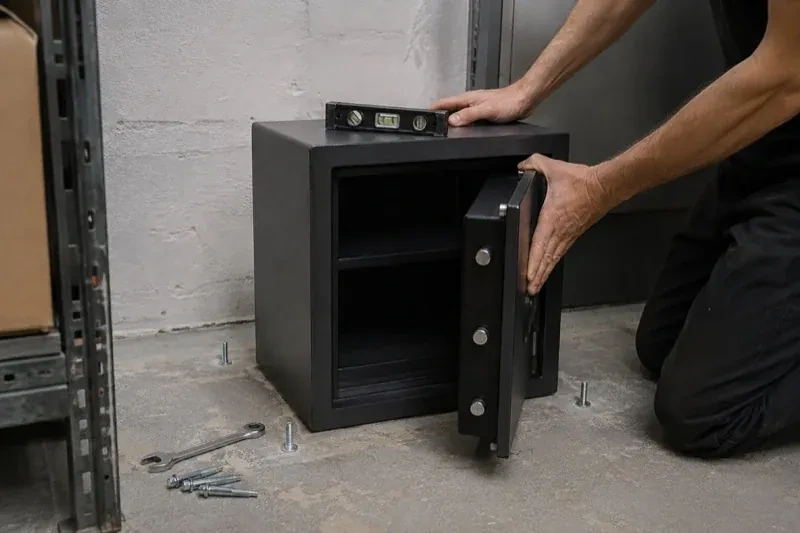
The surface behind the safe decides how it gets anchored, so it is checked before anything is ordered. Solid concrete accepts one style of anchor bolt; a wood subfloor over joists needs a different fastener reaching into structural framing rather than just the surface layer; a tiled floor cannot take a bolt at all without risking a crack around it. The locksmith also looks for slope, dampness, or a cold exterior wall that could sweat in humid weather, since all three affect where the safe should actually stand, not just how it gets bolted down.
Bringing an existing safe back into full working order
Servicing starts with the bolt-work: the mechanism is opened, cleaned of old grease and grit, and lubricated with a product suited to steel bolt-work rather than a general household oil. The lock is cycled repeatedly and adjusted if it binds or hesitates, and any handle or spindle that has worked loose is tightened. Batteries in an electronic lock are replaced as routine maintenance rather than waiting for a failure, and the door seal and hinges are checked and freed if they have picked up rust.
A safe that is genuinely fixed in place
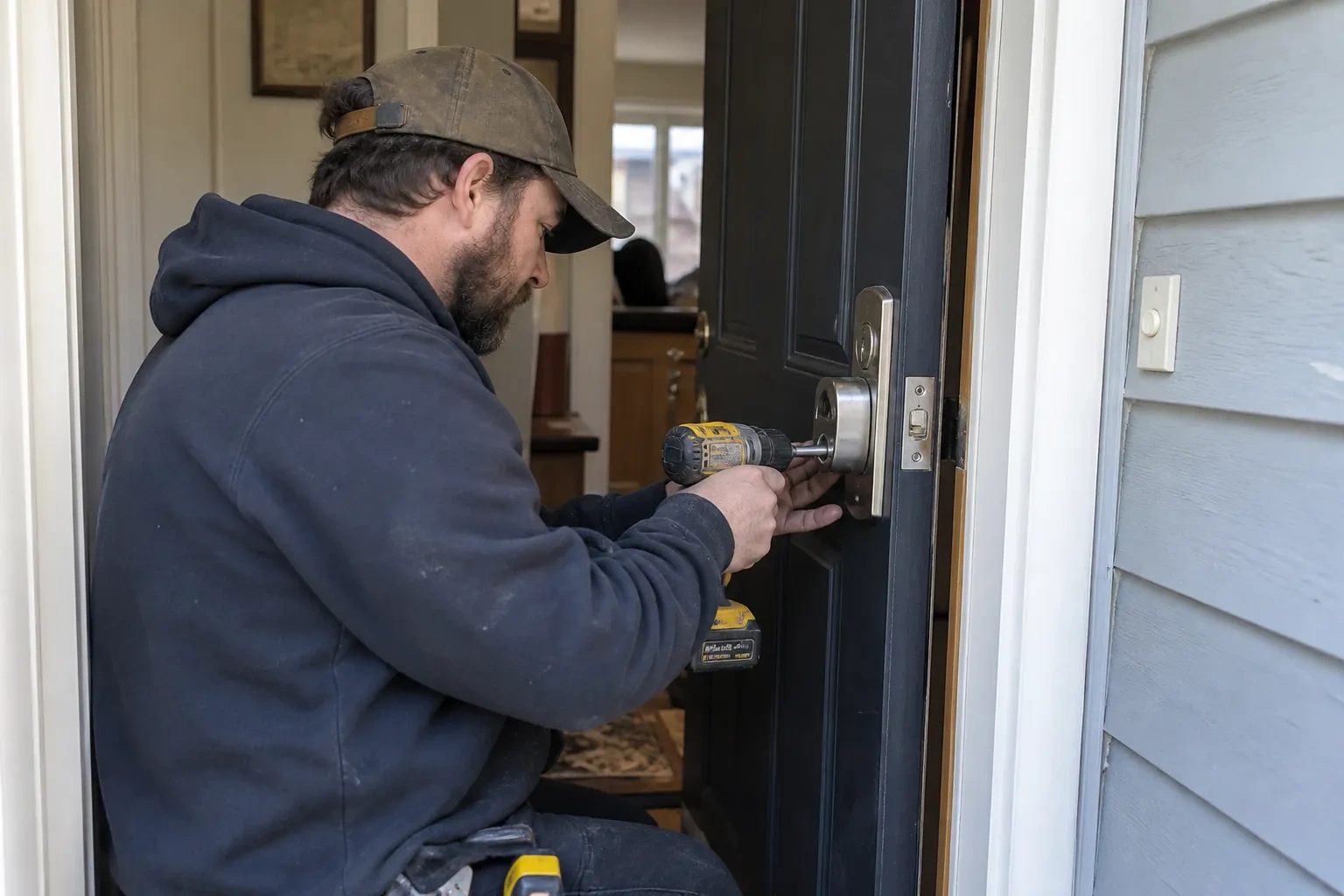
By the end of the visit, the safe sits level, anchored to the floor or wall with hardware matched to that surface, and tested by hand to confirm it does not rock, tip, or shift. Anyone trying to remove it would need to defeat the anchoring itself rather than simply lifting the unit and carrying it elsewhere. The owner is shown exactly where the anchor points are and told what was used, in case a future move or renovation needs to account for them.
Safe Installation & Servicing
In the van
Desiccant packets
Rated safe (burglary and fire)
Concrete anchor bolts
Mounting plate
Bolt-work lubricant
Safe Installation & Servicing
What affects the quote
Requests for concealment
Fitting a safe into a closet floor, a recessed wall cavity, or behind a built-in panel takes more planning than a straightforward open placement, and can limit which units will actually fit.
Documentation requested
Some customers want photographs of the anchoring, a written note of the model and ratings, or both, usually to satisfy an insurer, and preparing that paperwork adds a little time to the visit.
Battery and accessory needs
An electronic lock needs a battery of the correct type on hand, and a fire-rated unit benefits from desiccant supplied at installation, both small additions to the visit.
What to have ready
- Has the safe ever been anchored to the floor or wall before?
- Which room or level of the building will it go in?
- Is this a new safe or an existing one needing service?
Safe Installation & Servicing: questions
QuestionsHow often does the battery need replacing on an electronic lock?
Most electronic locks give a low-battery warning, usually a beep or flashing light, well before they actually stop working, and replacing the battery within that same week is the safer habit rather than waiting. Depending on how often the safe is opened, a battery commonly lasts somewhere between one and several years, and keeping a spare of the correct type near the safe avoids a search once the warning starts.
How do I prepare the room before a servicing visit?
Clearing a working space in front of the safe, moving anything stacked against or on top of it, and having a rough idea of when it was last serviced all help the visit start smoothly. If the combination or code is still known, having it on hand avoids needing to open the unit by other means first. Nothing more elaborate than that is generally needed beforehand.
What is the difference between a mechanical dial lock and an electronic keypad?
A mechanical dial has no battery and is set by hand to a private combination, turning through a sequence to release the bolt; it never runs out of power but takes a little practice to open. An electronic keypad accepts a numeric code and can support several separate codes for different people, but it depends on a battery that eventually needs replacing. Many owners choose based on how many people need access rather than one being simply superior to the other.