Lockouts · Wilmot
Break-In Damage Lock Repair
Police have come and gone, the occurrence number is on a sticky note, and you are standing in a cold hallway looking at a splintered frame, wondering how the house gets locked before everyone tries to sleep.
In plain words
A break-in repair happens alongside a police file and an insurance claim, and a good locksmith keeps both in mind. Before any hardware is moved the damage is photographed as found: door face, edge, strike, jamb, hinges and glass. The old parts are kept for the adjuster unless you prefer otherwise, and the written record at the end lists what was broken, what was replaced, what was reinforced and what is left for another trade. Insurers ask policyholders to document losses, keep damaged property and keep receipts, and this visit produces all three. You choose who does the repair; the locksmith makes it easy to show what it took.
How the visit goesThe patio slider is sitting crooked on its track. Its latch is snapped, the frame is bowed where it was pried, and the panel no longer meets the jamb, so the house cannot be closed up for the night.
Break-In Damage Lock Repair
How the visit goes
Photographs before parts move
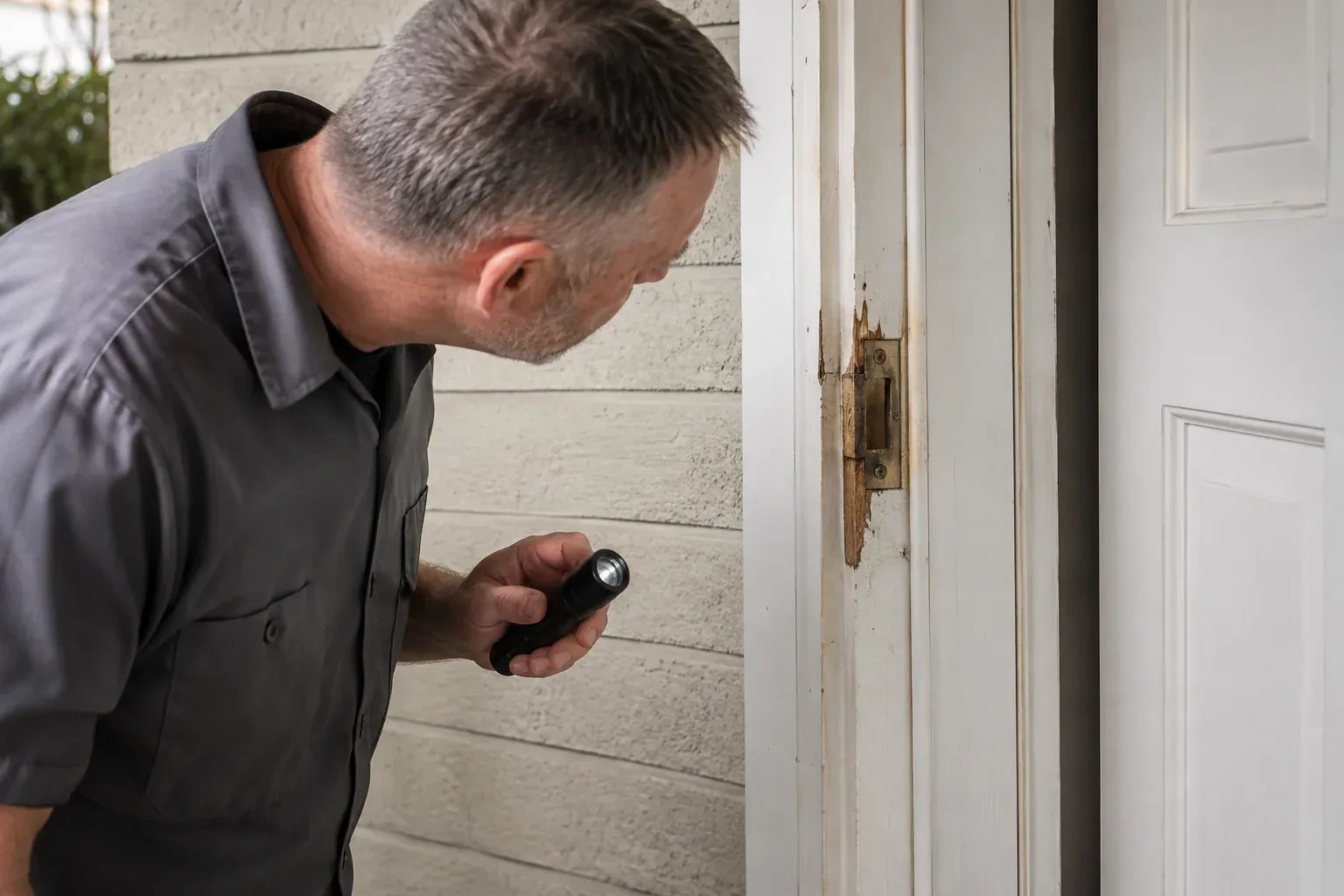
Nothing on the door is touched until it has been photographed as found. The locksmith records the door face and edge, the lock and cylinder, the strike and the wood around it, the hinges, the jamb and any broken glass, plus the tool marks that show how entry was made. These images serve the police occurrence file and the insurance claim, where insurers ask for damage to be documented and damaged property kept. You are encouraged to take your own set too. Once the record exists, hardware can come off and the repair can start without anyone later wondering what the door looked like at the beginning.
Securing the opening for the night
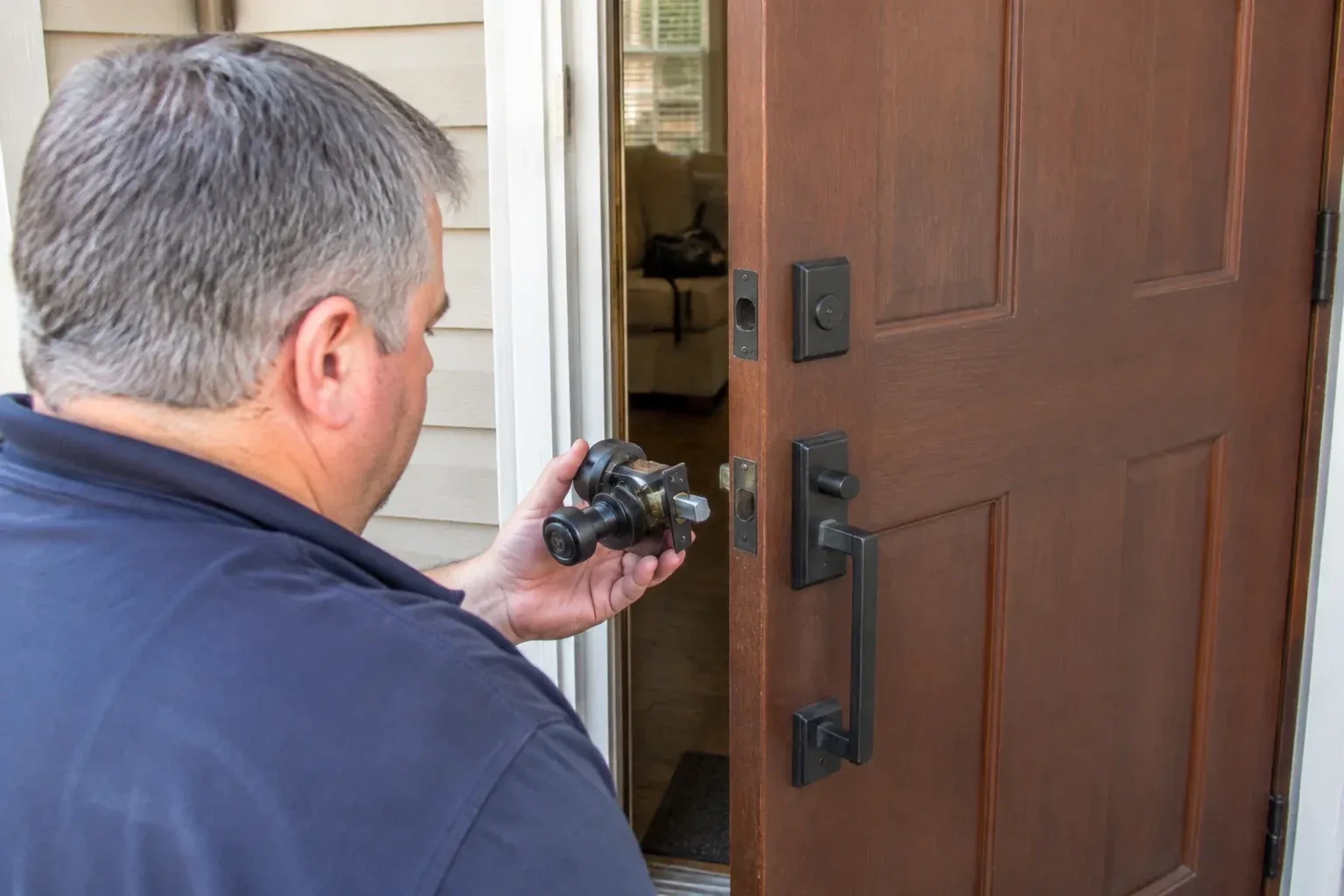
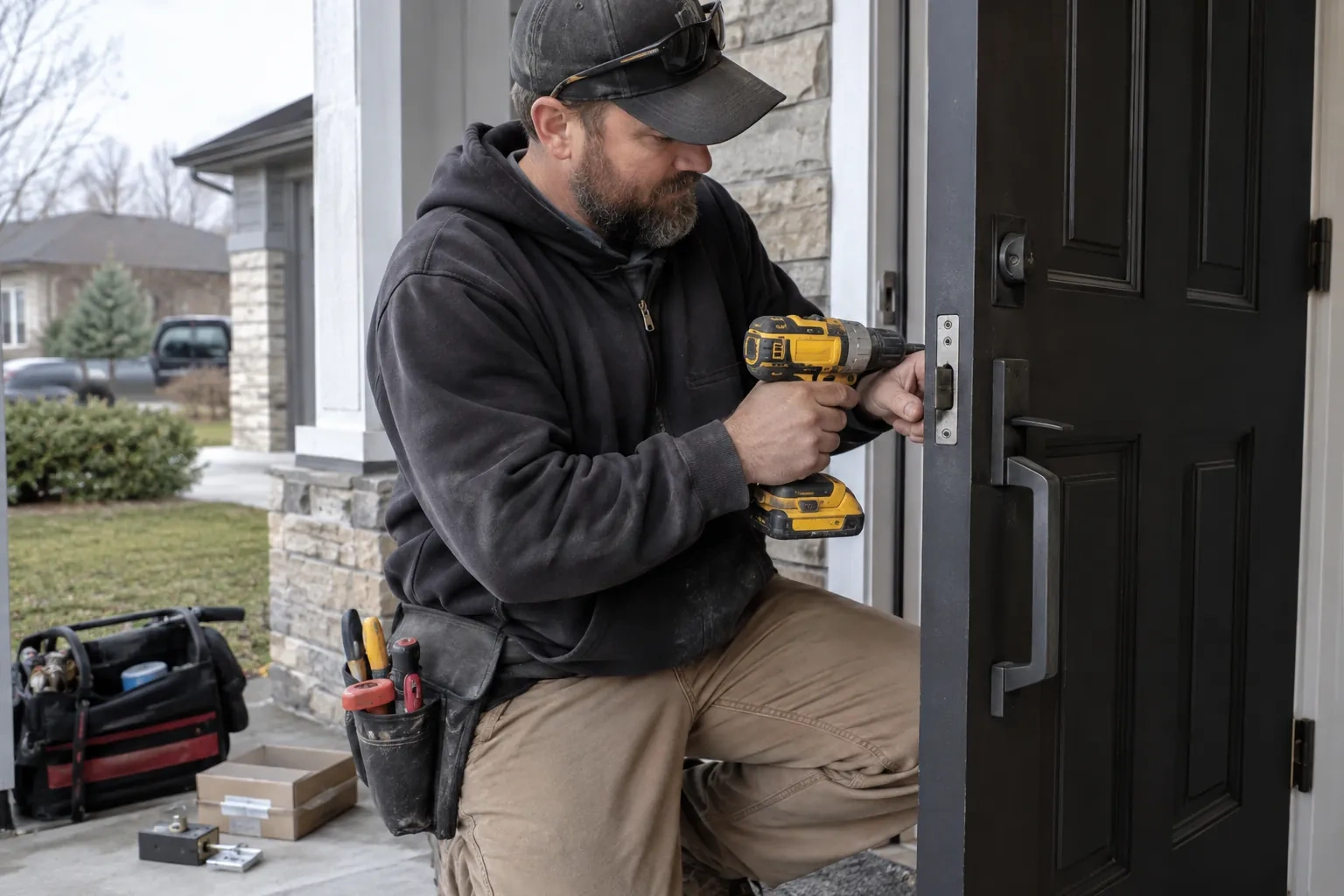
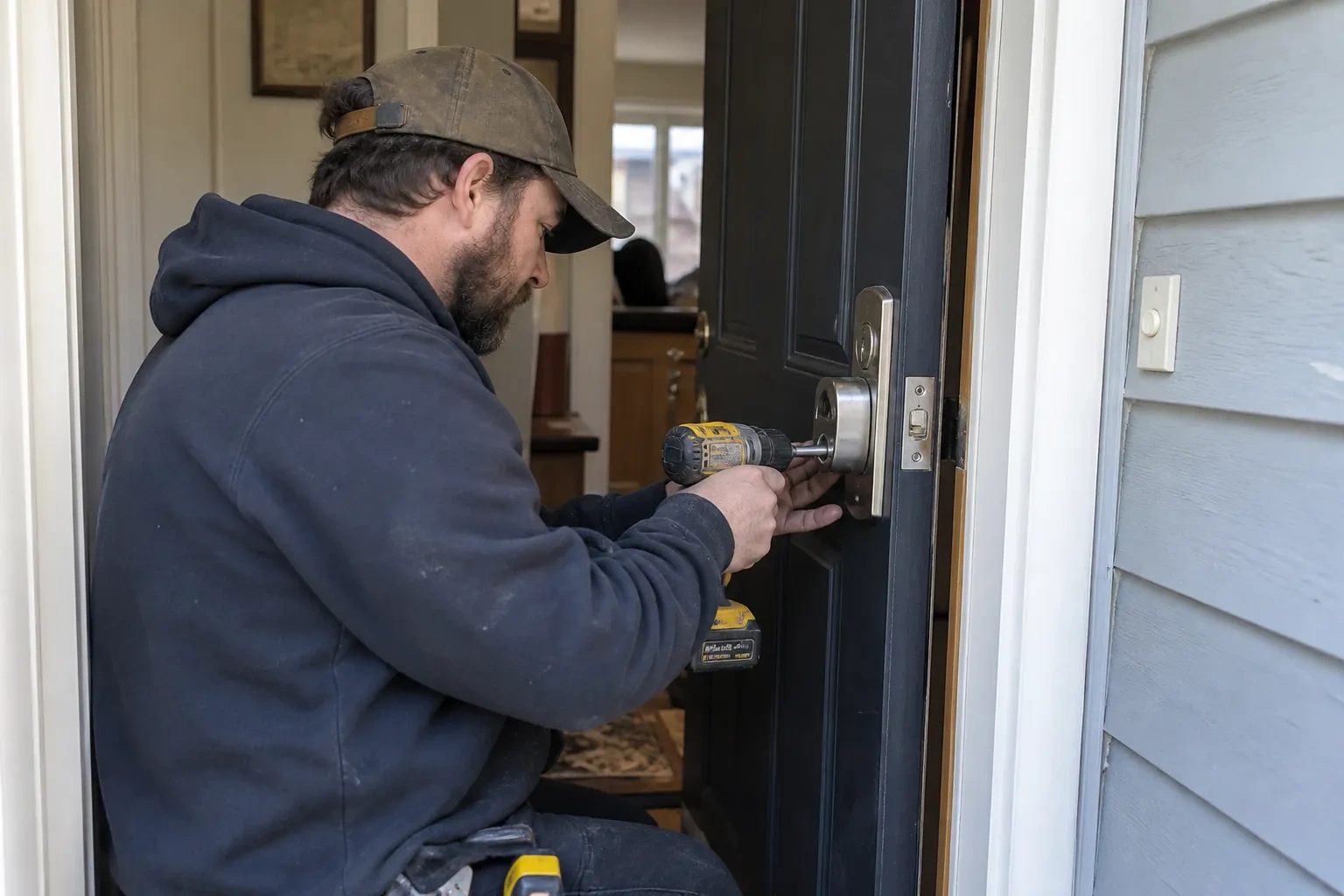
Before anything permanent, the door has to close and lock. Where the slab and frame are sound, a new deadbolt or cylinder goes straight in and the job moves on to reinforcement. Where the jamb is split, a steel repair plate is screwed over the break to hold the wood together and give the strike something to bite, or the strike is boxed and screwed into the stud behind the damage. Where the frame or door is too broken for hardware, plywood is fitted across the opening with cleats from inside, arranged so the household can still get out without a key. You know before the locksmith leaves exactly how the door is being held.
Stronger than it was before
A repaired door is usually the strongest door in the house, because the parts that failed have been replaced with the parts that should have been there. The bolt now sits in a boxed strike anchored to the stud by long screws, the hinge side is fixed to framing rather than trim, the door edge is sleeved in steel where it was soft, and a full-throw deadbolt with a hardened insert has replaced the light one. None of this shows from the street. What changes is that a repeat attempt meets resistance at every point the first one found weak, and the noise and time that demands is exactly what intruders avoid.
Break-In Damage Lock Repair
In the van
Jamb repair plate
Latch guard plate
Grade 1 deadbolt with one-inch throw
Security strike box
Hinge reinforcement plate
Break-In Damage Lock Repair
What affects the quote
How many parts were damaged
One broken cylinder on a sound frame is a small repair. A torn strike, a split jamb, a crushed door edge and bent hinges together are a longer visit with more hardware, and the quote follows the count.
Method of jamb repair
Bonding a split with epoxy and a repair plate is one line; fitting a new section of wood is another; a full jamb leg through a carpenter is quoted by that trade.
Lock failure or frame failure
Replacing a lock is hardware and fitting time. Rebuilding a strike side with a boxed strike, epoxy and long screws into the stud is carpentry as well, and is quoted as its own line.
What to have ready
- Have the police been called, and do you have an occurrence number?
- Have you photographed the damage as you found it?
- Is the damage to the lock, the frame, the door edge or the glass, or several?
Break-In Damage Lock Repair: questions
QuestionsShould I keep the broken lock and strike?
Yes, unless the insurer has already said they are not needed. Insurers generally ask policyholders to retain damaged property until the claim is settled, and a bag holding the twisted cylinder, torn strike and split wood answers an adjuster's questions more clearly than any description. The locksmith hands them over at the end of the visit along with a written note of what was replaced. Photographs of the parts in place, before removal, complete the record.
I rent. Who arranges the repair, and can I change the lock myself?
Tell your landlord or property manager as soon as the police have been called; provincial tenancy law makes the landlord responsible for repairs to the unit, and most will arrange the locksmith. A tenant may not change locks without the landlord's agreement, and a landlord who changes them must give the tenant keys, so the visit is coordinated between you. If you arrange securing yourself in an emergency, keep the receipt and the record of what was done for both sides.
Can the locksmith start before the police have finished?
The door is left as found until the police have seen it or said they will not attend. What can happen in the meantime is planning: the locksmith can look at the damage, photograph it, measure for hardware and prepare the temporary securing so that the moment the scene is released the work begins. Nothing is removed or moved before then, because the marks on the door are part of the report.
Related services
- Business Lockout ServiceIt is ten to nine, three staff are on the sidewalk with their coffees, and the key that has opened the glass front door for six years will not turn.
- Broken Key ExtractionThat key had been bending a little for years, and you kept straightening it.
- Seized & Jammed Lock OpeningThe old mortise lock on the front door of the house turns the key halfway and stops with a dull clunk.