Lockouts · Wilmot
Break-In Damage Lock Repair in Wilmot
Police have come and gone, the occurrence number is on a sticky note, and you are standing in a cold hallway looking at a splintered frame, wondering how the house gets locked before everyone tries to sleep.
In plain words
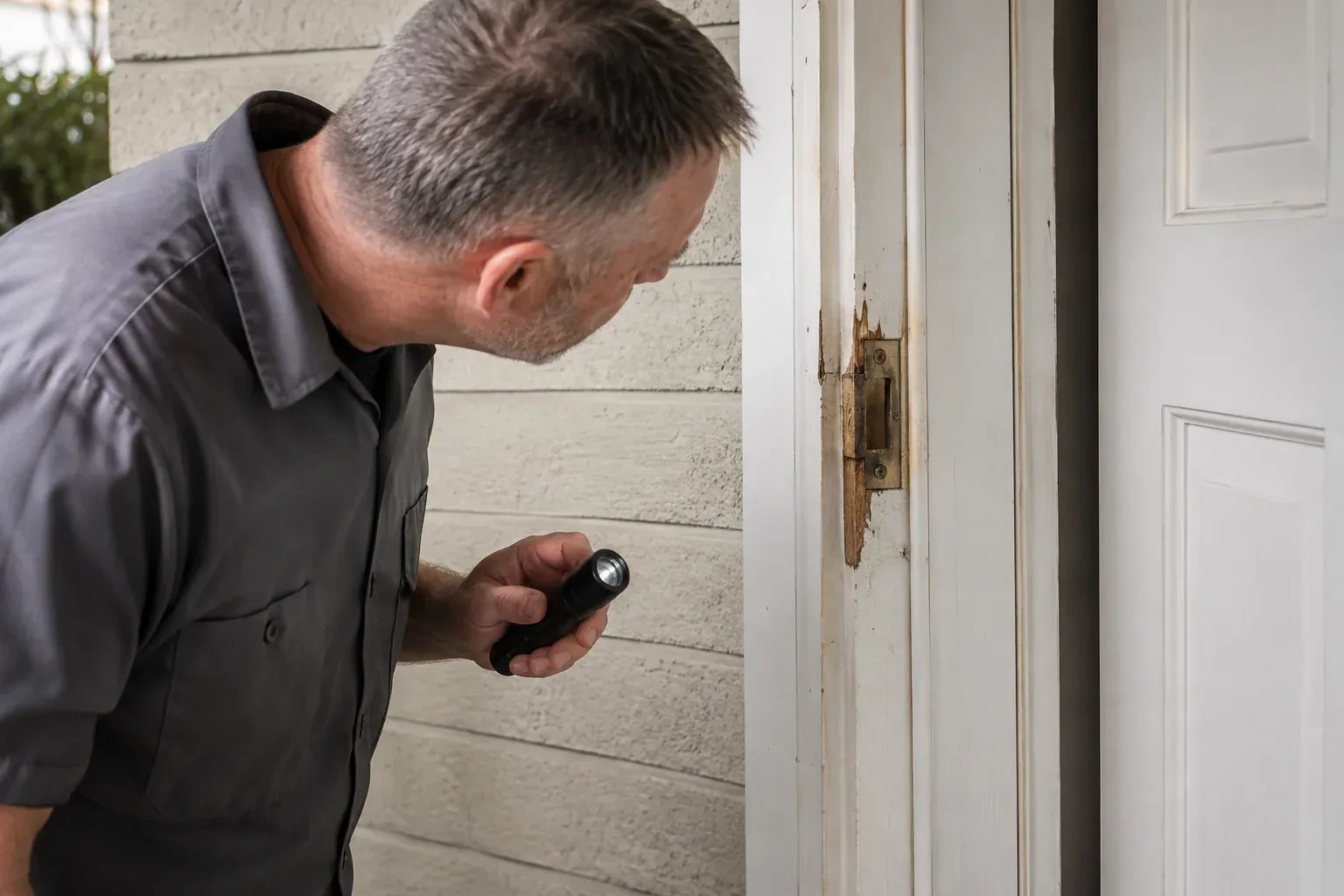
Break-in damage lock repair is the visit that turns a forced door back into a locked one. The locksmith first confirms you own, rent or manage the property, then looks at everything the attack touched: the lock, the bolt, the strike plate and wood behind it, the door edge, the hinges and any glass beside the door. The opening is secured before the visit ends, and the parts that gave way are replaced with stronger hardware and longer fasteners set into the framing. Any lock a taken key could open is rekeyed or replaced, so the house is closed on your terms again.
How the visit goesSomeone smashed the little window beside the door, reached in and turned the thumb-turn. The lock itself is fine, but there is glass on the mat, a hole in the sidelight and a deadbolt anyone can reach.
Break-In Damage Lock Repair
How the visit goes
What is behind the jamb
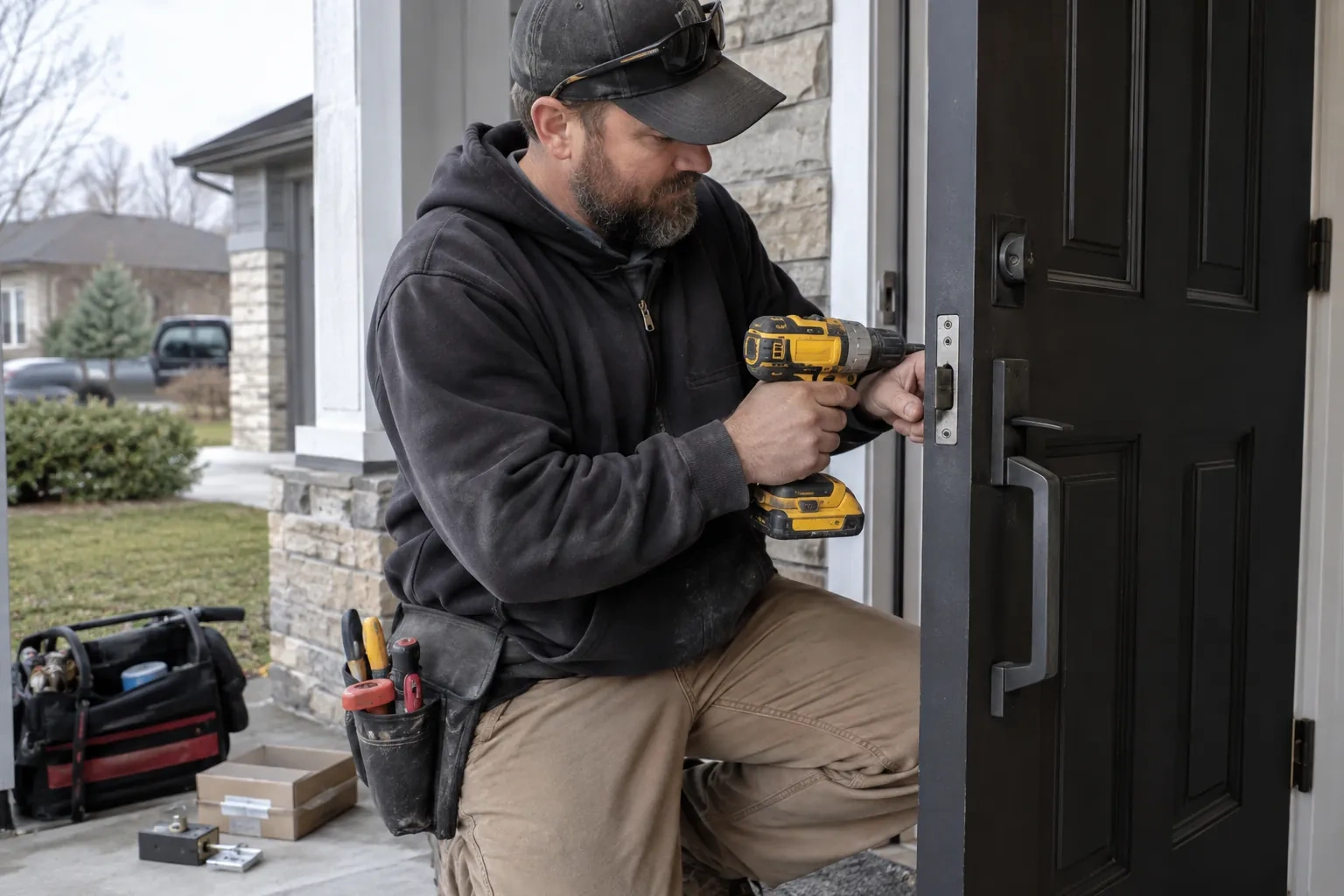
Long screws only help if there is something solid to bite into, so the locksmith looks at how the frame is built. Most house doors have a wood jamb, a shim space and then a stud, and three-inch screws reach through all three. A door beside a sidelight has glass where the stud would be, so fasteners are chosen for that construction instead. A jamb fixed to a masonry return, a steel frame in a commercial building, or a fire-rated suite door in an apartment corridor each call for their own hardware and fixing method. Knowing the wall before choosing the screws is what makes the reinforcement real.
Fitting the new deadbolt and cylinder
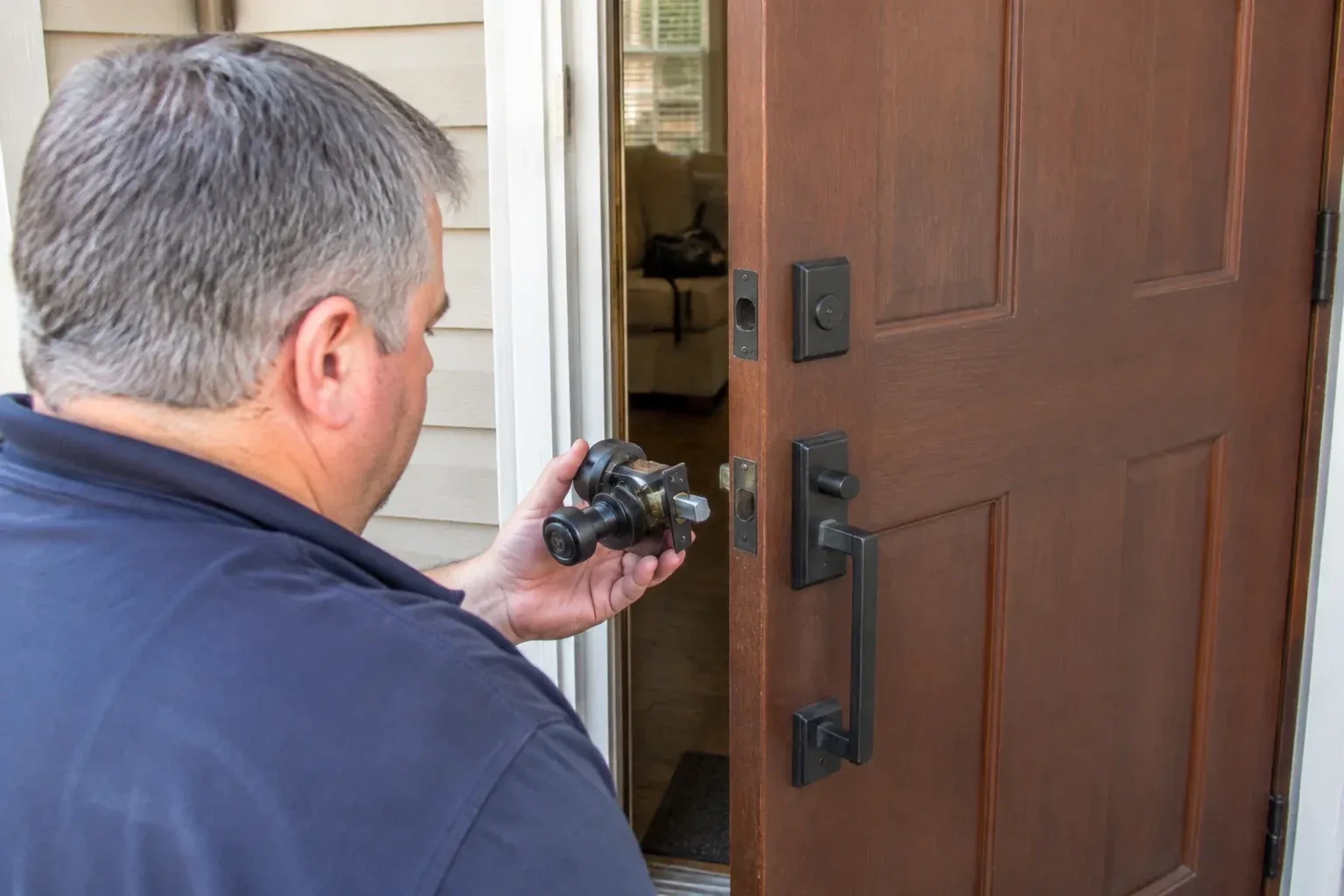
The replacement hardware is chosen for the door and for the attack it suffered. A deadbolt with a full one-inch throw, a hardened insert against sawing and a low-profile face that resists a wrench grip is the usual choice, graded to a recognised durability standard rather than the lightest unit on the shelf. It is matched to the existing bore and backset so no new holes weaken the slab, or the preparation is enlarged cleanly where the old hardware was small. The bolt is tested with the door open, then closed, and the strike adjusted until it throws without dragging. Trim and finish are matched to your other doors where you want that.
A record for police and the adjuster
You are left with a plain written account: which opening was forced, what was found damaged, what was replaced, what was reinforced and with what, which locks were rekeyed and how many keys were cut, and what remains for another trade. The photographs taken before work began sit alongside it. The broken hardware is bagged for the adjuster unless you say otherwise, and the receipt for the securing visit goes in the same folder, since insurers ask policyholders to keep damaged property and receipts. Together these turn a stressful evening into a claim file that answers questions before they are asked.
Break-In Damage Lock Repair
In the van
Jamb repair plate
Latch guard plate
Grade 1 deadbolt with one-inch throw
Security strike box
Hinge reinforcement plate
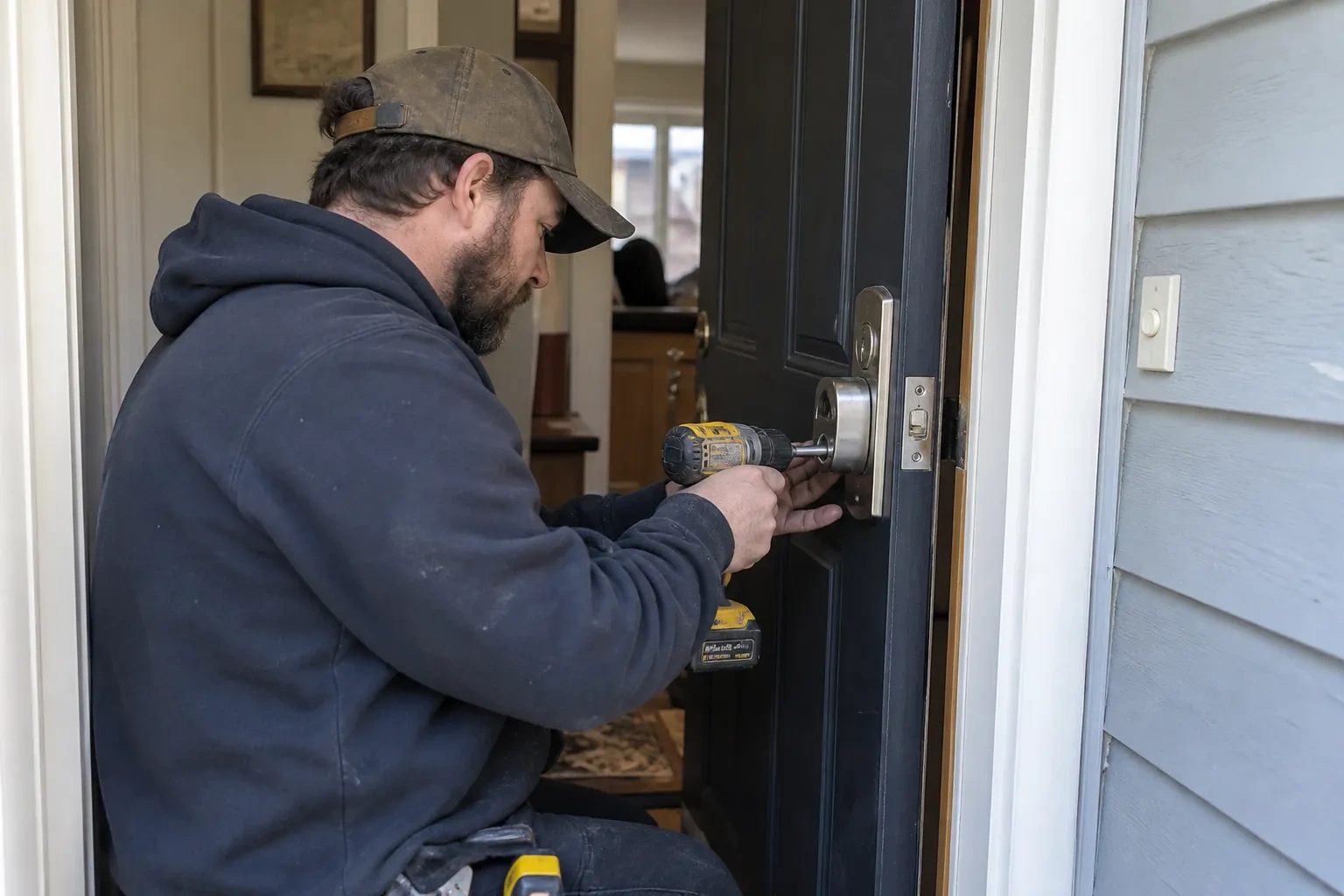
Break-In Damage Lock Repair
What affects the quote
Lock failure or frame failure
Replacing a lock is hardware and fitting time. Rebuilding a strike side with a boxed strike, epoxy and long screws into the stud is carpentry as well, and is quoted as its own line.
Door and frame material
A wood jamb over a stud takes standard reinforcement. Steel frames, jambs on masonry, fibreglass doors and aluminum storefront stiles each need their own fasteners and methods, which changes both labour and parts.
Securing now versus repairing fully
Some households want the door locked tonight and the permanent repair booked later; others want both done at once. The quote separates the two so you can choose either order without surprises.
What to have ready
- Were any keys, garage remotes or alarm codes taken?
- Which door or opening was forced, and does it still close at all?
- Is the damage to the lock, the frame, the door edge or the glass, or several?
Break-In Damage Lock Repair: questions
QuestionsShould I keep the broken lock and strike?
Yes, unless the insurer has already said they are not needed. Insurers generally ask policyholders to retain damaged property until the claim is settled, and a bag holding the twisted cylinder, torn strike and split wood answers an adjuster's questions more clearly than any description. The locksmith hands them over at the end of the visit along with a written note of what was replaced. Photographs of the parts in place, before removal, complete the record.
I rent. Who arranges the repair, and can I change the lock myself?
Tell your landlord or property manager as soon as the police have been called; provincial tenancy law makes the landlord responsible for repairs to the unit, and most will arrange the locksmith. A tenant may not change locks without the landlord's agreement, and a landlord who changes them must give the tenant keys, so the visit is coordinated between you. If you arrange securing yourself in an emergency, keep the receipt and the record of what was done for both sides.
Can the locksmith start before the police have finished?
The door is left as found until the police have seen it or said they will not attend. What can happen in the meantime is planning: the locksmith can look at the damage, photograph it, measure for hardware and prepare the temporary securing so that the moment the scene is released the work begins. Nothing is removed or moved before then, because the marks on the door are part of the report.
Related services
- Business Lockout ServiceIt is ten to nine, three staff are on the sidewalk with their coffees, and the key that has opened the glass front door for six years will not turn.
- Broken Key ExtractionThat key had been bending a little for years, and you kept straightening it.
- Seized & Jammed Lock OpeningThe old mortise lock on the front door of the house turns the key halfway and stops with a dull clunk.