Change or rekey · Wilmot
Lock Replacement & Upgrade in Wilmot
Three teenagers, a dog walker, a cleaner and one house key that keeps going missing.
In plain words
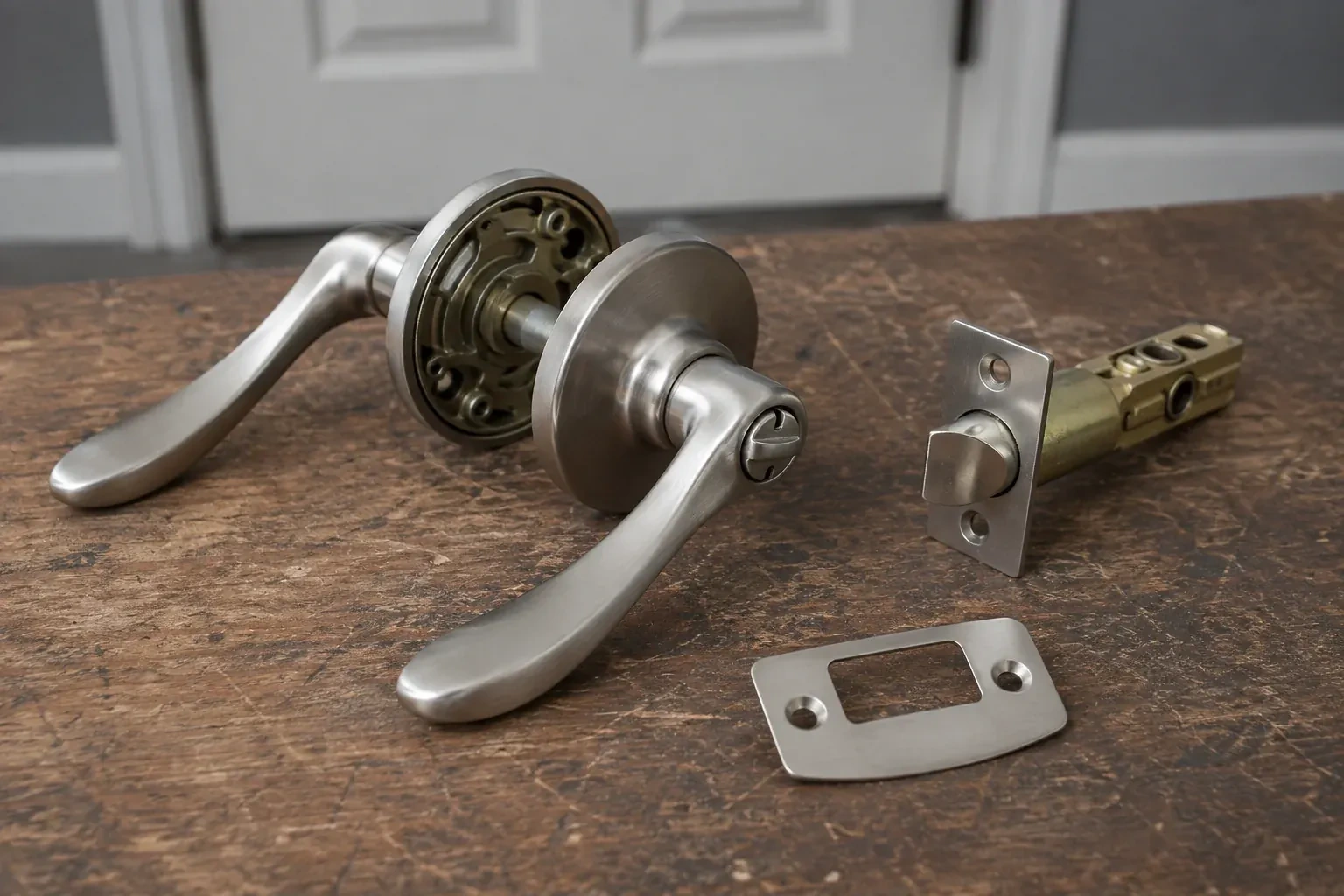
Lock replacement and upgrade is the service that takes tired or under-built door hardware off and puts hardware suited to the door in its place. It ranges from a like-for-like deadbolt on a back door to a complete refit of every entrance with heavier-grade locks, reinforced strikes and one key for the house. The locksmith first confirms that the person ordering the work has the right to change the lock, then examines the door, measures the existing preparation and recommends hardware that fits it cleanly. The visit ends with each lock tested from both sides, keys in your hand and the packaging and instructions left with you.
How the visit goesThe century home's original mortise lock takes a key the size of a spoon, sticks in humid weather and has worn its strike to a groove. You want a lock that works every day without giving up the old door.
Lock Replacement & Upgrade
How the visit goes
Who is asking for the change
The first check is about the person, not the door. An owner can change any lock on their home. A tenant who wants new hardware on the unit door needs the landlord's agreement, and a landlord who changes a lock while a tenant lives there hands over new keys. The locksmith asks which situation applies and, where paperwork helps, looks at identification, a deed, a lease or a property-management note. It takes a minute and it means the new lock goes on with everyone who has a stake in the door knowing about it, which is exactly how a lock should start its working life.
Setting and reinforcing the strike
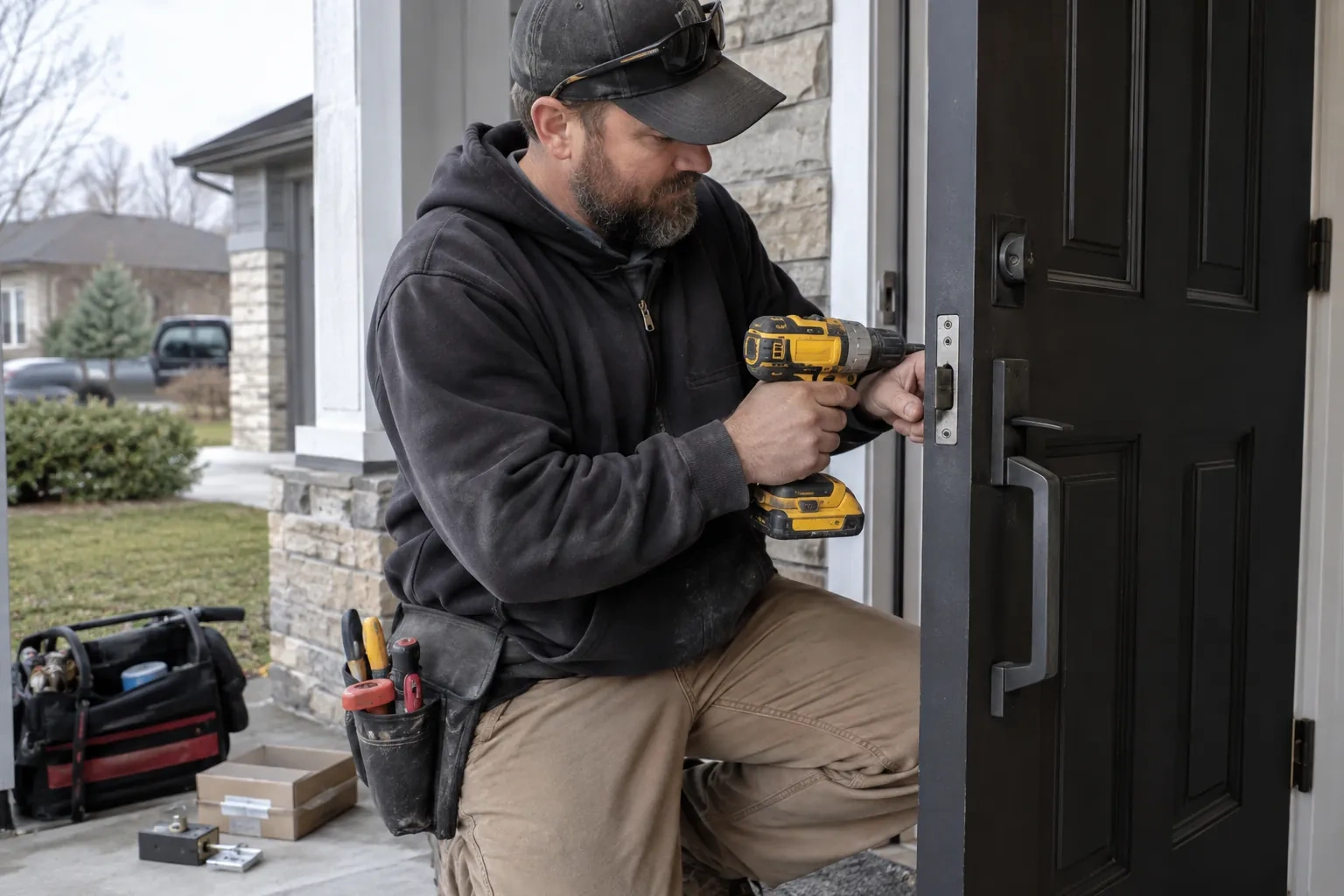
The strike side is where a replacement earns most of its value. With the door closed, the bolt is thrown and its mark checked against the pocket so the strike can be positioned to accept the full throw without rubbing. A shallow pocket is deepened until the bolt seats to its stop. Then a reinforced strike or a strike box is fitted using 75 millimetre screws that pass through the jamb and bite into the framing behind it, which is what stops a jamb splitting under a kick. Where an old forced entry has cracked the wood, it is glued and dowelled or a repair plate is fitted first.
A record of what went on the door
You are told plainly what was fitted: the maker and model, the grade, the function and finish of each lock, whether the strike was reinforced, and how the doors are keyed. The instruction sheets and packaging stay with you, since they carry the model numbers needed for a matching lever or a spare cylinder later. The old hardware is handed over or taken away as you prefer; a sound old cylinder can be worth keeping as a spare. For a rental, this account doubles as the note a landlord or property manager will want about the new keys.
Lock Replacement & Upgrade
In the van
Manufacturer-approved cylinder lubricant
Adjustable latch or bolt
75 millimetre strike and hinge screws
Graded deadbolt
Boring jig and hole saws
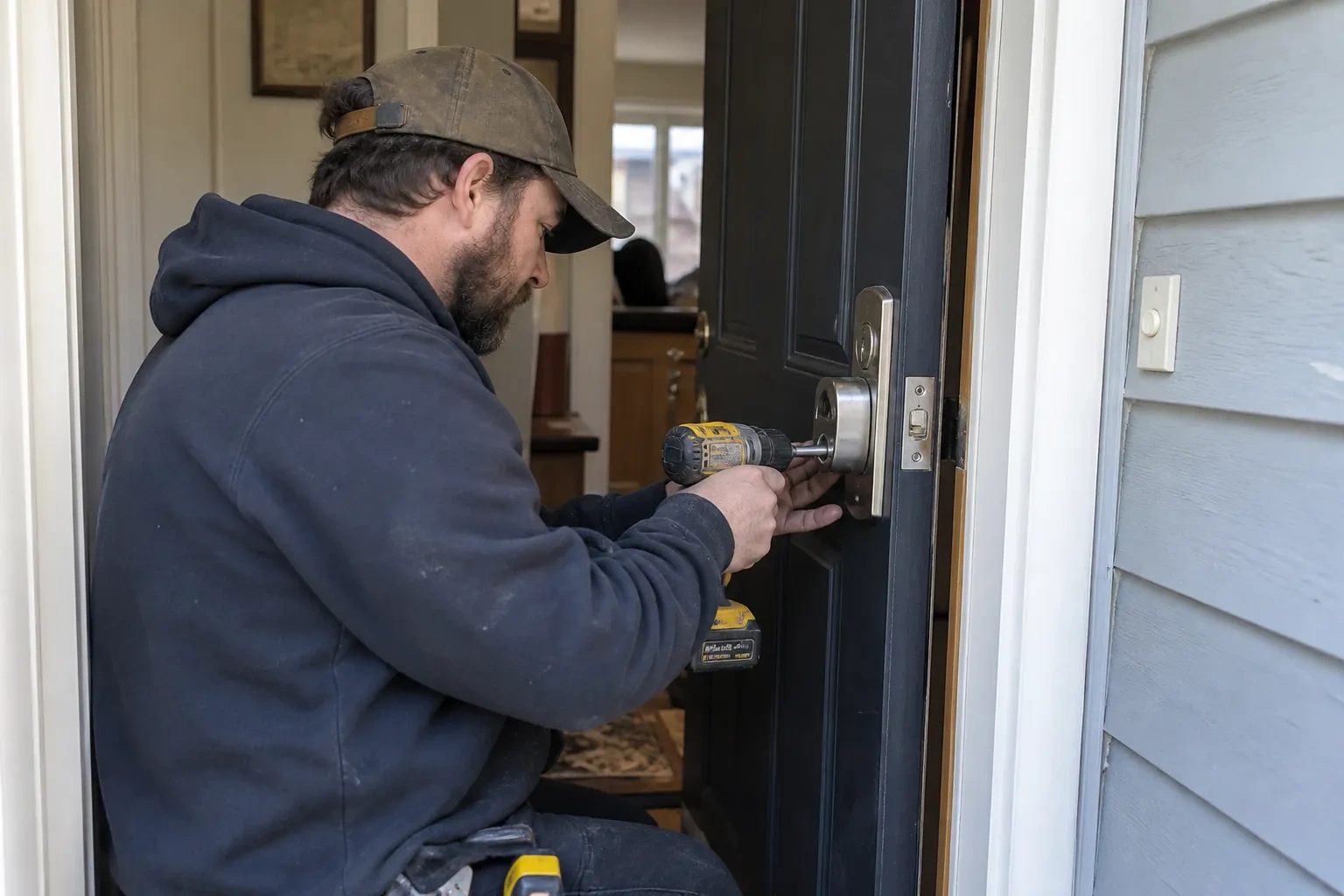
Lock Replacement & Upgrade
What affects the quote
Patio and French door hardware
Sliding door mortise locks, foot bolts and flush bolts for an inactive French door leaf are specialty items sized to the door, and they are quoted as their own line beside the entrance work.
Changes to the door preparation
Adjusting a strike mortise is minor; boring a new hole for a deadbolt, fitting a filler plate over an old mortise pocket or adapting a thick door with extension kits is quoted as its own item.
Special-order hardware
Most standard locks come from the van. A specific style, an unusual finish or a restricted system may need ordering, which affects scheduling and is noted in the quote rather than discovered on the day.
What to have ready
- Can you photograph each lock from outside, inside and along the door edge?
- Are you interested in a keypad or smart lock on any door?
- Is the door wood, steel or fibreglass, and roughly how thick is it?
Lock Replacement & Upgrade: questions
QuestionsWill a new lock fit the holes already in my door?
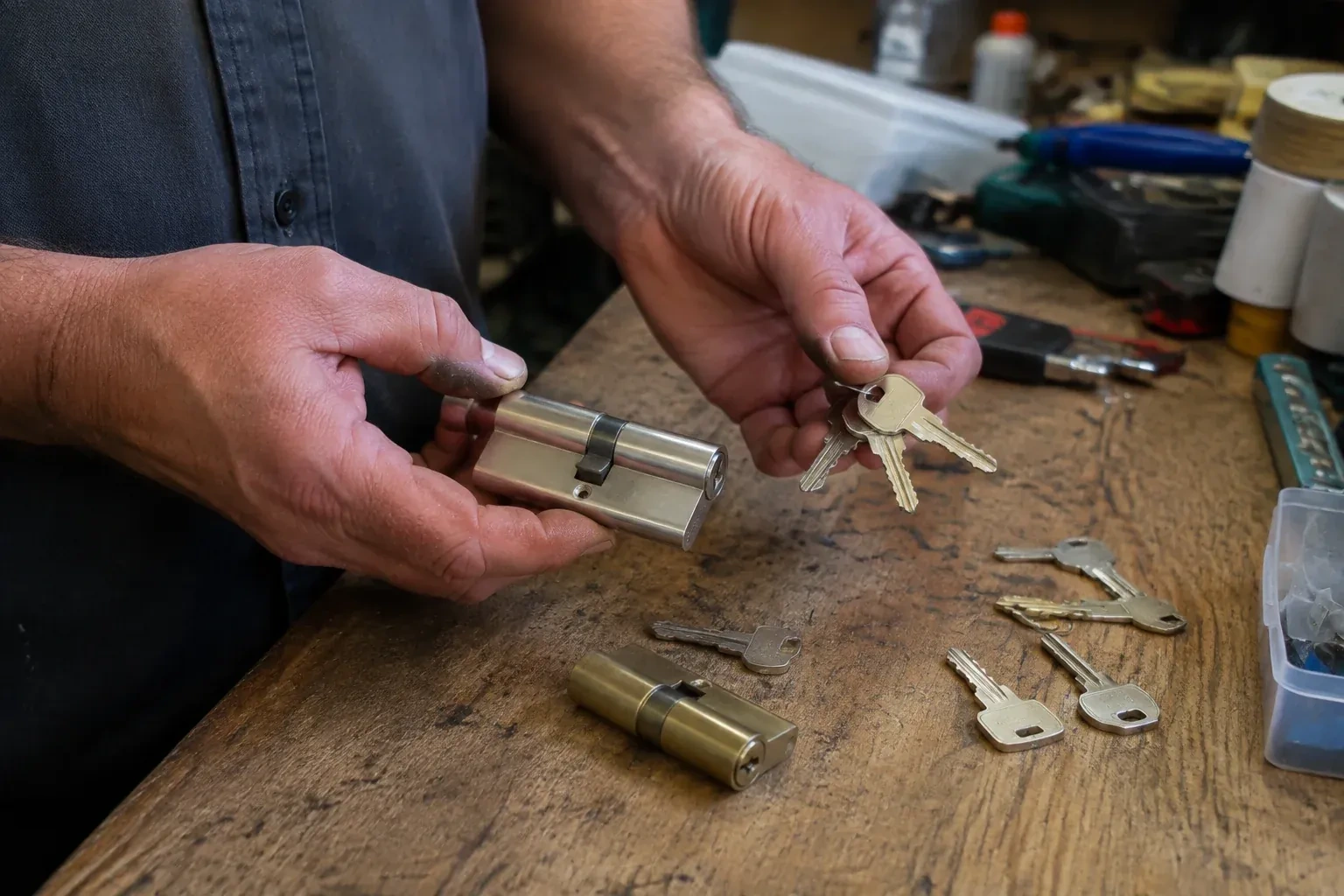
Usually, yes. Most residential doors are prepared to standard sizes, a 54 millimetre cross bore and a backset of 60 or 70 millimetres, and most modern hardware adjusts between those backsets. The locksmith measures before choosing, so the new lock is matched to the door rather than the other way around. Where an older mortise lock or an unusual bore is found, filler plates, extension kits or a carefully jigged new bore bring the door to standard.
Is there anything different about steel or fibreglass doors?
The lock hardware is the same; the door construction changes the method. Steel and fibreglass doors have a wooden or composite block inside the lock stile, and existing bores are used wherever possible. Where a new deadbolt must be added, the locksmith drills with a jig and bits suited to the skin so the hole is clean and square, and fits an edge plate designed for that door. Insulated doors also move less with humidity, so alignment tends to hold well.
What information helps before the visit?
Photographs of each lock from outside and inside, plus one of the door edge showing the latch plate and one of the strike on the frame, tell the locksmith most of what they need. Add the door thickness if you can measure it, whether the door is wood, steel or fibreglass, the finish you want to match, how many doors are involved and whether you want them all on one key.
Related services
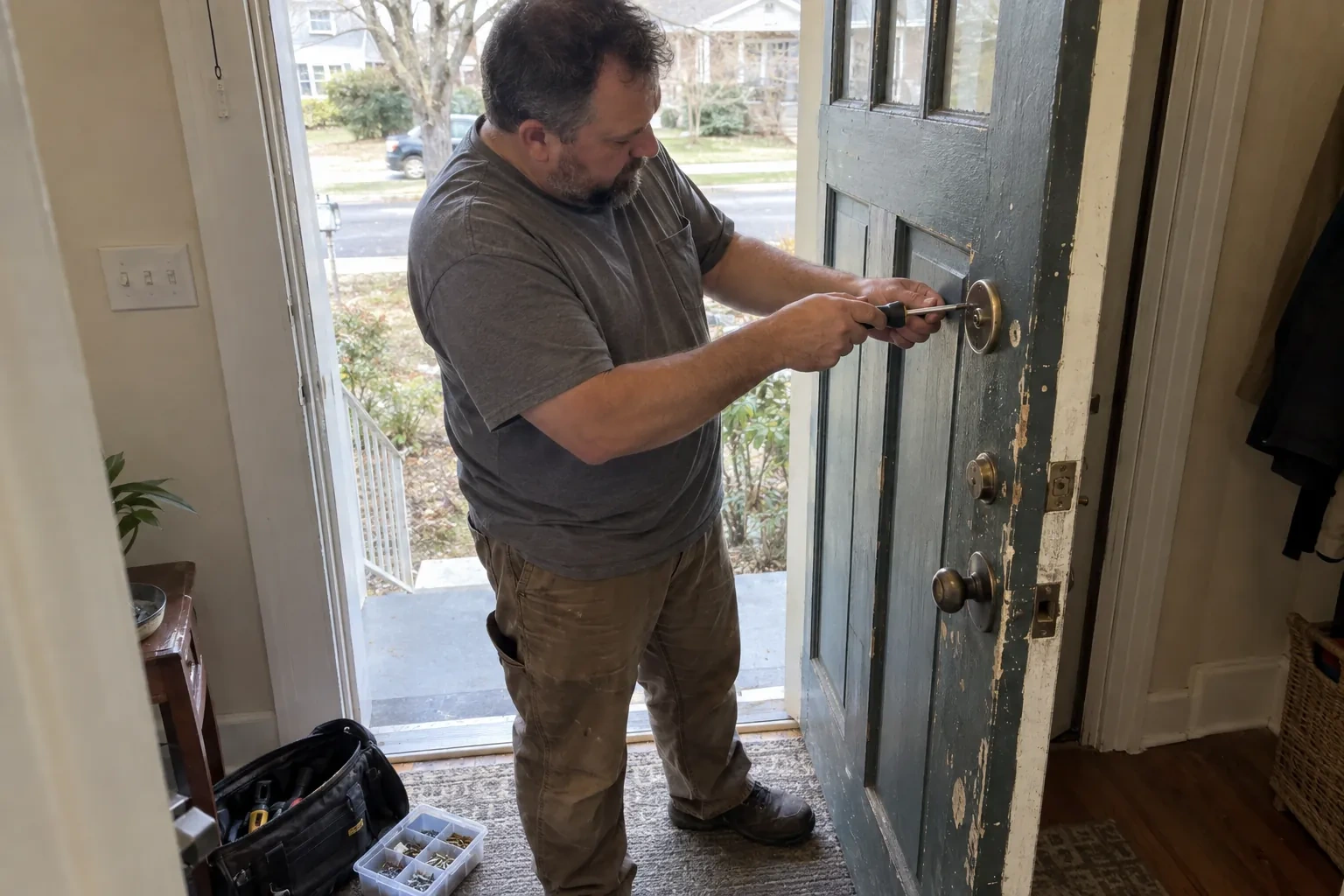
- Deadbolt InstallationYou bought a keypad deadbolt online and pulled the old one off, only to find the hole in the door is a different size and the bolt latch sits at a backset the new kit does not list.
- Vintage Mortise Lock ServiceSomeone painted the door years ago without removing the hardware.
- Smart Lock InstallationYou have just taken possession of the house and the previous owners handed over a keypad deadbolt with a code nobody wrote down and an app account you cannot get into.