Change or rekey · Petersburg
Lock Replacement & Upgrade in Petersburg
Three teenagers, a dog walker, a cleaner and one house key that keeps going missing.
In plain words
Moving into a home is the classic moment for this service, because you inherit whatever hardware and whatever key copies the previous owners left behind. The locksmith walks every exterior door with you and sorts the locks into three piles: sound hardware worth keeping and rekeying, worn hardware worth replacing, and doors with no deadbolt at all. Everything that stays is pinned to one new key, new locks are keyed to match, and old copies floating around town stop mattering. You leave the visit knowing exactly which key opens which door and how many of them exist.
How the visit goesSomeone tried the back door while you were away. The jamb is splintered around the strike, the bolt is bent, and the knob turns with a grinding feel. Everything held, barely, and you want hardware that would do better next time.
Lock Replacement & Upgrade
How the visit goes
Exposure, weather and finish
The locksmith looks at where the door lives. A side entrance beside a salted driveway, a south-facing front door in full sun and a sheltered porch each treat a finish differently, and the residential hardware label scores finish durability as its own category for exactly this reason. Existing hardware is examined for pitting, peeling and green bloom, which shows how hard the spot is on metal. That guides the choice between a PVD brass, a satin nickel, a powder-coated black or a stainless product, and whether a storm door or a small hood would help. Matching the rest of the entrance comes last, once the finish will survive the location.
Adapting older and unusual doors
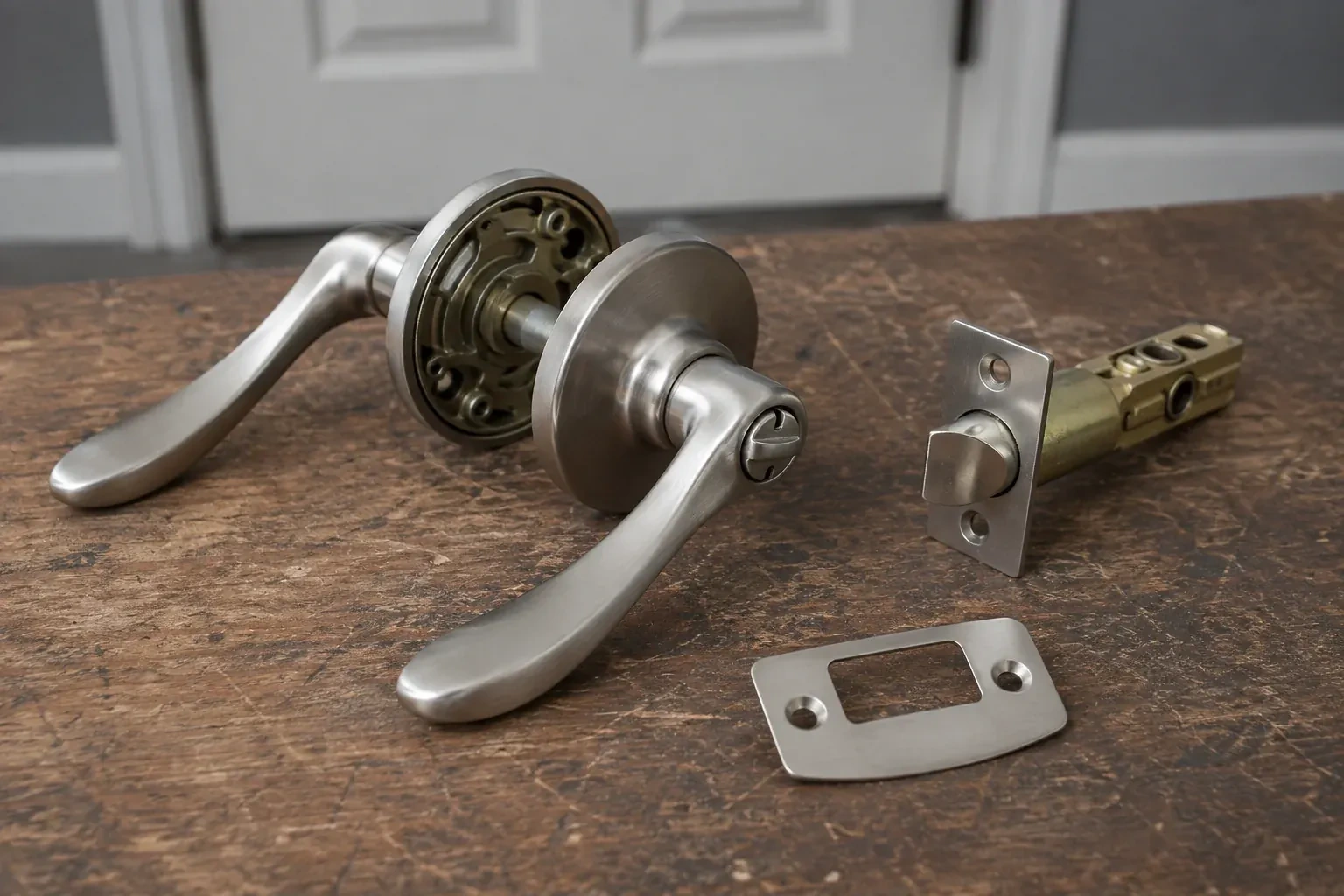
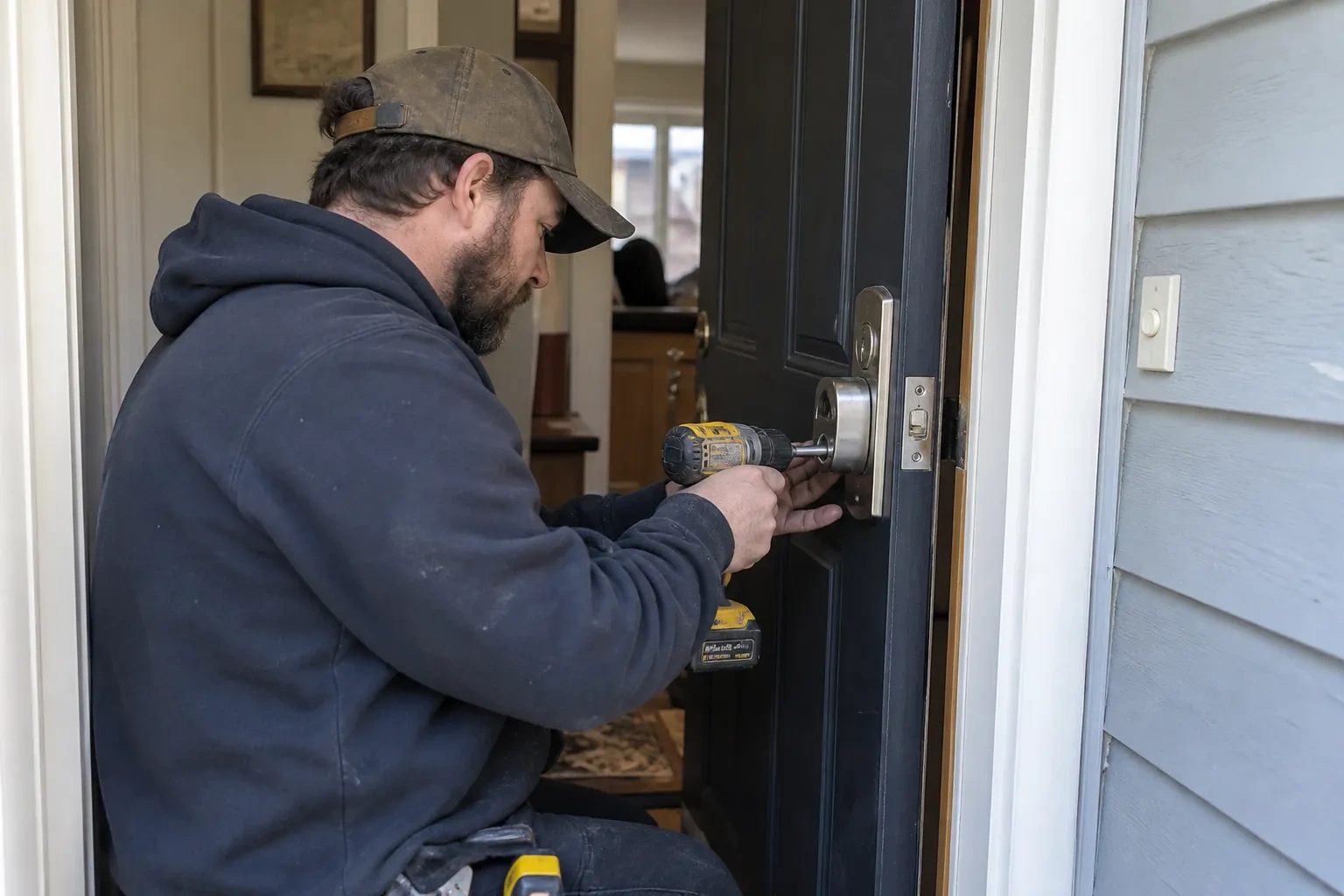
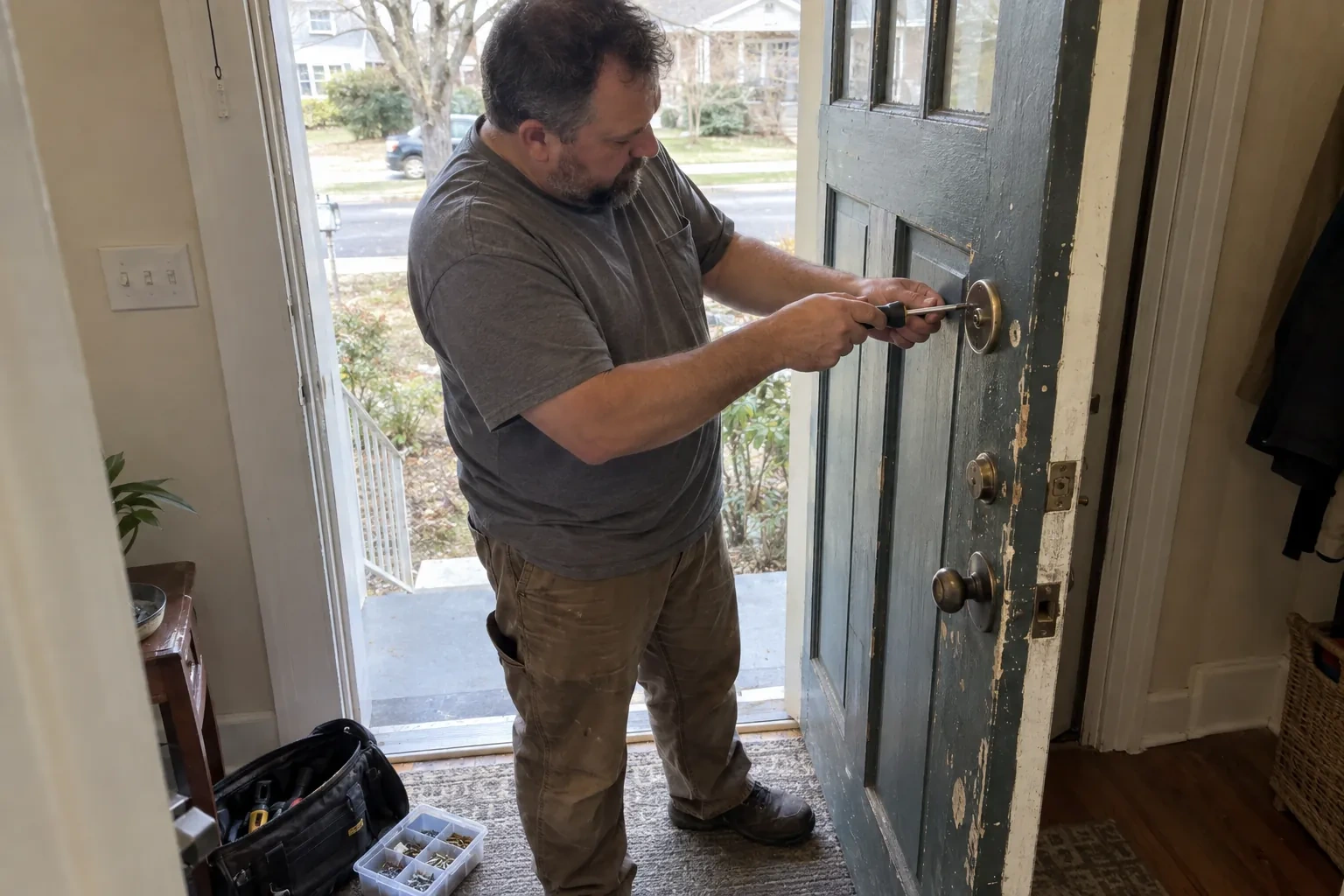
Not every door is a standard modern slab. A century home with a mortise lock may keep its case and get a new cylinder and strike, or take a filler plate that lets a cylindrical deadbolt sit where the old case was, without hacking at the original stile. A door thicker than 45 millimetres gets extended spindles and screws. A sliding patio door gets a replacement mortise hook lock or a keyed surface bolt sized to the rail. Steel and fibreglass doors are drilled only with the right bits and a jig, and a new deadbolt above an existing knob is bored with a template so it sits square.
An opening that is stronger, not just newer
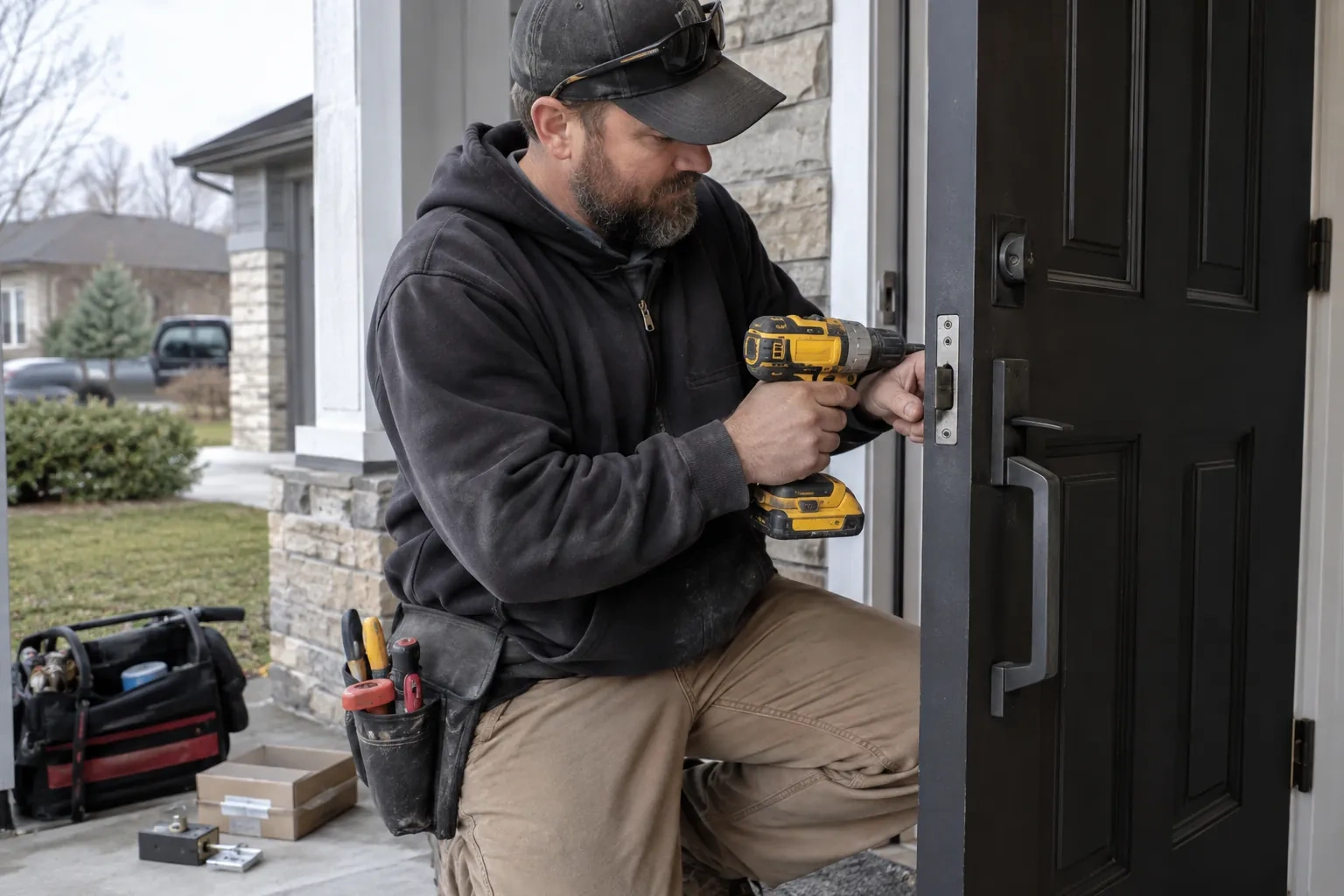
Where the strike was reinforced, the improvement is mostly invisible and worth understanding. Long screws now tie the strike through the jamb into the framing, the pocket has been cut to take the whole bolt, and any split wood has been repaired. Together these make the frame the equal of the deadbolt, which is the part most break-ins defeat. The locksmith points out what changed so you can check it yourself: a bolt that seats fully with the door closed and a strike that stays put under a firm push. A twice-yearly look at those screws keeps it that way.
Lock Replacement & Upgrade
In the van
Manufacturer-approved cylinder lubricant
Adjustable latch or bolt
75 millimetre strike and hinge screws
Graded deadbolt
Boring jig and hole saws
Lock Replacement & Upgrade
What affects the quote
Changes to the door preparation
Adjusting a strike mortise is minor; boring a new hole for a deadbolt, fitting a filler plate over an old mortise pocket or adapting a thick door with extension kits is quoted as its own item.
Keys cut
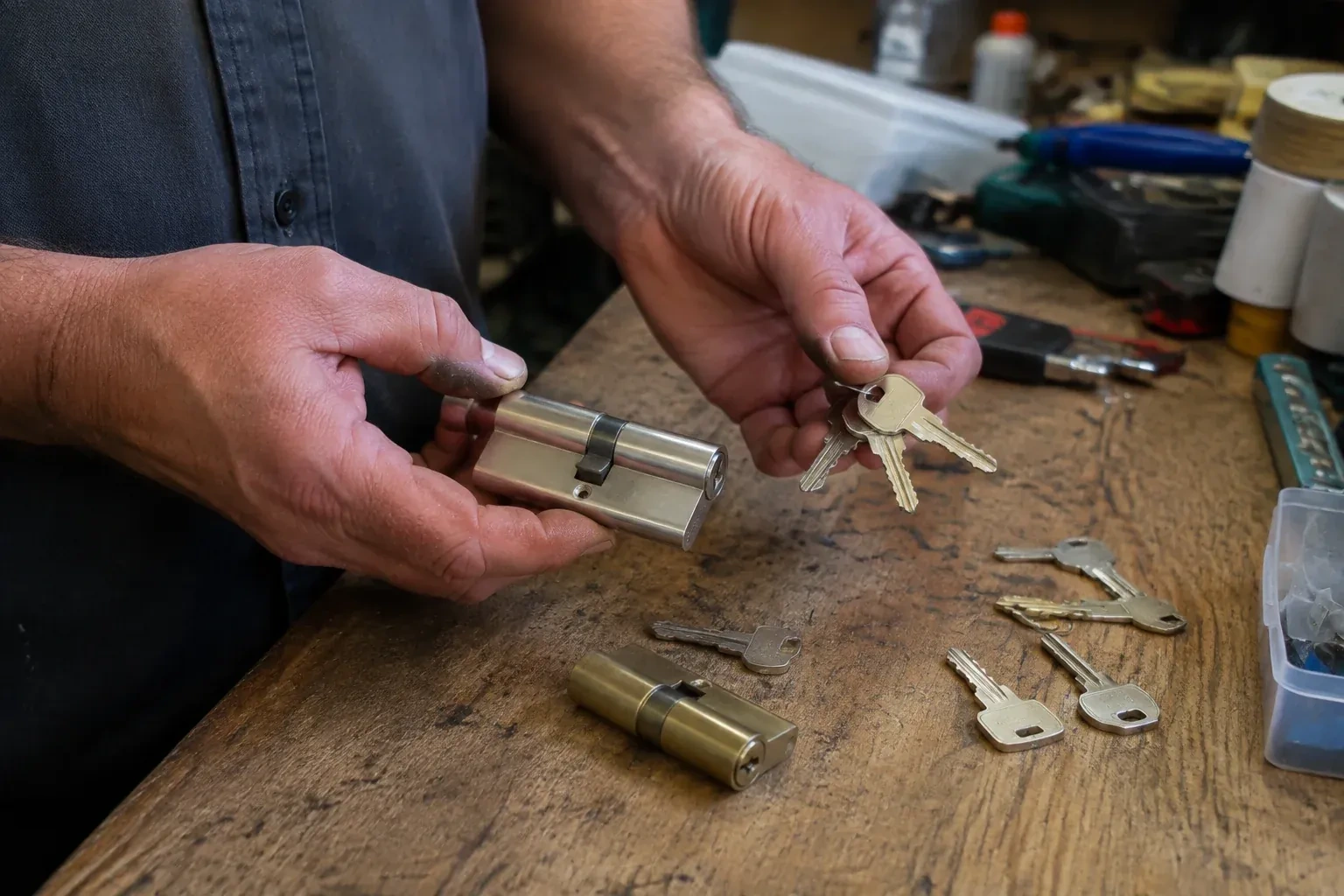
Each key is counted, and restricted keys cut against a card are a different item from standard blanks. Say how many people need one and the quote lists them.
Smart lock setup
Fitting a keypad or smart deadbolt includes programming codes, pairing to a phone or hub and calibrating the bolt, which is time on top of the mechanical installation and is named in the quote.
What to have ready
- Can you photograph each lock from outside, inside and along the door edge?
- Which doors are you thinking about, and what is on each one now?
- Is there a sliding patio door or French door to include?
Lock Replacement & Upgrade: questions
QuestionsWill a new lock fit the holes already in my door?
Usually, yes. Most residential doors are prepared to standard sizes, a 54 millimetre cross bore and a backset of 60 or 70 millimetres, and most modern hardware adjusts between those backsets. The locksmith measures before choosing, so the new lock is matched to the door rather than the other way around. Where an older mortise lock or an unusual bore is found, filler plates, extension kits or a carefully jigged new bore bring the door to standard.
Is there anything different about steel or fibreglass doors?
The lock hardware is the same; the door construction changes the method. Steel and fibreglass doors have a wooden or composite block inside the lock stile, and existing bores are used wherever possible. Where a new deadbolt must be added, the locksmith drills with a jig and bits suited to the skin so the hole is clean and square, and fits an edge plate designed for that door. Insulated doors also move less with humidity, so alignment tends to hold well.
What information helps before the visit?
Photographs of each lock from outside and inside, plus one of the door edge showing the latch plate and one of the strike on the frame, tell the locksmith most of what they need. Add the door thickness if you can measure it, whether the door is wood, steel or fibreglass, the finish you want to match, how many doors are involved and whether you want them all on one key.
Related services
- Deadbolt InstallationYou bought a keypad deadbolt online and pulled the old one off, only to find the hole in the door is a different size and the bolt latch sits at a backset the new kit does not list.
- Vintage Mortise Lock ServiceSomeone painted the door years ago without removing the hardware.
- Smart Lock InstallationYou have just taken possession of the house and the previous owners handed over a keypad deadbolt with a code nobody wrote down and an app account you cannot get into.