Change or rekey · Petersburg
Vintage Mortise Lock Service in Petersburg
Someone painted the door years ago without removing the hardware.
In plain words
Interior doors are as much a part of this work as the entry. Bedroom, bathroom and closet doors in an older home usually carry a lighter mortise latch with a privacy turn button, and after decades without lubrication they stop catching or the turn button seizes. These small cases are short jobs on the bench: a clean, a spring, a new turn button spindle where the old one has sheared. Sets of interior locks are often serviced in one visit, and a bit key can be cut that operates all of them, which is how they were originally supplied when the house was built.
How the visit goesThe old skeleton key still fits the keyhole, but it now needs a jiggle, a lean on the door and a little luck before the bolt moves. Last week it took three tries. You have one key and no idea where a second could come from.
Vintage Mortise Lock Service
How the visit goes
Bit key or cylinder
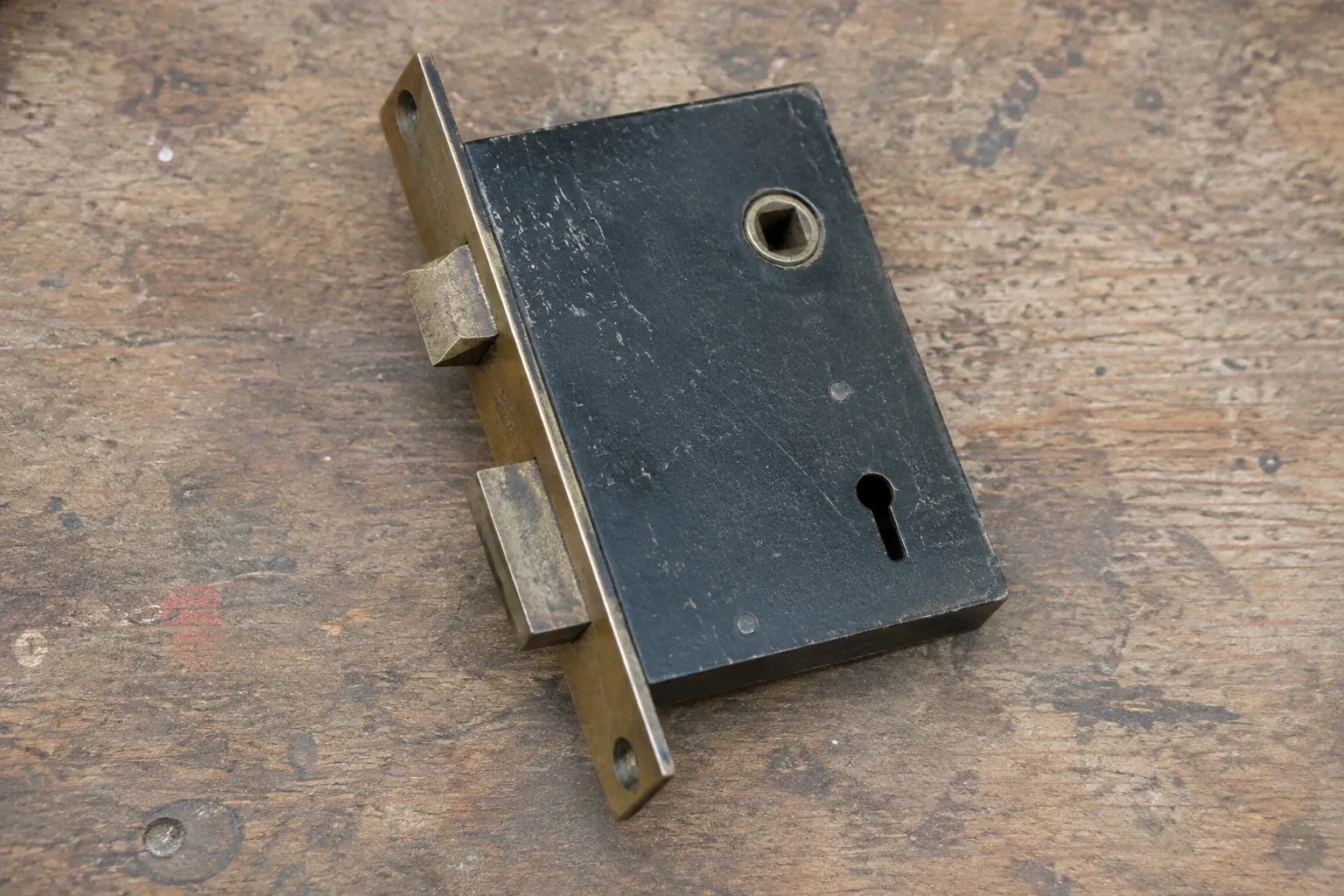
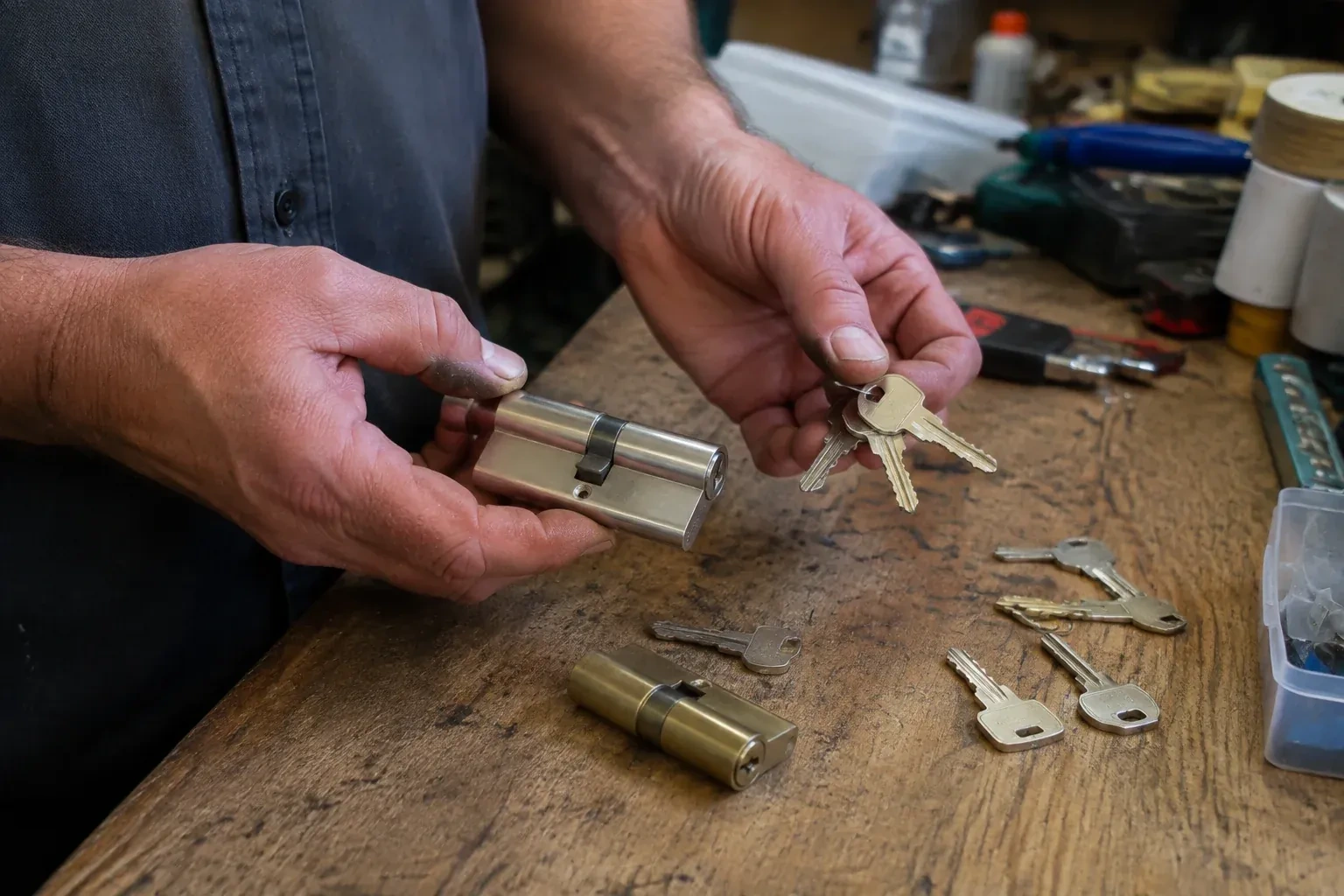
Older mortise locks come in two families, and the check sorts out which one is on the door. A keyhole shaped like a small keyhole silhouette takes a bit key, the skeleton key style, and the case works on wards and levers that the key's bit must match. A round face on the door with a slot for a flat key is a pin-tumbler cylinder threaded into the case. The distinction matters for everything that follows: how a lost key is replaced, whether the lock can be rekeyed, and what to do if the mechanism is worn out. It also settles whether a spare can be filed on the bench or cut on a key machine.
Cutting a bit key to the lock
For a bit-key lock, keys are made to the case rather than copied from a pattern. A blank with the right bow, shank and bit size is chosen, then the bit is filed by hand to clear the wards inside the case and to lift each lever to the correct height. The key is tried, marked, filed again and tried again until it turns the bolt cleanly from both sides. A second key is made to match while the first is fresh. Where a working original exists, it is used as a guide and the new key is cut to it, and a worn original can itself be gently restored if the customer wants to keep using it.
The interior doors in step
Where a set of interior mortise latches was serviced together, you leave with bedroom and bathroom doors that close and stay closed, privacy turns that actually lock, and, if you wanted it, a single bit key that operates every interior lock the way the builder intended. A note of which key fits which door goes into the house file. Interior cases need almost no care beyond a drop of oil every couple of years and a check that a turn button has not been painted over. A child who locks a bathroom and cannot reopen it is released from outside with the bit key, so keep it somewhere the adults can reach.
Vintage Mortise Lock Service
In the van
Hardwood dowel and wood glue
Hub followers and lever packs
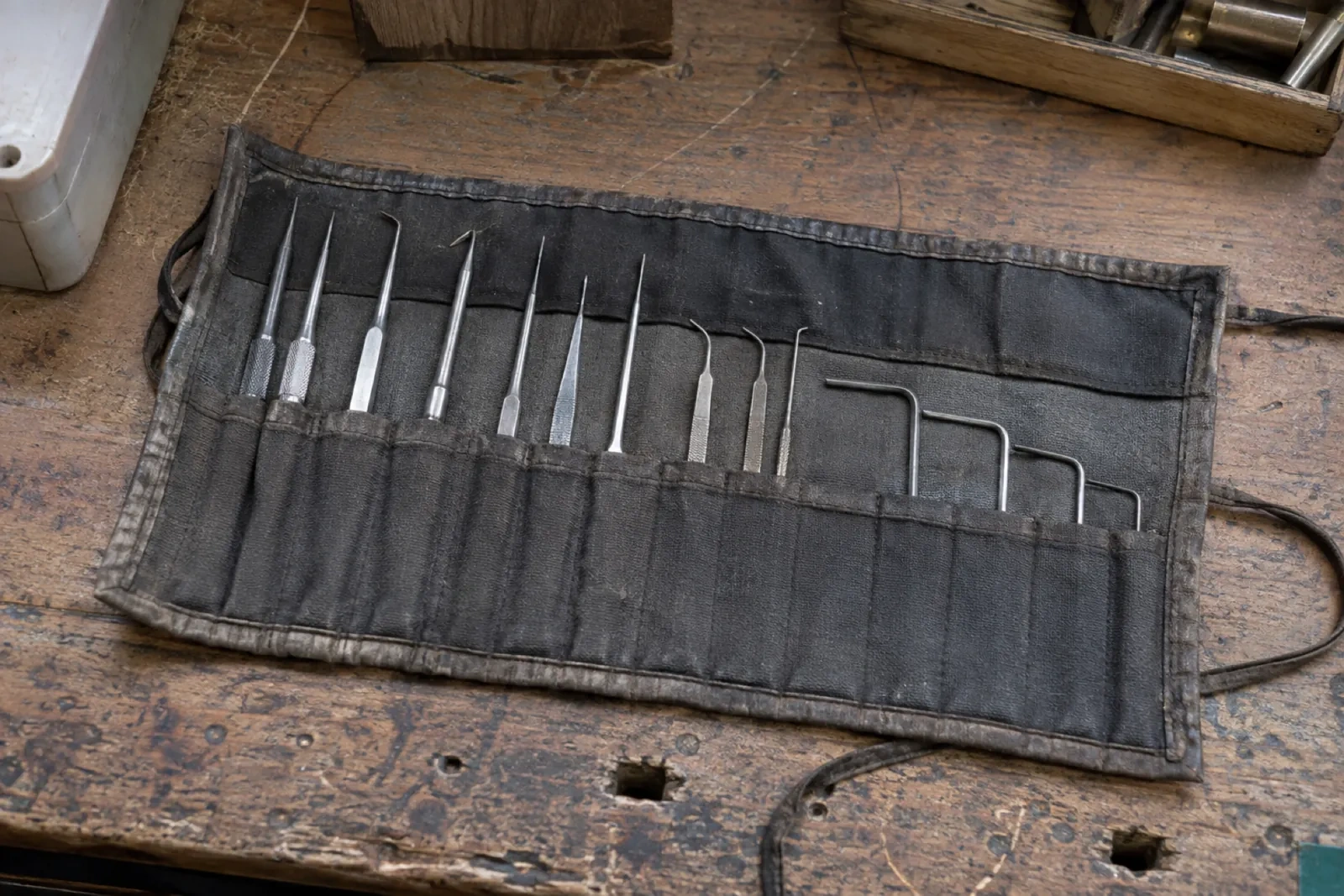
Warding files
Cylinder set screw
Reproduction mortise case
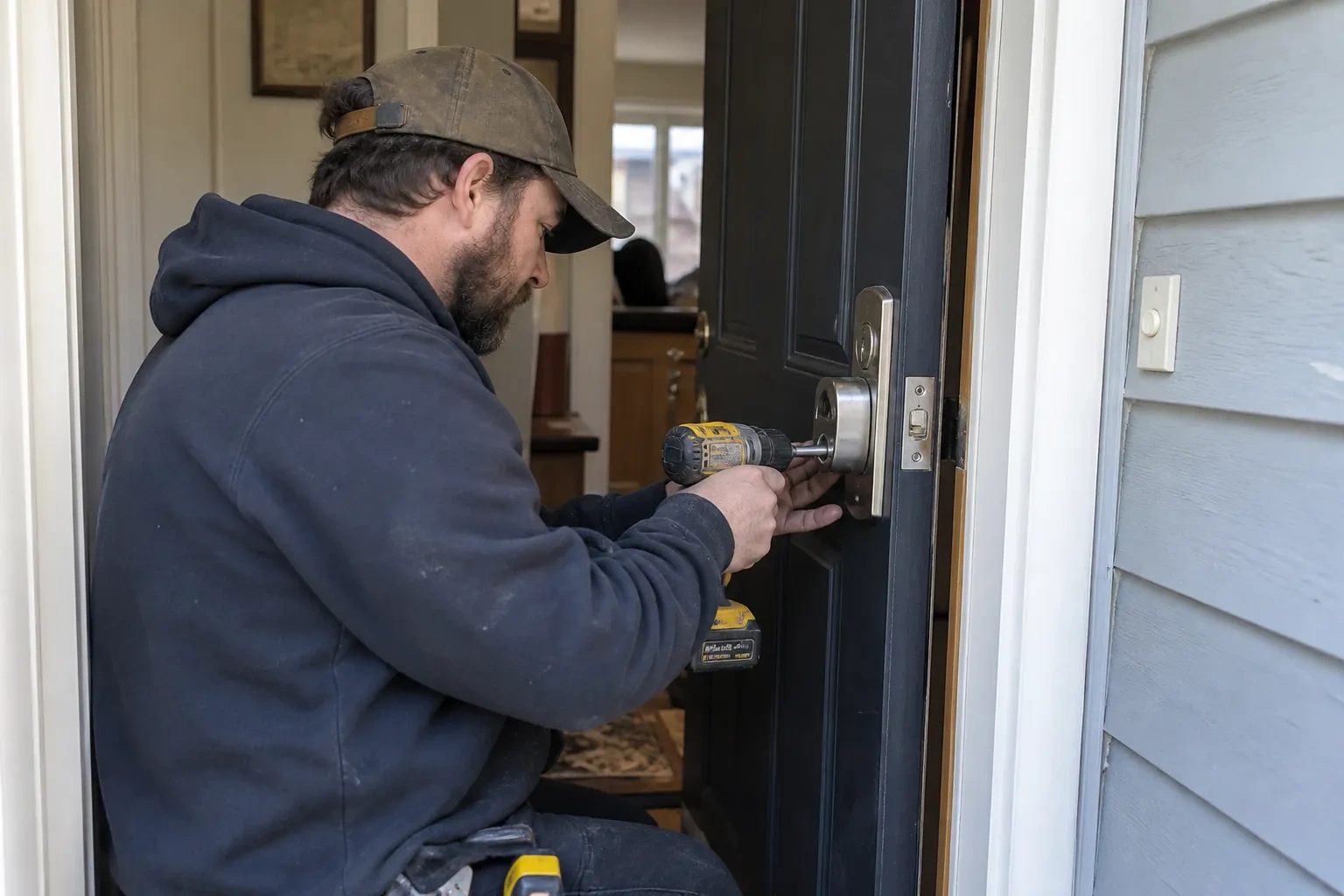
Vintage Mortise Lock Service
What affects the quote
Condition of the wood
Stripped screw holes, a loosened pocket or a split at the door edge need dowelling, shimming or gluing before the case can be trusted. That woodwork is quoted once the locksmith has seen the pocket empty.
Strike and hinge work
Where the door has dropped or swelled, adjusting or moving the strike and tightening or packing hinges is part of the fix. It is small work but it is listed, so you see what was done to the door.
Paint and seized parts
Hardware buried under decades of paint takes time to free and clean without damage. A faceplate, strike and thumb-turn that have to be stripped back add to the visit and are noted in the quote.
What to have ready
- Is the trouble worse with the door closed than with it open?
- Is the property designated as a heritage building?
- What does the knob do when you turn it: return, sag, or not come back?
Vintage Mortise Lock Service: questions
QuestionsWhat does the service visit involve, step by step?
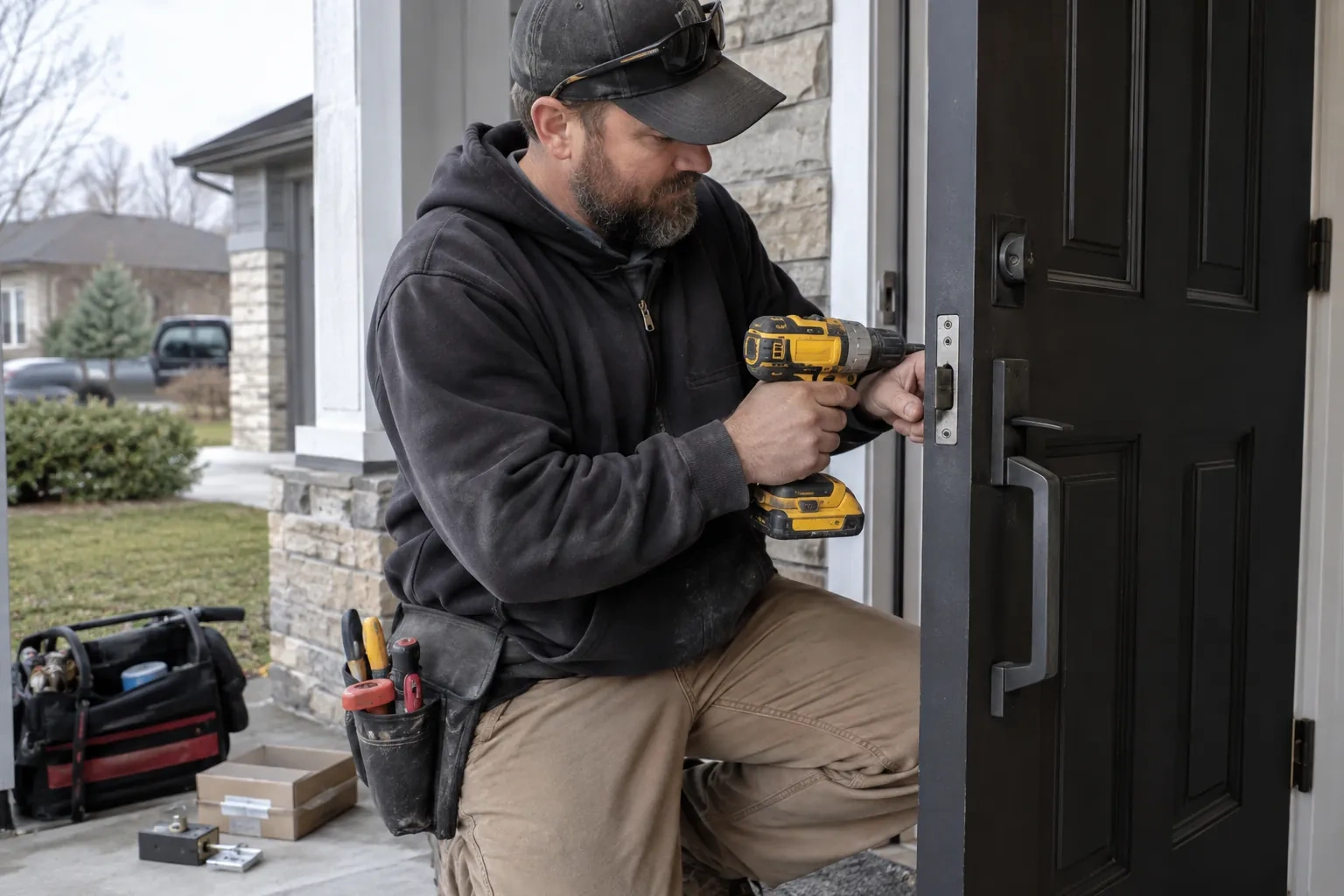
The locksmith checks your authority to request the work, examines the door and lock, and tells you what it needs. The knobs, plates and cylinder come off, the case slides out of the door edge and is opened on a bench, cleaned, re-sprung and repaired. Keys are made or the cylinder rekeyed, the door pocket is tidied, everything goes back on, and the strike is adjusted. You test the finished lock from both sides.
My home is a designated heritage property. Does that change anything?
It reinforces the choice to service rather than replace. Where a property carries a heritage designation, changes affecting listed features can need extra sign-off, and original door hardware is occasionally among those features. A rebuilt mortise case with its original trim is preservation rather than alteration, and the locksmith's written record of what was retained and what was replaced is useful for your file.
Will the door look any different afterwards?
Usually not, when the original case is repaired: the same knobs, escutcheons, faceplate and strike go back on in the same positions, and the only visible change is paint or grime cleared from the edges that were catching. A replacement case is chosen to match the pocket so original trim is reused wherever spacing allows, though an occasional case needs a small pocket or fixing change, explained beforehand.
Related services
- Deadbolt InstallationYou bought a keypad deadbolt online and pulled the old one off, only to find the hole in the door is a different size and the bolt latch sits at a backset the new kit does not list.
- Lock Replacement & UpgradeThree teenagers, a dog walker, a cleaner and one house key that keeps going missing.
- Smart Lock InstallationYou have just taken possession of the house and the previous owners handed over a keypad deadbolt with a code nobody wrote down and an app account you cannot get into.