Change or rekey · Wilmot
Deadbolt Installation
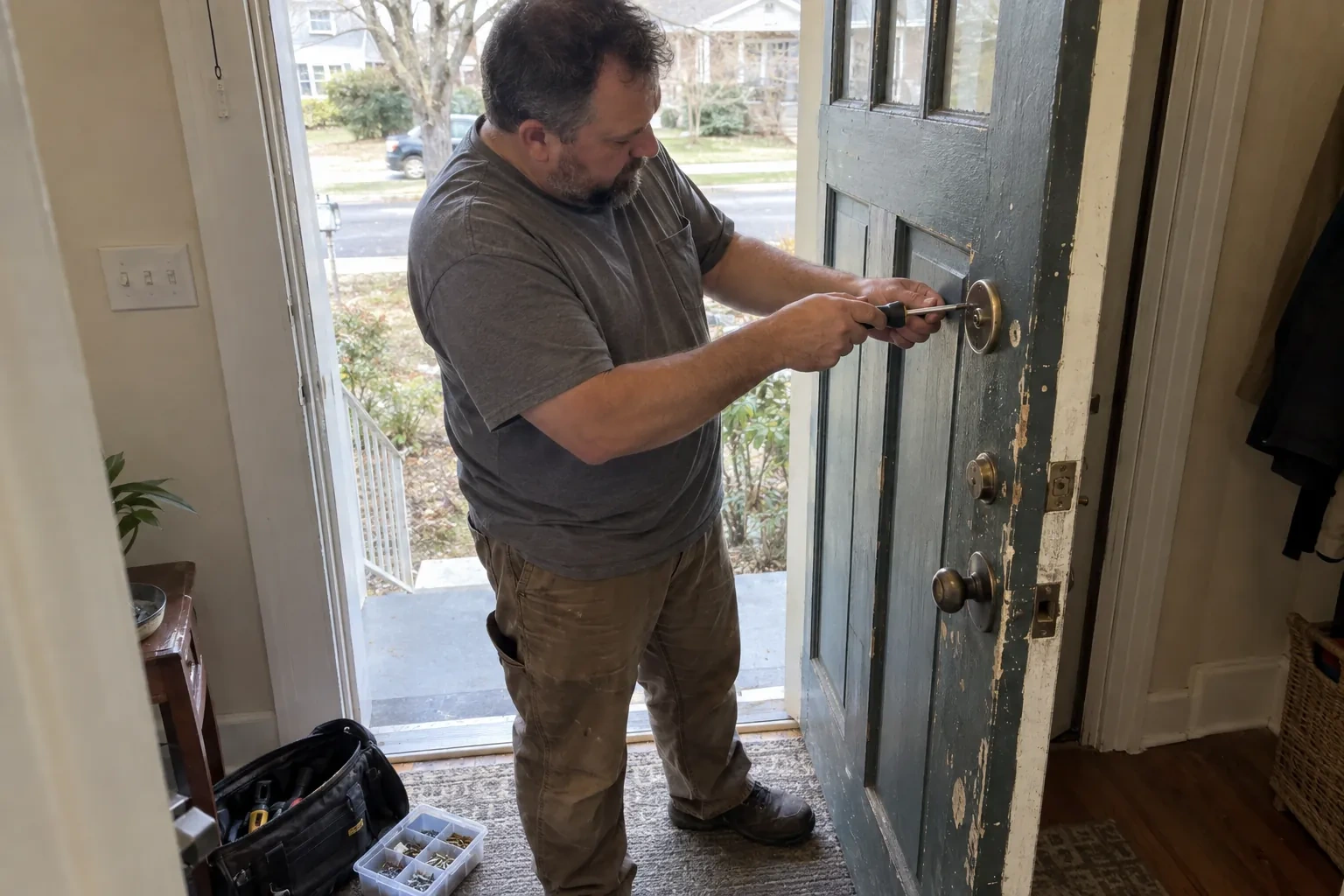
You bought a keypad deadbolt online and pulled the old one off, only to find the hole in the door is a different size and the bolt latch sits at a backset the new kit does not list.
In plain words
For a main exit door the hardware choice has a safety side as well as a security side. A door people leave a home through should open from the inside without a key, so a single-cylinder deadbolt with an inside thumb-turn is the standard fit rather than a bolt keyed on both faces. Where glass sits close to the lock, the answer is a captive thumb-turn, laminated glass, or a tested security-film system with its specified frame attachment, not a key on the inside. The locksmith explains the trade-offs, fits the lock that keeps a stranger out and the family able to leave, and shows everyone the thumb-turn.
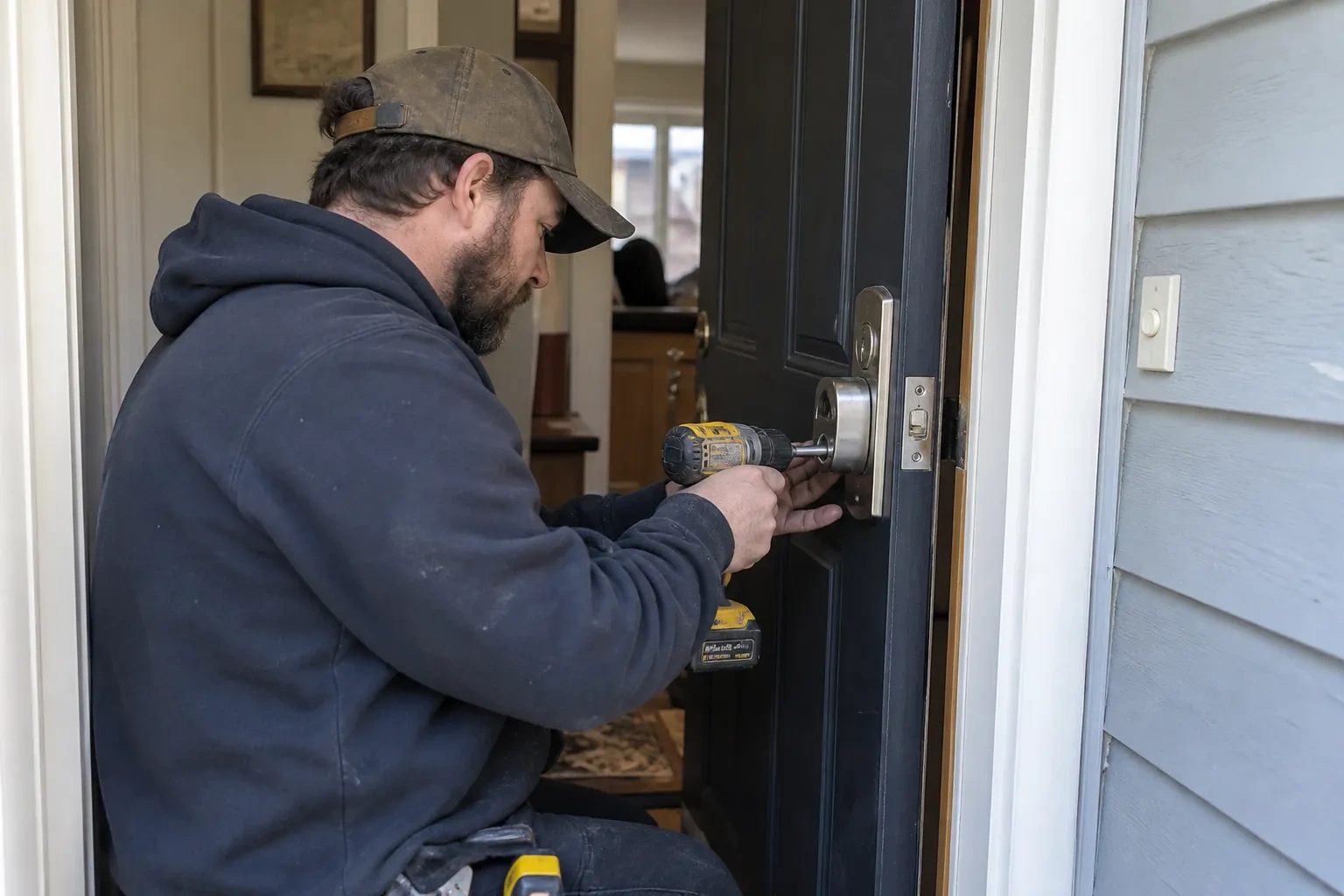
How the visit goesYou bought a keypad deadbolt online and pulled the old one off, only to find the hole in the door is a different size and the bolt latch sits at a backset the new kit does not list. The door is now open and the box is on the counter.
Deadbolt Installation
How the visit goes
Which key should open it
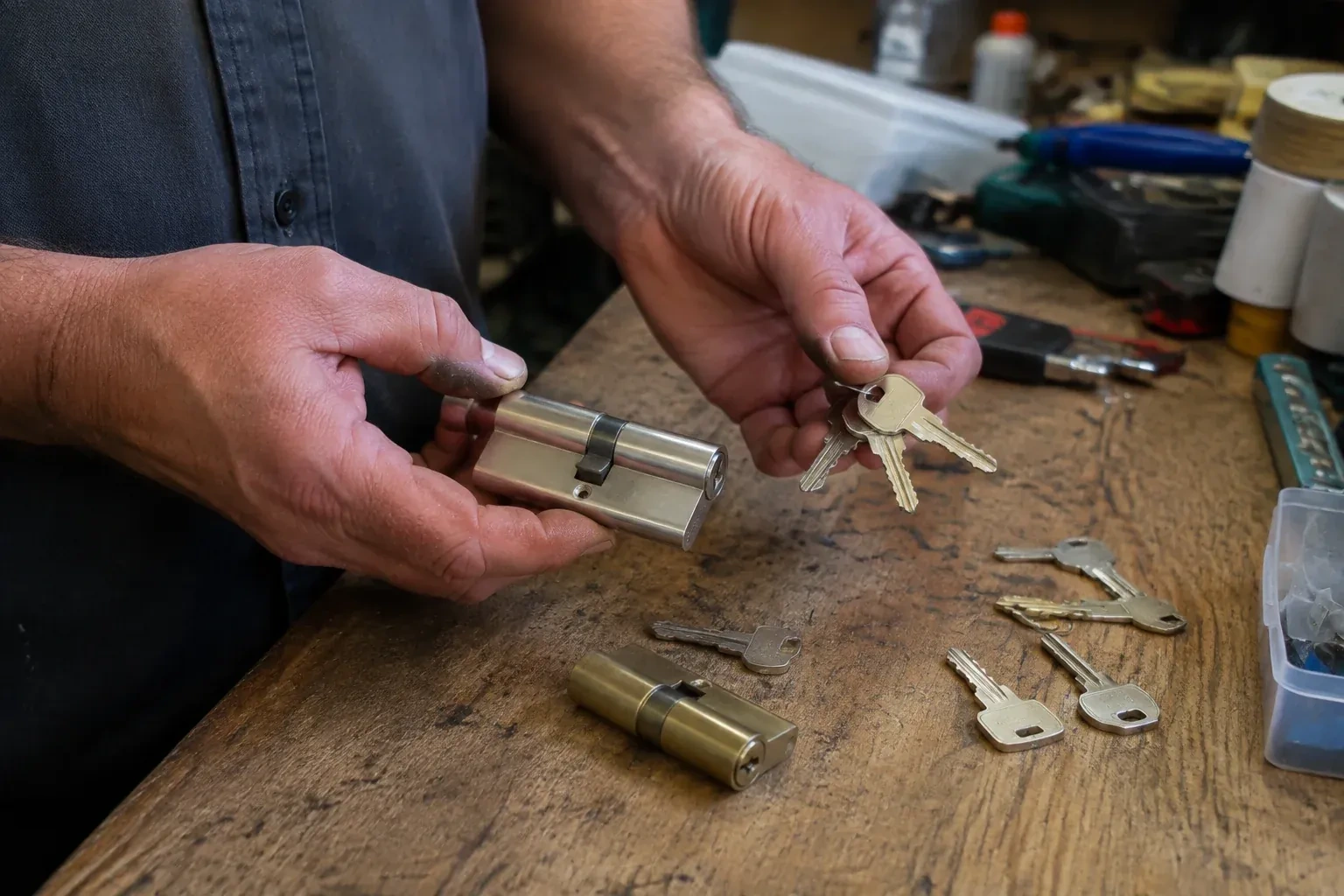
A deadbolt is also a key decision, so the locksmith asks how the household's keys are arranged now. If every door shares one key, the new cylinder can be pinned to that same key, provided the keyways match, so nobody's ring grows. If the house has just changed hands, this is the natural time to set the new bolt and the other exterior locks to a fresh key and retire whatever copies are out there. Restricted or high-security keyways, keypad models with a backup cylinder and locks that must match a rental building's system all steer the choice of hardware, and it is easier to settle this before the box is opened than after.
Fitting the bolt and setting the backset
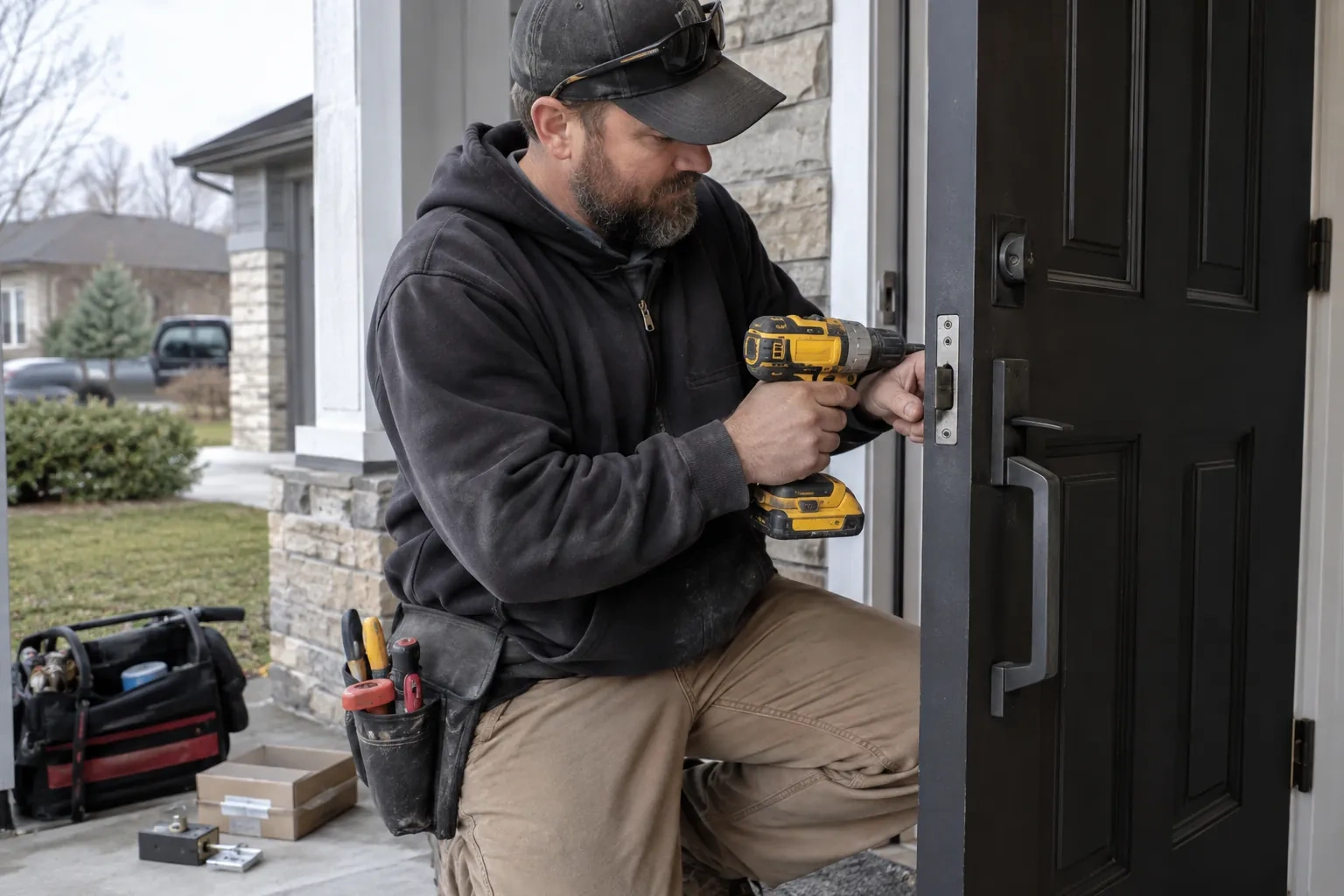
The bolt assembly slides into the edge bore with the faceplate set the way its maker marks, commonly the word "top" facing up. Most residential bolts adjust between 60 mm and 70 mm by twisting or sliding the faceplate, and the locksmith sets it to the backset measured earlier so the tailpiece from the cylinder lands in the centre of the bolt's cam. The bolt is secured with its two short screws, and the locksmith works it in and out by hand to feel that it runs freely through the door without rubbing on the bore. On an insulated door a round drive-in collar may replace the flat plate where the edge is too thin to mortise.
A frame that now holds the bolt
Behind the new strike plate is the part of the job you cannot see and will never need to think about. The pocket has been bored deep enough for the bolt to seat fully, the plate has been let into the jamb so it sits flush, and the long screws reach through the jamb into the framing behind it. On a door that had been forced or had stripped screw holes, a full-length reinforcer may sit under the strike. If you press the jamb with your palm now, it does not flex. That stiffness is what a bolt needs to do its work, and it is the reason the installation took as long on the frame as on the door.
Deadbolt Installation
In the van
25 mm auger bit
Reinforced strike plate
Dry PTFE lubricant
Single-cylinder deadbolt
Boring jig and 54 mm hole saw
Deadbolt Installation
What affects the quote
Removing and disposing of the old hardware
Some visits end with the old deadbolt and strike left with the homeowner, and others ask for it to be removed and hauled away. Taking the old hardware away adds a small amount of time and is agreed before the new deadbolt goes in.
Storm door or restricted clearance
A tight storm door, a narrow lock stile or a decorative panel at bolt height can require low-profile trim or a shifted position, which is settled and quoted at the assessment.
Door material
Solid wood, steel-clad and fibreglass doors are each cut differently. Metal skins call for slower cutting and cleanup of filings, so the material is one of the first things a quote takes into account.
What to have ready
- Is there glass in the door or a sidelight beside it within arm's reach of the lock?
- Does the door have to be pulled or lifted before it latches or locks at the moment?
- Is the door between the garage and the house one of the doors you want bolted?
Deadbolt Installation: questions
QuestionsCan a deadbolt be added to a door that only has a knob?
Yes, on nearly any wood, steel-clad or fibreglass entry door. The locksmith marks a spot above the knob, clamps a jig to the door and bores a cross hole through the face and a smaller hole through the edge, then cuts a pocket and fits a strike on the frame. The main things checked first are the door's thickness, what is inside it at that height and whether glass sits close by.
Why does the strike plate matter so much?
The strike is the metal plate the bolt throws into, and it is where a kicked door usually fails: short screws bite only into the thin jamb board, which splits. A reinforced strike or strike box fastened with 75 mm screws passes through the jamb into the stud behind, so a blow is met by the framing of the house. On a wood frame, strike screws that reach at least 30 mm into solid wood behind the jamb are what actually holds.
Someone forced my door. Can the new deadbolt go into the same frame?
In most cases, yes. The locksmith examines the jamb for splits and stripped screw holes, glues and pins any cracked section, and fits a full-length jamb reinforcer under the strike so the new long screws bite into sound wood and the stud behind. A new pocket is bored to the correct depth. Where the jamb is beyond repair, replacing that section of frame is discussed before any lock goes on.
Related services
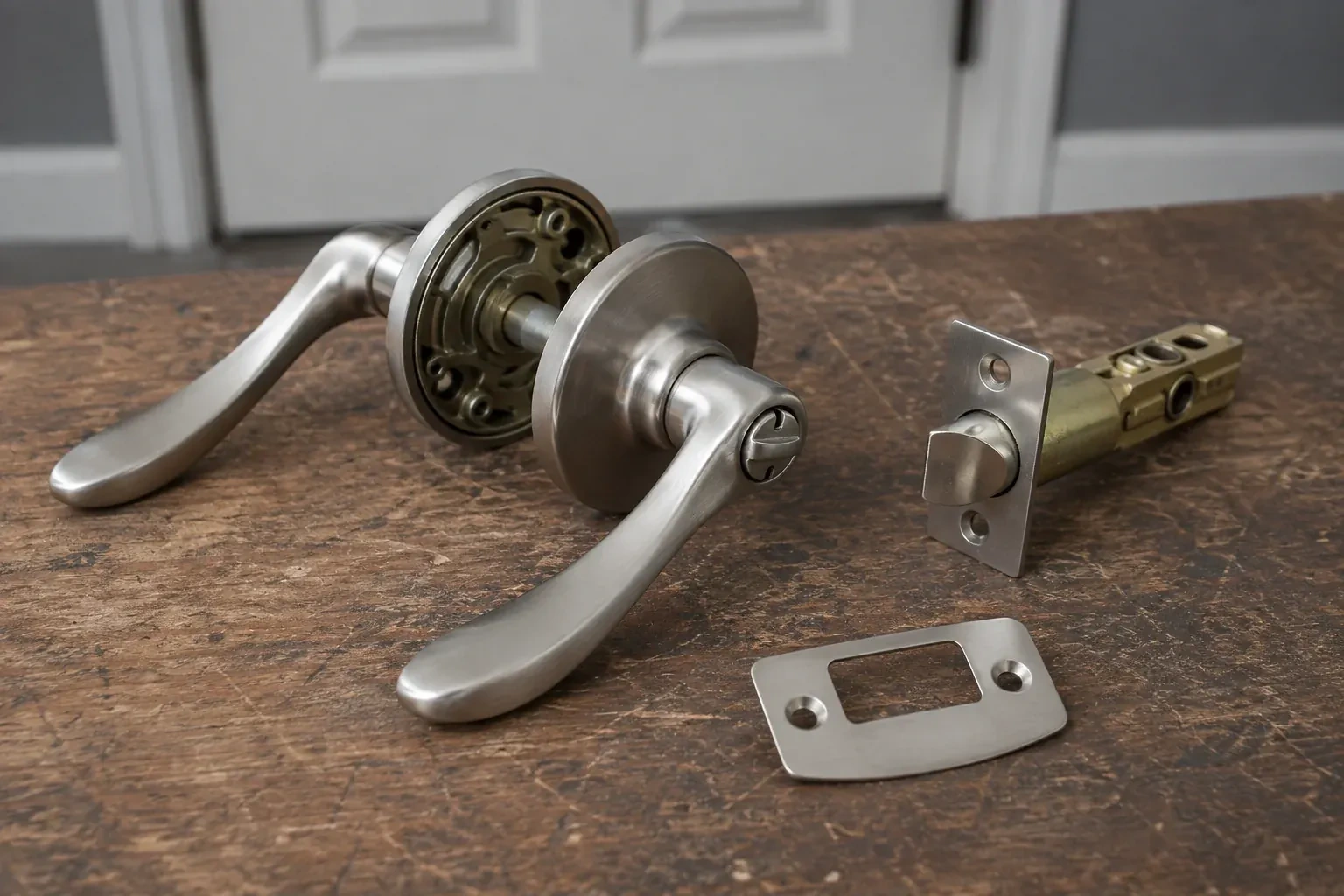
- Lock Replacement & UpgradeThree teenagers, a dog walker, a cleaner and one house key that keeps going missing.
- Vintage Mortise Lock ServiceSomeone painted the door years ago without removing the hardware.
- Smart Lock InstallationYou have just taken possession of the house and the previous owners handed over a keypad deadbolt with a code nobody wrote down and an app account you cannot get into.