Car keys · Wilmot
Motorcycle & Scooter Keys
You dig through every jacket pocket and the tank bag twice, but the ignition key that always sits on the same ring is nowhere to be found.
In plain words
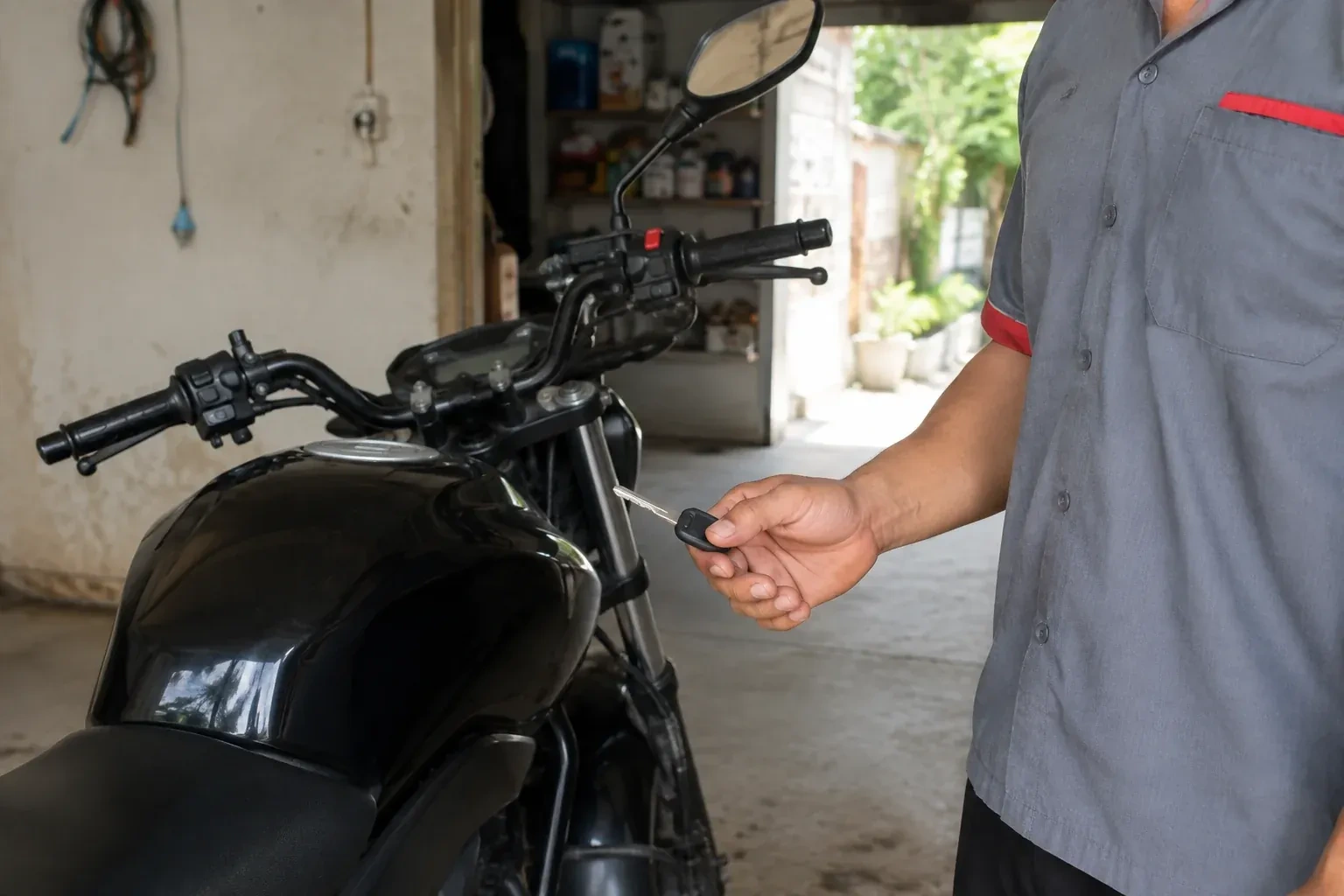
What is actually possible depends on whether a working key still exists somewhere. If one does, even a spare kept by a family member or a dealership record of the code, a fresh key can usually be cut or duplicated directly from it. If every key for the machine is gone, the locksmith reads the lock itself, translating wafer depths into a cut, or, on a machine with an immobiliser, pairs a new transponder where that system allows it, since some instead need the whole unit replaced. Either route aims for a key that starts the engine and operates the other locks the owner wants included.
How the visit goesThe key turns half a rotation in the ignition, catches, then the blade lets go with a small snap. The bow is still in your hand; the rest of it is somewhere inside a lock that now has nothing to grip.
Motorcycle & Scooter Keys
How the visit goes
Mapping every lock on the machine
A motorcycle rarely has just one lock, so the locksmith walks around it noting the ignition and steering, the seat latch, a fuel cap on older models, and any storage compartment, top case or helmet lock fitted afterward. Each is checked against whichever key the owner has, since it is common for one or two of them to already share a cut while another was left on its own from the factory or a previous repair. Knowing the full list before starting means the finished key set covers every lock the owner actually wants, not just the one that prompted the call.
Pairing a new transponder
A machine with an immobiliser needs its electronics satisfied as well as its lock. Using either a remaining working key or programming equipment built for that system, the locksmith teaches the vehicle's module the new transponder's code where that system supports it, though some manufacturers require their own code key and a dealer procedure instead. The mechanical cut and the electronic pairing are separate steps and both have to succeed: a key can be shaped correctly and still fail to start the engine if the chip inside it was never taught to the machine, which is why this step is tested with a full engine start rather than just a turn of the switch.
A key set that covers the whole machine
Where the locks are compatible, the visit ends with them all answering to the same key: ignition, steering, seat and, where fitted, the fuel cap or a storage compartment. Before leaving, each one is opened and closed again with the owner watching, so there is no guessing about which key does what. Carrying one key instead of two or three is a small change, but it is the detail most owners mention afterward, since a single blade on the ring is one less thing to sort through at the pump or on the side of the road.
Motorcycle & Scooter Keys
In the van
Transponder programming unit
Code-cutting machine
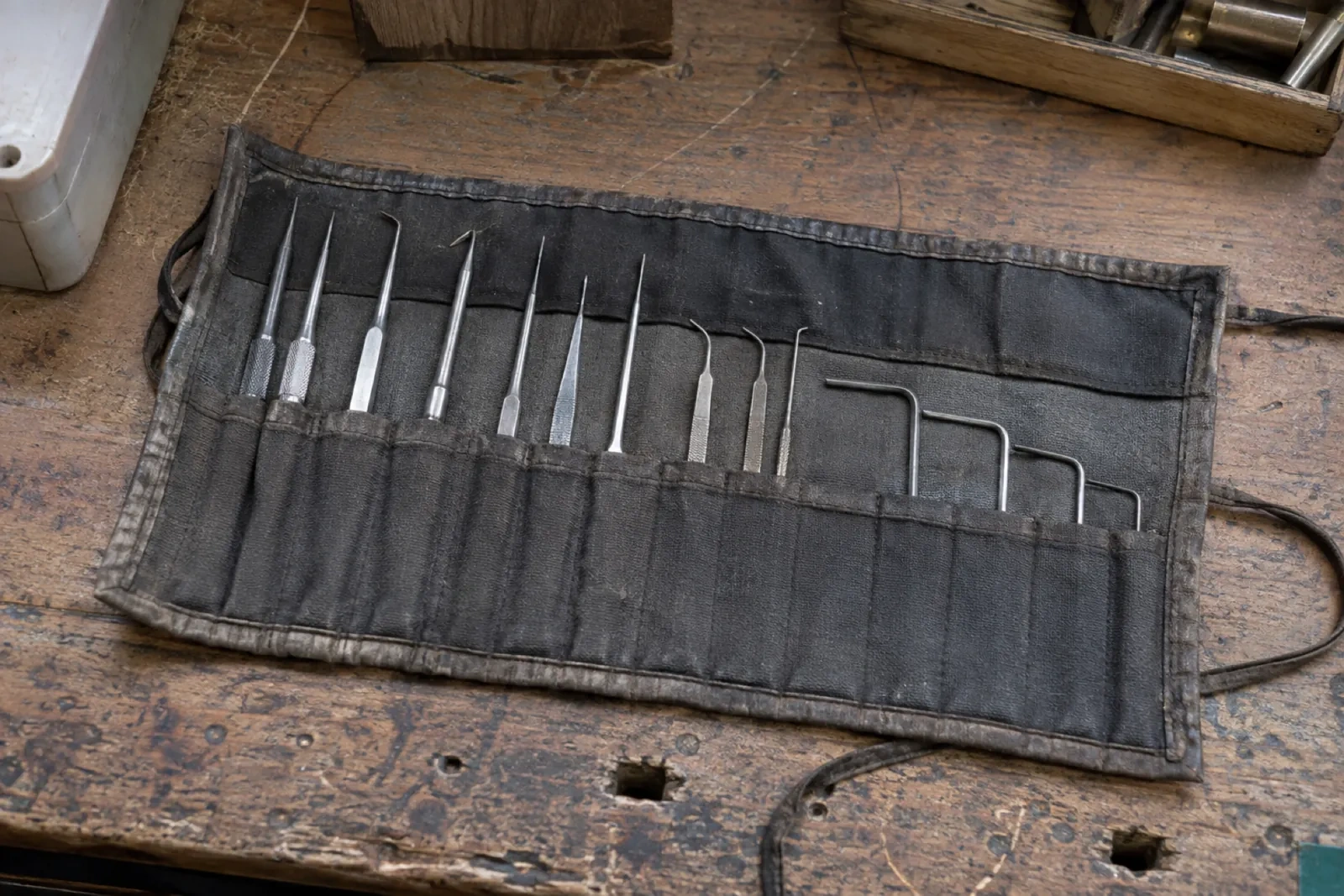
Pick and tension tools
Torx and security bits
Replacement transponder chips
Motorcycle & Scooter Keys
What affects the quote
Whether an immobiliser is fitted
A machine with an immobiliser needs its electronics paired as well as its lock cut, which adds equipment and testing beyond a purely mechanical key, and is reflected as its own step in the quote.
Distance to the machine's location
Distance to wherever the machine is kept, whether a driveway across town or a more remote property, is part of every call, and travel time is reflected alongside the key work itself.
Number of locks on the machine
A single ignition lock is the simplest case. A machine with a separate seat, fuel cap and storage lock involved is a longer visit with more hardware to read, cut and test.
What to have ready
- Does the engine crank but fail to start with the current key?
- Would you like every lock brought onto one key?
- Is the steering lock turning freely, or does it feel stuck?
Motorcycle & Scooter Keys: questions
QuestionsWhat should I do to look after a new key or lock afterward?
Very little beyond two simple habits: wipe the key clean before use, especially after a wet ride, and, where the lock's own maker calls for it, a light dose of the specified lubricant once or twice a year. Storing a spare somewhere other than on the machine itself rounds out the care a new key or lock generally needs.
Do I have to have the original key for you to cut a new one?
No. When every key for the machine is gone, the locksmith reads the lock directly, working out each wafer's depth by picking and reading the cylinder or using a decoder built for that keyway, and cuts a fresh key to the code that comes out of that reading. It takes longer than copying an existing key, since every wafer is read individually, but it produces a key that matches the lock rather than a guess.
I only have the key, not the bike here. Can you still cut one from it?
Yes, a key on its own can usually be read and duplicated without the machine present, since the cuts on the blade carry the information the locksmith needs. What cannot be confirmed without the bike is whether an immobiliser is fitted or whether other locks are keyed the same way, so bringing the machine, or at least a photo of the ignition and dash, helps decide whether anything beyond a straightforward copy is needed.
Related services
- Car Key ReplacementAfter fifteen years the blade has worn to a smooth sliver.
- Spare Car Key DuplicationA lockout last month ended with a locksmith opening the door and going home, and the same single key has been carried ever since with nothing behind it.
- Key Fob ProgrammingThe car changed hands last week, and the paperwork included exactly one fob for a household with two drivers.