Locksmith
Useful things to know
We spend our days explaining locks to people who have never had to think about them, and that is the voice these notes are written in. No jargon, no assumptions. Just what you need to know to keep your home, business and vehicle sensibly secured.
You asked, we answered
When does a locksmith decide to drill instead of pick?
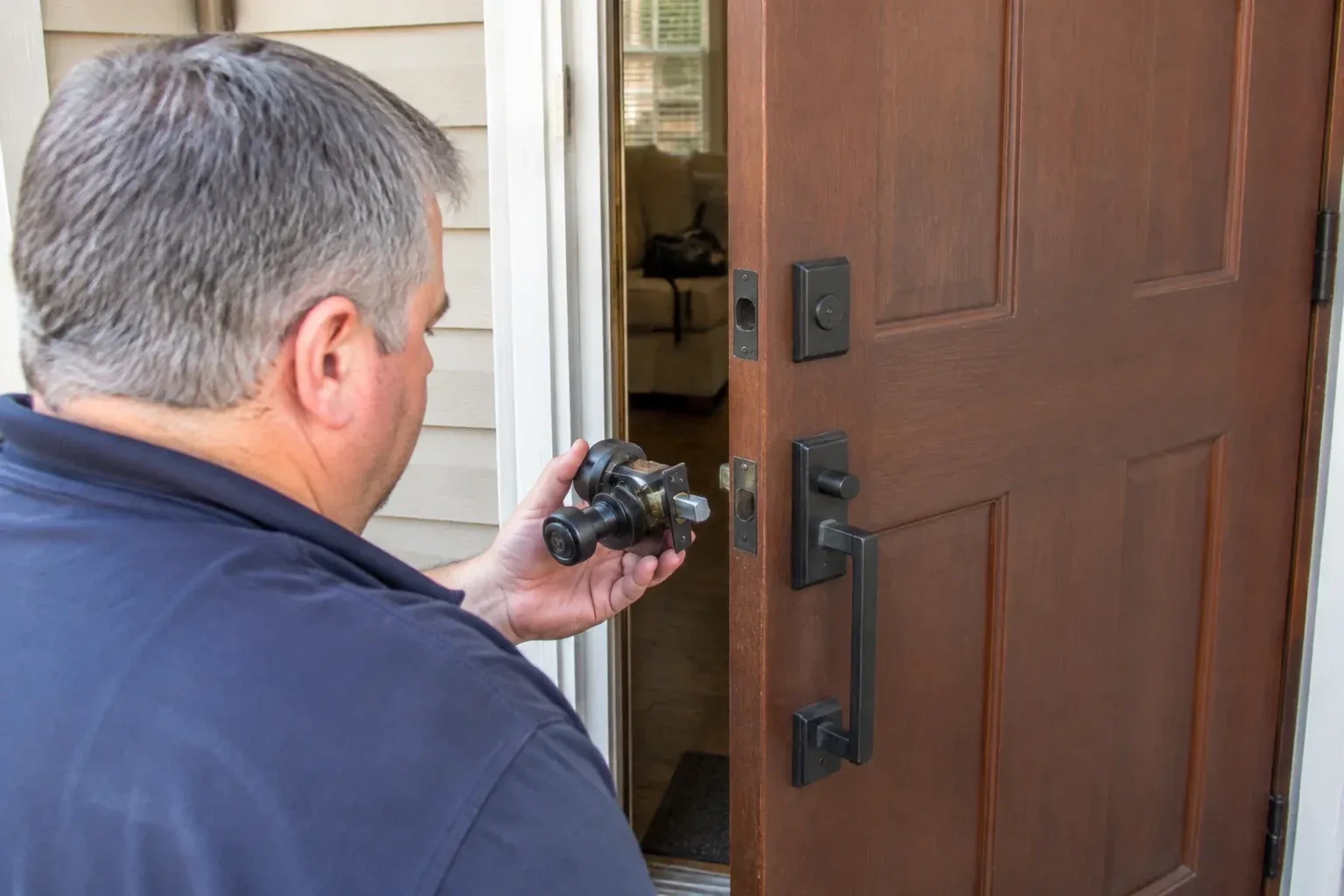
Drilling is the last rung, reached only when the cylinder has genuinely stopped cooperating. Typical reasons are a plug seized by corrosion or a failed spring, a key snapped deep inside that blocks the pins, a high-security cylinder whose anti-pick features make picking impractical, or a lock already damaged by someone's earlier attempt. The decision is explained before the drill comes out, the hole is confined to the cylinder, and replacement hardware goes in straight afterwards.
We have just taken over a unit and have no keys for the old locks. Is that a lockout?
It is treated as one, with the same authority check: your new lease and identification settle it. The locksmith opens the previous occupant's locks, then rekeys or replaces them so keys still floating around from the last tenant stop working. It is also the moment to decide how the unit will be keyed: one key for every door, separate keys for the cash office and stockroom, or cores that suit a growing staff.
Can the piece be pushed out from the other side?
On a standard door cylinder the keyway is closed at the back by the plug and the tailpiece, so there is no straight path through. What a locksmith can do is remove the cylinder, take off the cap, and push the plug out of its housing with a follower, which frees the fragment from behind. That is done on the bench, not by forcing anything from the inside of the door.
Should I keep the broken lock and strike?
Yes, unless the insurer has already said they are not needed. Insurers generally ask policyholders to retain damaged property until the claim is settled, and a bag holding the twisted cylinder, torn strike and split wood answers an adjuster's questions more clearly than any description. The locksmith hands them over at the end of the visit along with a written note of what was replaced. Photographs of the parts in place, before removal, complete the record.
Why do locks jam more in winter?
Two reasons meet in the same season. Freeze-thaw weather sends meltwater into the keyway by day and freezes it by night, and cold thickens any old grease or oil that has been sprayed into the pins. At the same time dry, heated indoor air shrinks wood doors so bolts move in their pockets. Doors on the shaded or windward side get the worst of it. A dry lubricant, a keyhole cover and a check of the strike after the first hard frost take care of most of it.
Should I rekey after a renovation or when a cleaner stops coming?
It is good practice whenever a key has been out of your hands for a while and you are not certain it came back. Contractors, cleaners, sitters and short-term guests all have honest reasons to hold a key, and most return it, but a rekey at the end of the arrangement is what turns 'probably' into certainty. Some households make it a habit at the close of every project.
Can the entry door of my condo suite be rekeyed?
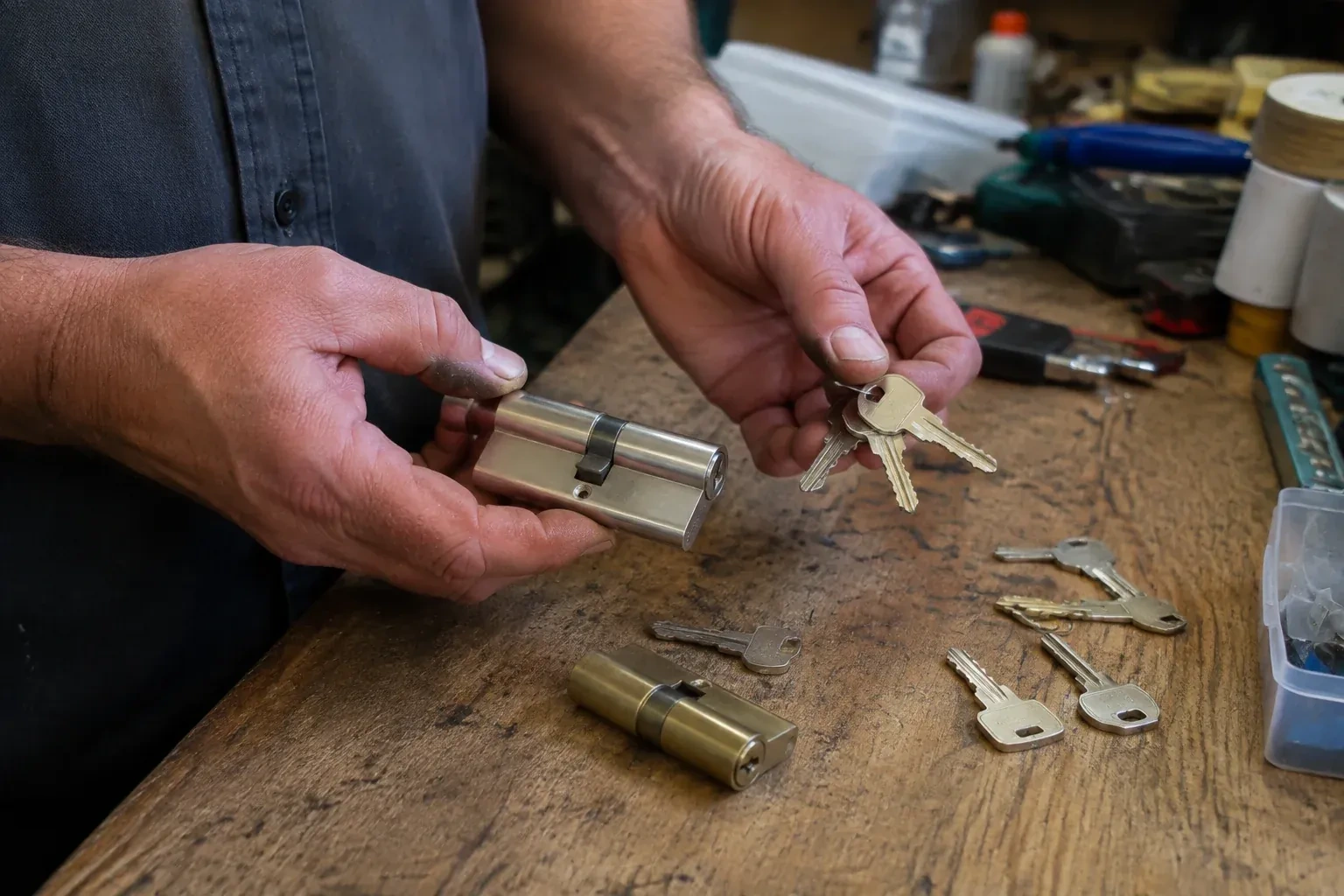
Often, but check with your property management first. Condominium corporations have a right to enter a unit on reasonable notice, and without notice in an emergency, and many buildings ask that suite doors stay on a system the corporation can open or that a key be lodged with management. Lobby, garage and locker-room doors belong to the corporation and are theirs to manage. A locksmith will ask about your building's rule and work within it.
Can a deadbolt be added to a door that only has a knob?
Yes, on nearly any wood, steel-clad or fibreglass entry door. The locksmith marks a spot above the knob, clamps a jig to the door and bores a cross hole through the face and a smaller hole through the edge, then cuts a pocket and fits a strike on the frame. The main things checked first are the door's thickness, what is inside it at that height and whether glass sits close by.
Will a new lock fit the holes already in my door?
Usually, yes. Most residential doors are prepared to standard sizes, a 54 millimetre cross bore and a backset of 60 or 70 millimetres, and most modern hardware adjusts between those backsets. The locksmith measures before choosing, so the new lock is matched to the door rather than the other way around. Where an older mortise lock or an unusual bore is found, filler plates, extension kits or a carefully jigged new bore bring the door to standard.
What does the service visit involve, step by step?
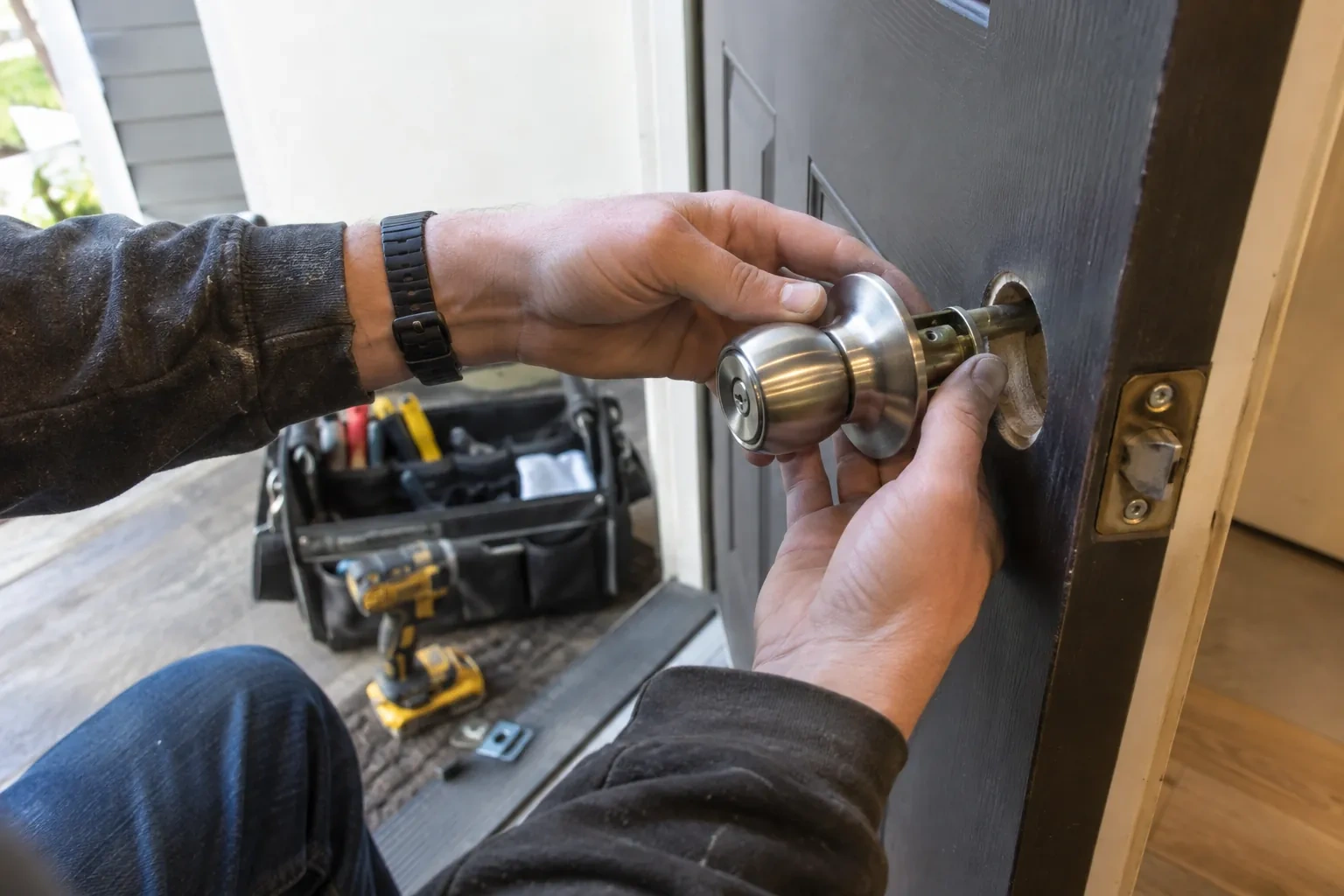
The locksmith checks your authority to request the work, examines the door and lock, and tells you what it needs. The knobs, plates and cylinder come off, the case slides out of the door edge and is opened on a bench, cleaned, re-sprung and repaired. Keys are made or the cylinder rekeyed, the door pocket is tidied, everything goes back on, and the strike is adjusted. You test the finished lock from both sides.
What happens when the batteries die?
The lock warns you well before that point, with a light or tone at the keypad and, on connected models, a message to your phone. If the warnings are missed, a keyed model's mechanical override still opens the door, while a key-free model instead has two small contacts on the outside where a nine-volt battery gives it enough power to accept a code. The locksmith shows you each route your model offers and where the spare batteries and the key should live.
How should I look after a gate lock so it keeps working?
Twice a year, work the lubricant the cylinder maker specifies into the keyway and cycle the key a few times; the wrong product for that model can collect grit or gum up the mechanism instead of helping it. Check that the closer still settles the gate into the latch without slamming, and look at hinges or post hardware for movement, especially after a hard winter. A cylinder that starts needing a wiggle, or a gate that has begun to drag, is worth addressing while it is still a small adjustment.
I just moved in and have no key at all. Can you still help?
Yes, and it is a common reason for this visit. Ownership or a lease showing the address, plus photo identification, is generally enough to confirm the compartment is yours to change. The old lock is opened without a key using the same techniques used elsewhere, then swapped for a new one, so whoever held the previous key no longer has any use for it.
Will opening my safe damage it?
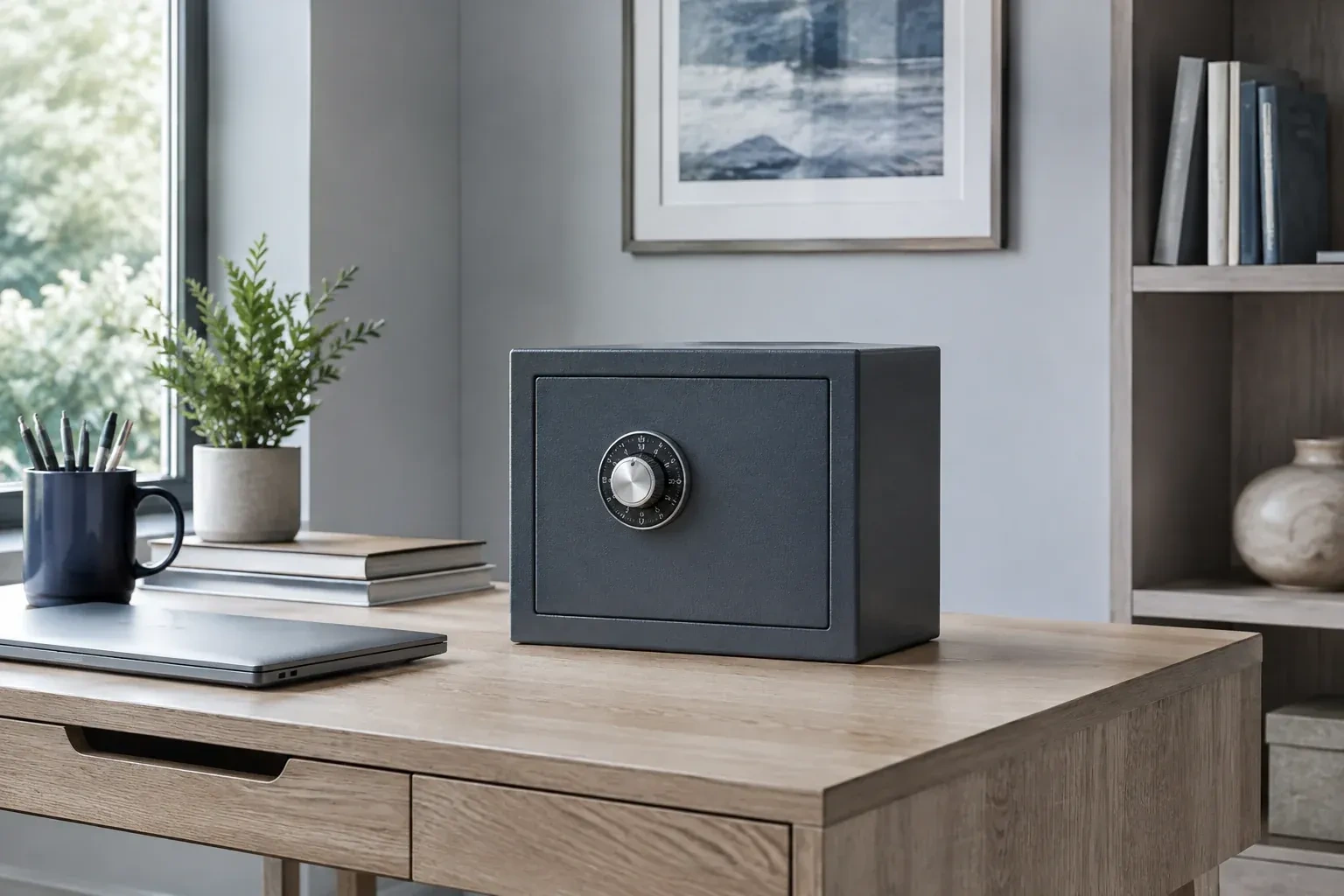
In most cases the lock and case are left intact, since manipulation, decoding and manufacturer reset paths all work the mechanism the way the original combination would. Drilling is kept for cases where the gentler routes are unavailable or exhausted, aimed at one small point the manufacturer marks as repairable, and patched before the visit ends; a skilled technician aims to leave the rest of the body, hinges and finish unaffected, though the outcome and any effect on the safe's rated protection level depends on its construction.
How often does the battery need replacing on an electronic lock?
Most electronic locks give a low-battery warning, usually a beep or flashing light, well before they actually stop working, and replacing the battery within that same week is the safer habit rather than waiting. Depending on how often the safe is opened, a battery commonly lasts somewhere between one and several years, and keeping a spare of the correct type near the safe avoids a search once the warning starts.
Will my door look different afterwards?
Barely. A high security cylinder sits in the same place as the old one and is usually distinguished only by a different keyway shape and sometimes a hardened collar. A graded deadbolt is a standard-looking deadbolt in your chosen finish. The reinforced strike is longer than the plate it replaces and the wrap-around reinforcer, if used, shows as a neat metal band on the door edge. The difference is felt when you lock up, not seen from the street.
How often should a business change its keys as a matter of routine?
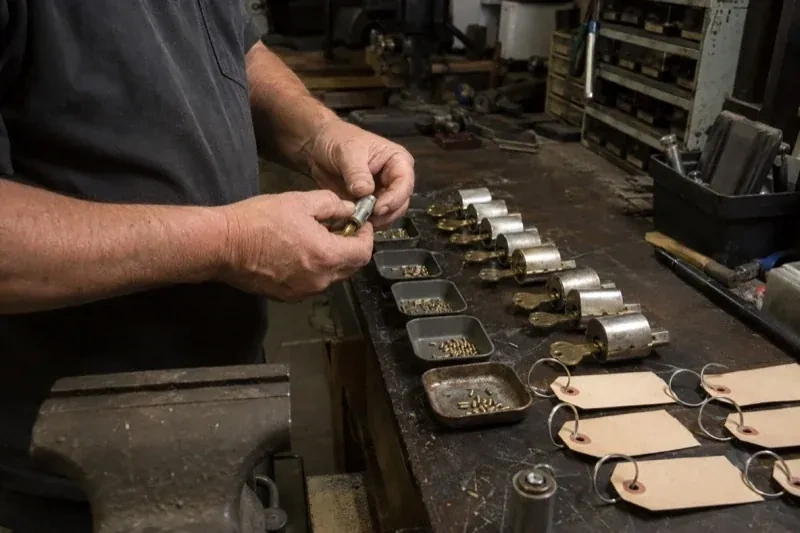
There is no fixed interval. Rekey on events rather than on a calendar: a key not returned, a lease change, a break-in, a renovation crew finished, or a key count that no longer matches the register. Businesses with a good register and a restricted keyway often go years between rekeys because nothing prompts one. A yearly check of the register against the keys on the hook is the habit that tells you when the time has come.
Can electronic locks be part of the same system as mechanical keys?
Yes. Where a property mixes keypad or card doors with mechanical cylinders, the access levels are designed to line up across both, so a department sitting at one sub-master level mechanically holds a matching level electronically. Mechanical override cylinders behind an electronic lock are pinned into the same chart as every other door, so one record still describes the whole property.
What happens to the doors if the power goes out?
Outage behaviour depends on how that opening was built: battery backup can be sized to carry the reader, the lock and the controller through a typical outage, so a brief power loss need not lock anyone out or, on a fire-alarm-tied opening, lock anyone in, but that backup and any mechanical key override are specified per opening rather than assumed for every door. Fail-safe hardware unlocks once power has been out longer than the backup lasts; fail-secure hardware stays locked, and what opens it depends on the hardware chosen.
What if the existing device is old and no replacement part is available?
Where a specific replacement part cannot be sourced for an older device, the practical route is usually to replace the whole exit device with a current one built for the same door, rather than leave a partially working device in place. This is decided case by case once the existing hardware and door preparation have been examined, since the new device still has to suit the same opening.
What happens to keys held by former employees or contractors?
Once a cylinder is replaced or rekeyed, any key that was not reissued for the new combination simply stops working on that door. This is the direct answer to a key that walked out with someone who left the business, and it is worth doing across every door that key used to open, not only the one that prompted the call.
My car is in a gated lot or an underground garage. Does that matter?
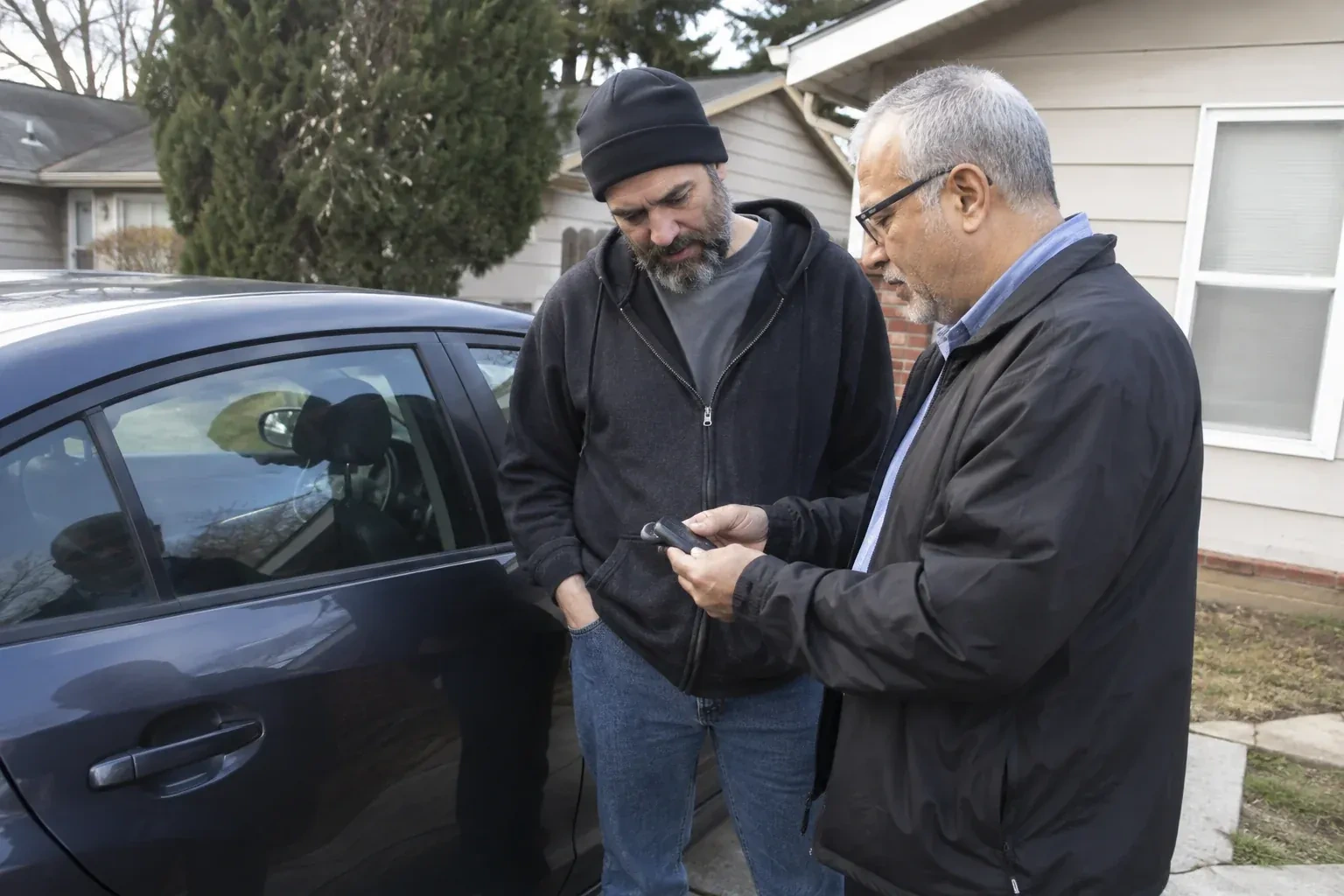
Only for getting the van to the car. Tell the locksmith how the lot is entered, whether a code, a buzzer or an attendant is involved, and which level the car is on, so nobody loses time at the gate. In a tight garage the locksmith checks there is room to open the door fully and enough light to see the interior switches, and brings a torch if not. The opening itself is unchanged.
Does programming a new key affect the keys I already have?
Adding a key leaves the existing keys in place; the car simply learns one more. The exception is a deliberate all-keys-lost reset or an erase you ask for, which clears every stored key and then registers only the ones you present. For that reason the locksmith asks you to bring every key you own to the visit, so each one can be re-registered and tested rather than left behind and forgotten by the car.
How long does making a spare car key usually take?
The time depends mainly on the key system rather than the blade. A plain mechanical key can often be duplicated within one visit, without extra electronic work. A transponder or remote-head key adds a cloning or programming step, done off the vehicle when the chip supports it and through the vehicle's own diagnostic port when it does not, with the diagnostic route usually taking longer. The locksmith can usually say which category your vehicle falls into once the make, model and year are known, before the appointment starts.
What is the difference between a remote, a transponder key and a proximity fob?
A basic remote only operates the locks and alarm from a distance while a separate metal key still starts the engine. A transponder key combines a cut blade with a chip the immobilizer reads before allowing a start. A proximity fob goes further: it authorizes entry while it is nearby, though most vehicles still need the handle touched, gripped or pressed to actually unlock, and it starts the engine with a push button, with no key insertion needed day to day. Each type is programmed differently.
What's the difference between cutting a key and programming it?
Cutting shapes a blank to match the lock, so it turns the mechanical cylinder in the door or ignition. Programming is a separate step where the chip inside the key head is taught to the vehicle's immobilizer, so the engine agrees to start. A key can be cut perfectly and still fail to start the car if that second step was skipped, which is the single most common source of confusion in this service.
Is my vehicle's security system disabled while this work is happening?
No part of the vehicle's electronic security system is bypassed or defeated as part of a mechanical ignition repair. The locksmith works on the physical cylinder and its housing, and any question involving the immobilizer or transponder system is identified and referred rather than worked around, so the vehicle's built-in protection stays exactly as it was designed to work.
Can you match a new lock cylinder to my existing key rather than giving me a new key?
Yes, this is usually the preferred approach. A replacement cylinder is set or selected to match the key you already carry, so you continue using the same key and fob across the whole vehicle instead of adjusting to a new one for a single door.
What should I do to look after a new key or lock afterward?
Very little beyond two simple habits: wipe the key clean before use, especially after a wet ride, and, where the lock's own maker calls for it, a light dose of the specified lubricant once or twice a year. Storing a spare somewhere other than on the machine itself rounds out the care a new key or lock generally needs.