Lockouts
Lockout Services
A door that refuses to open is one problem; a door that refuses to close is another, and often the more pressing one. The emergency pages cover both, including temporary bracing and board-up when the frame or glass needs a proper repair later.
Which one do I need?
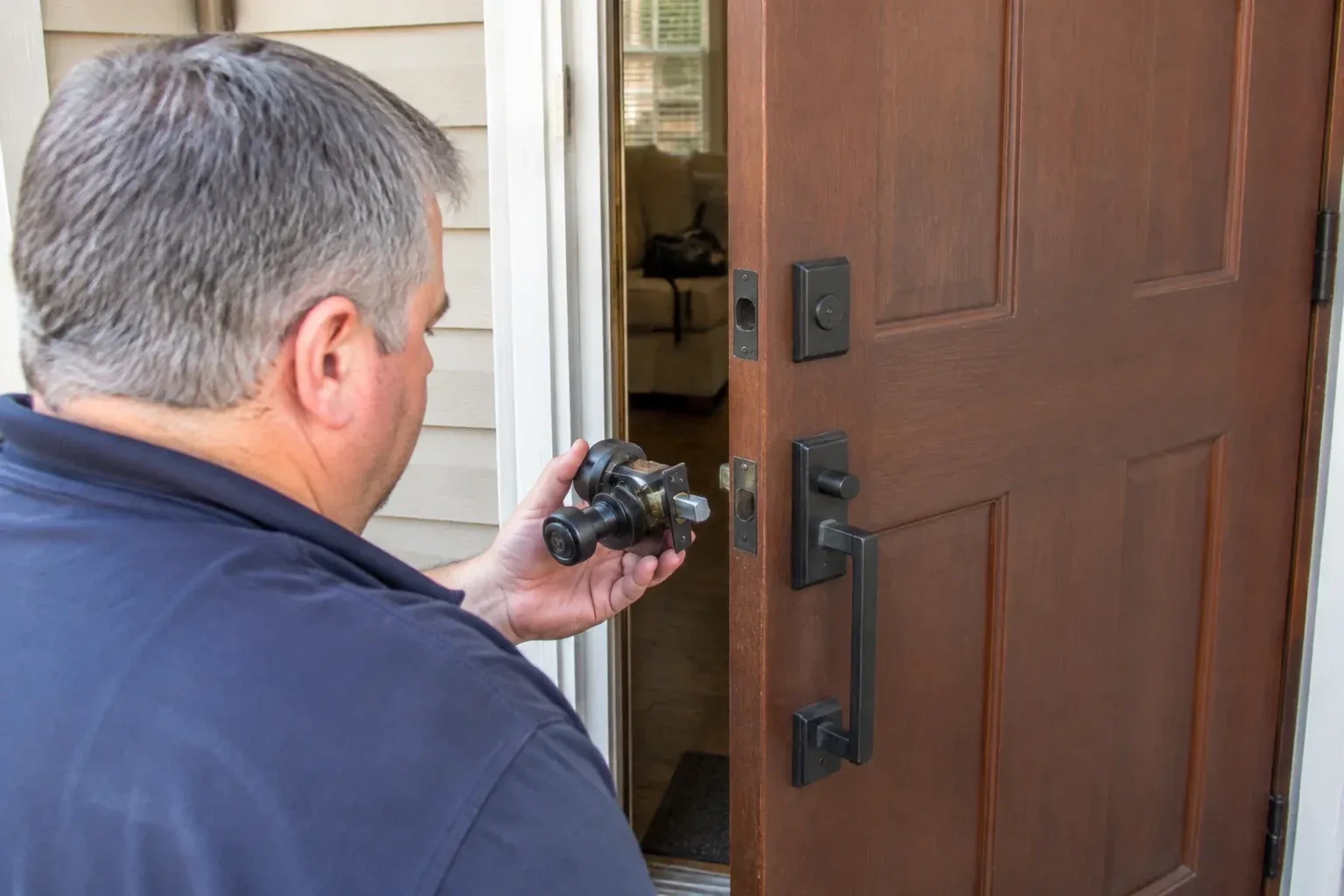
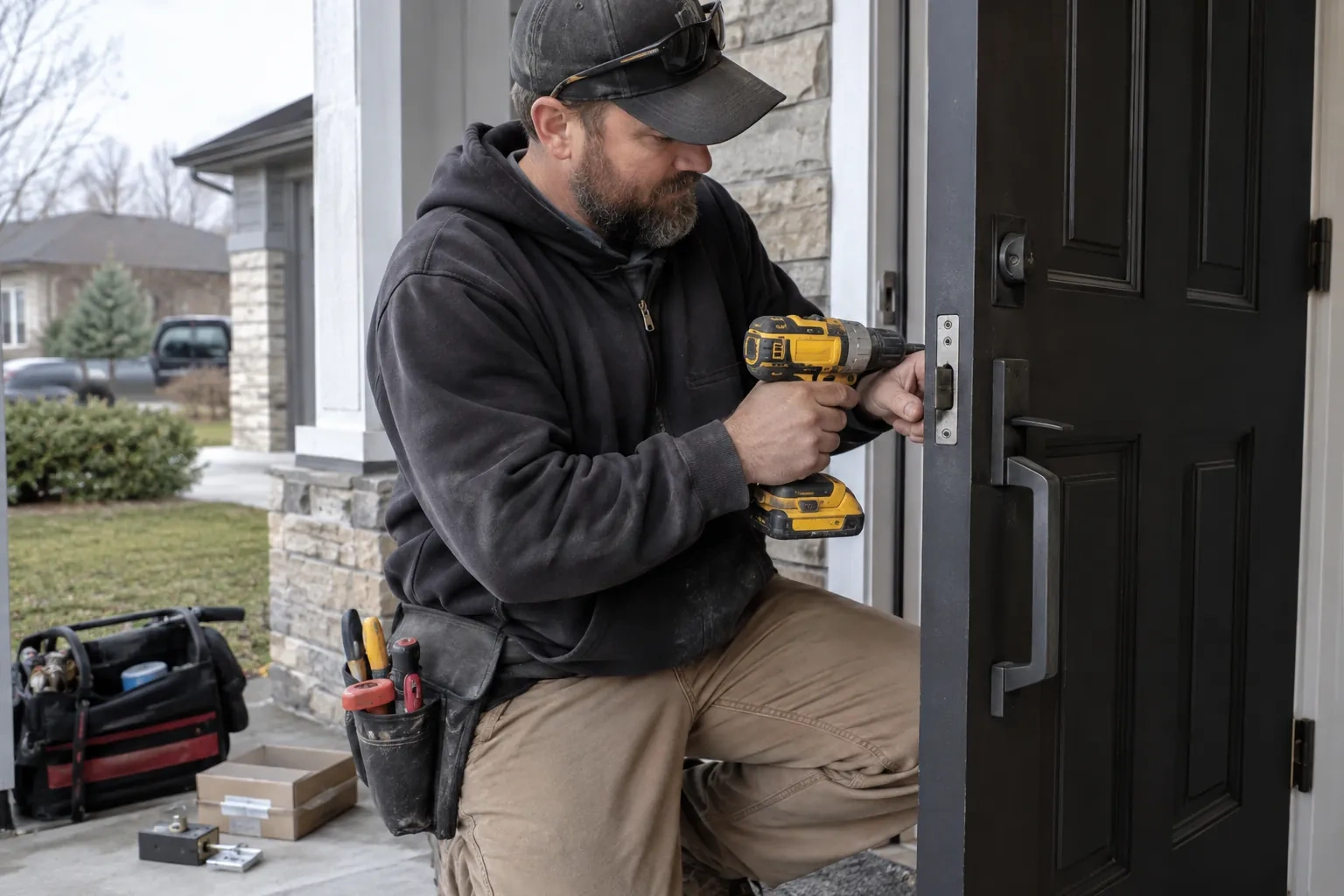
- You stepped out to grab the recycling bin and the door swung shut behind you.Home Lockout Service
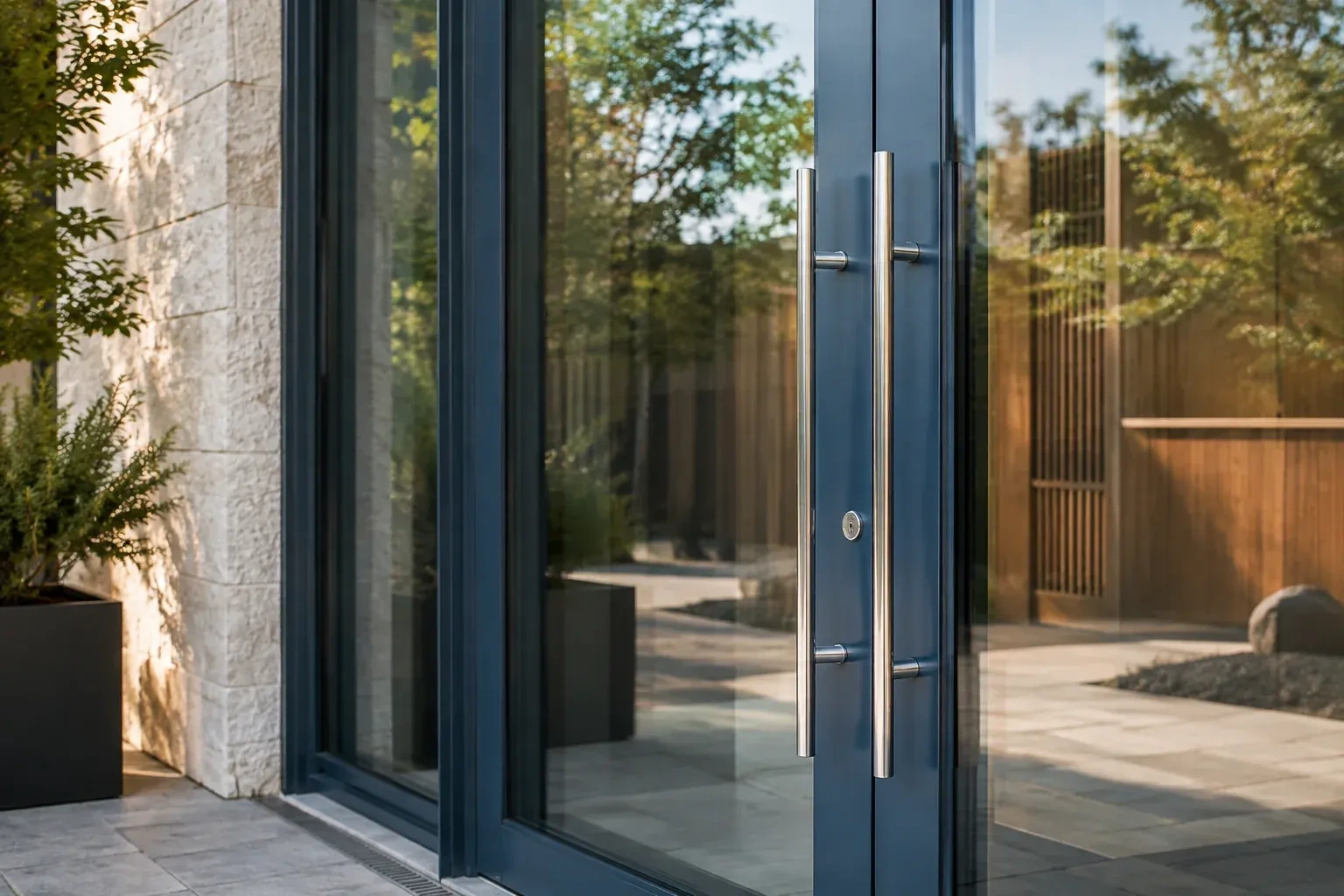
- It is ten to nine, three staff are on the sidewalk with their coffees, and the key that has opened the glass front door for six years will not turn.Business Lockout Service
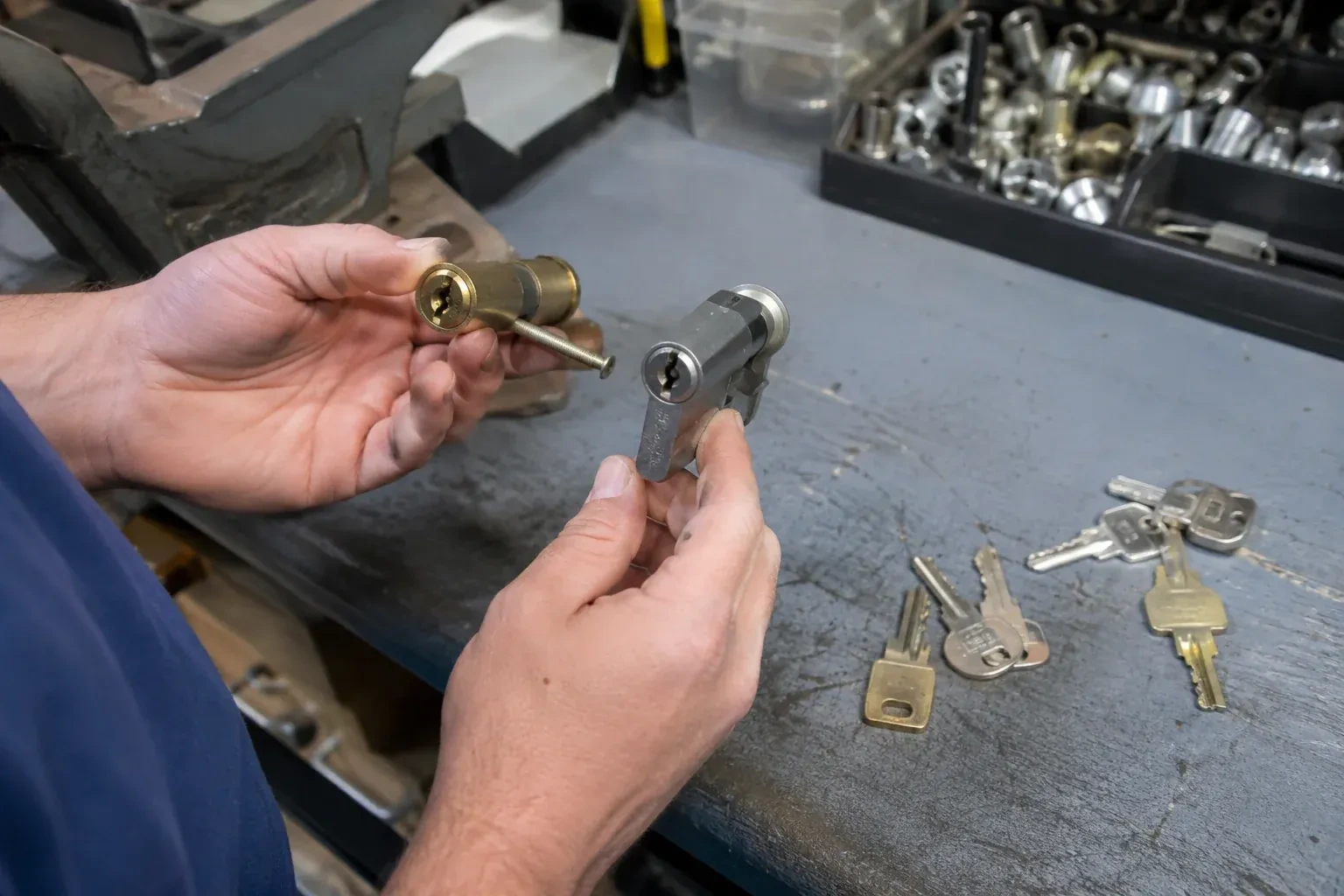
- That key had been bending a little for years, and you kept straightening it.Broken Key Extraction
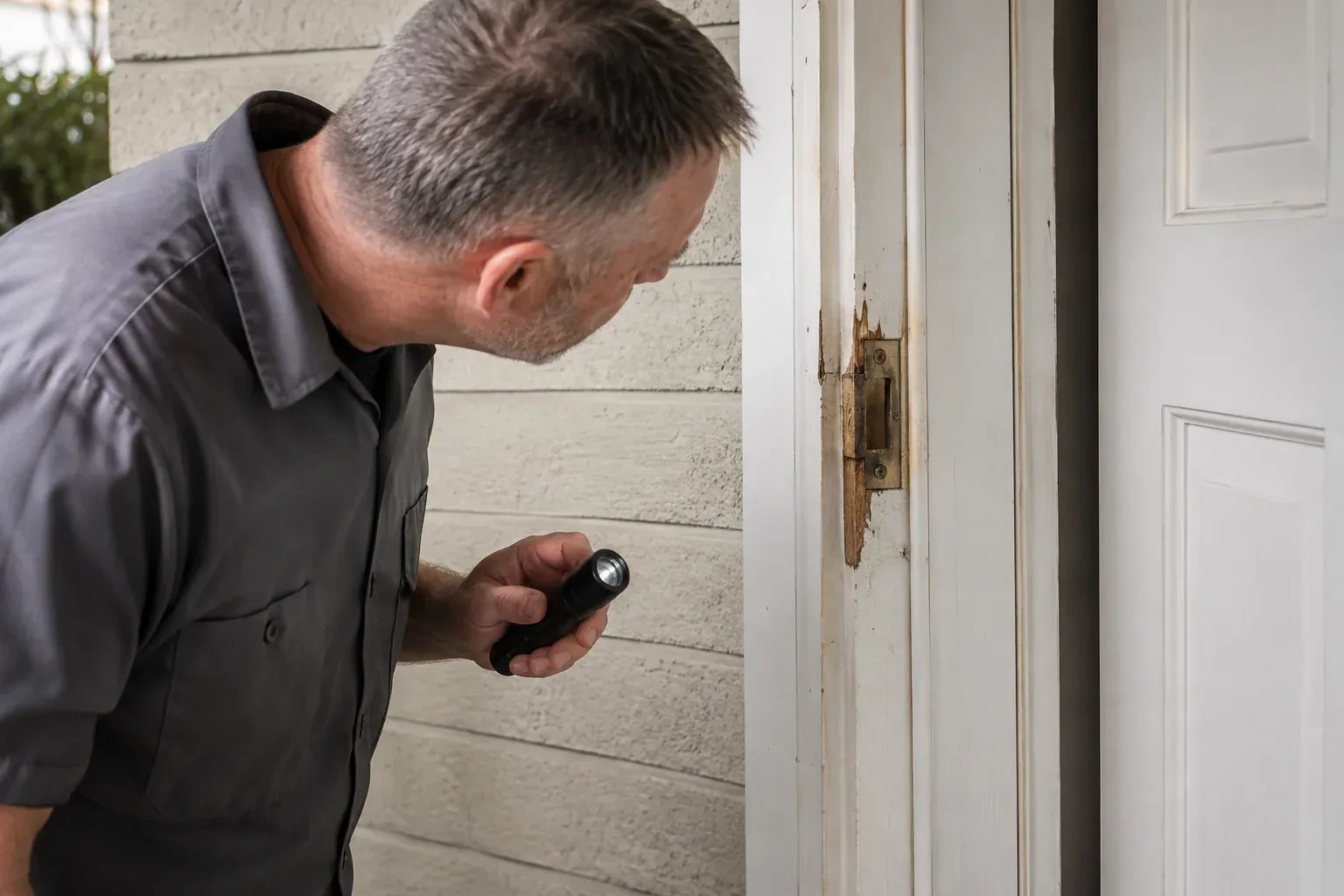
- Police have come and gone, the occurrence number is on a sticky note, and you are standing in a cold hallway looking at a splintered frame, wondering how the house gets locked before everyone tries to sleep.Break-In Damage Lock Repair
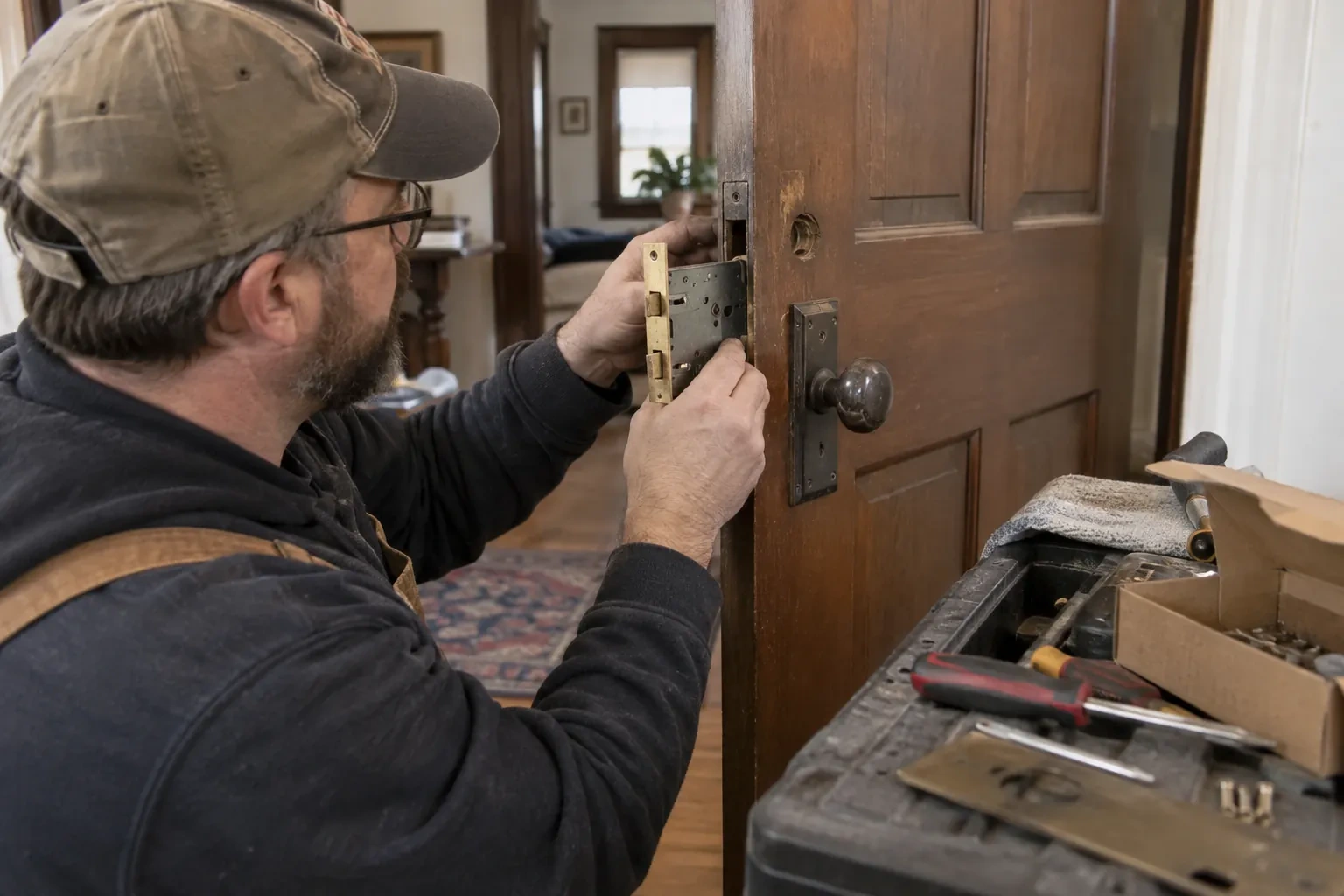
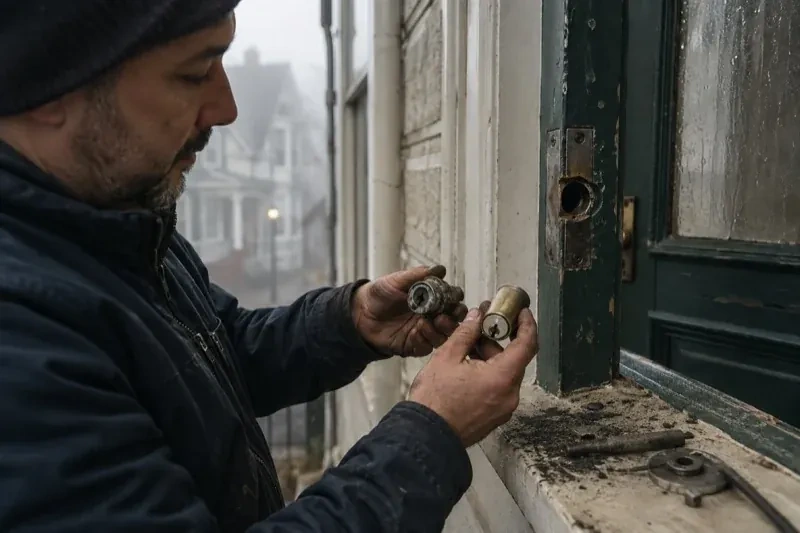
- The old mortise lock on the front door of the house turns the key halfway and stops with a dull clunk.Seized & Jammed Lock Opening
- You let a part-time employee go on Friday.Lost Keys — Same-Visit Rekey
Lockout Services
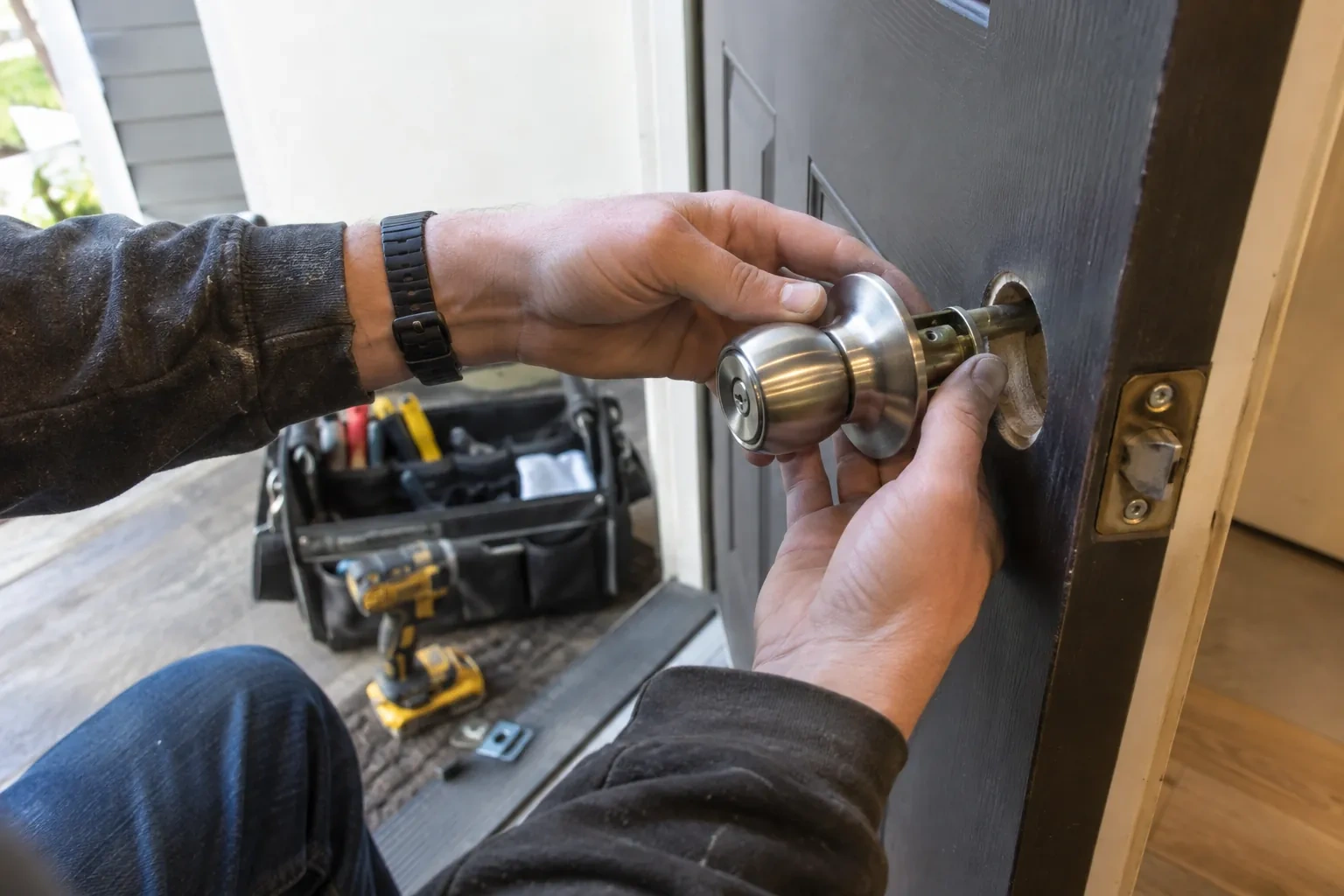
Locked out of a home or business, a key snapped in the lock or a lock that has seized: entry with the least damage, then the door secured again.
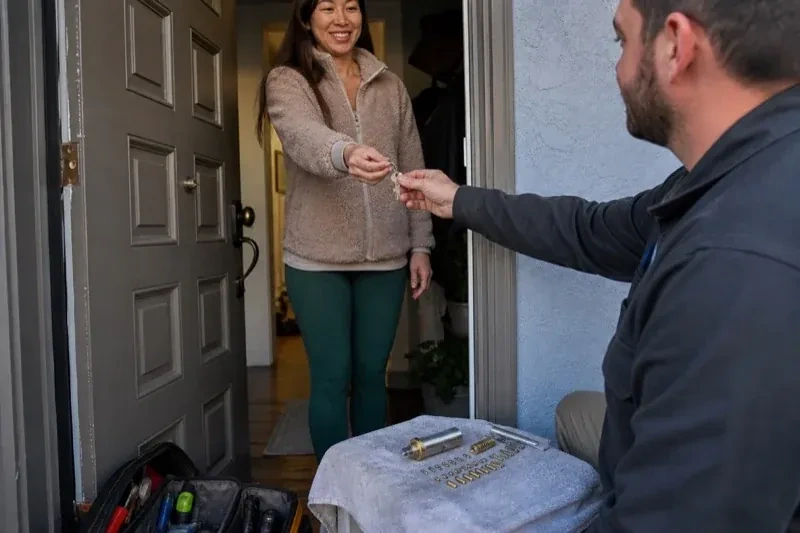
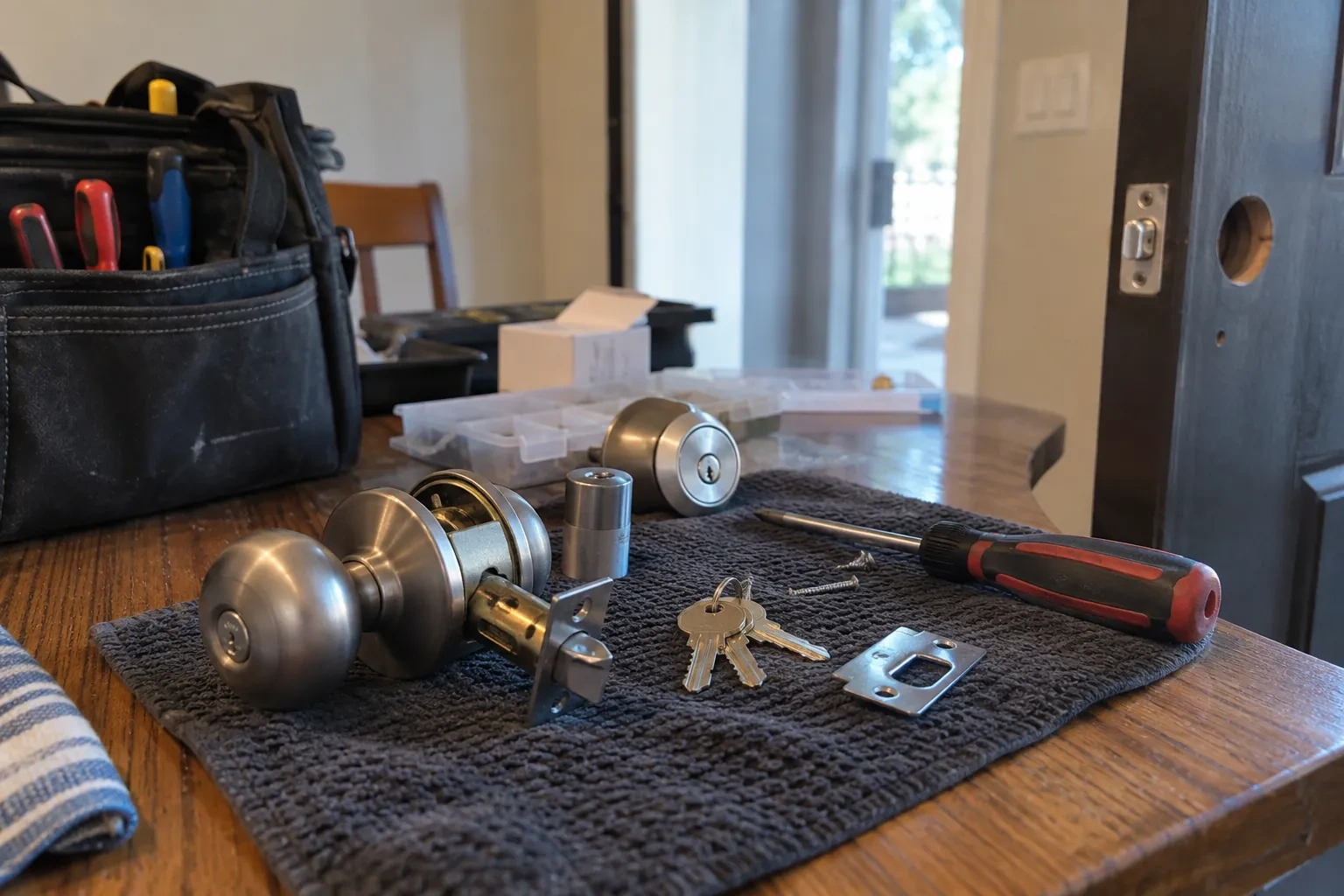
Home Lockout Service
Reading the lock itself
Every lock announces what it is to someone who knows where to look. The shape of the keyway, the maker's mark on the face, the presence of a thumb-turn or a second keyed side, and whether the door has a separate deadbolt above a latching knob all tell the locksmith which family of hardware they are dealing with. A residential pin-tumbler cylinder, a mortise case in a century home, a restricted keyway with security pins and a keypad lock with a hidden override each respond to different techniques.
Identifying the lock correctly before touching it is what makes a clean, non-destructive opening the usual outcome.