High security · New Dundee
Safe Installation & Servicing in New Dundee
The accountant's office keeps a decade of client files in cardboard boxes because the only safe in the building is a small drawer safe meant for a laptop, nowhere near large enough for binders of paper.
In plain words
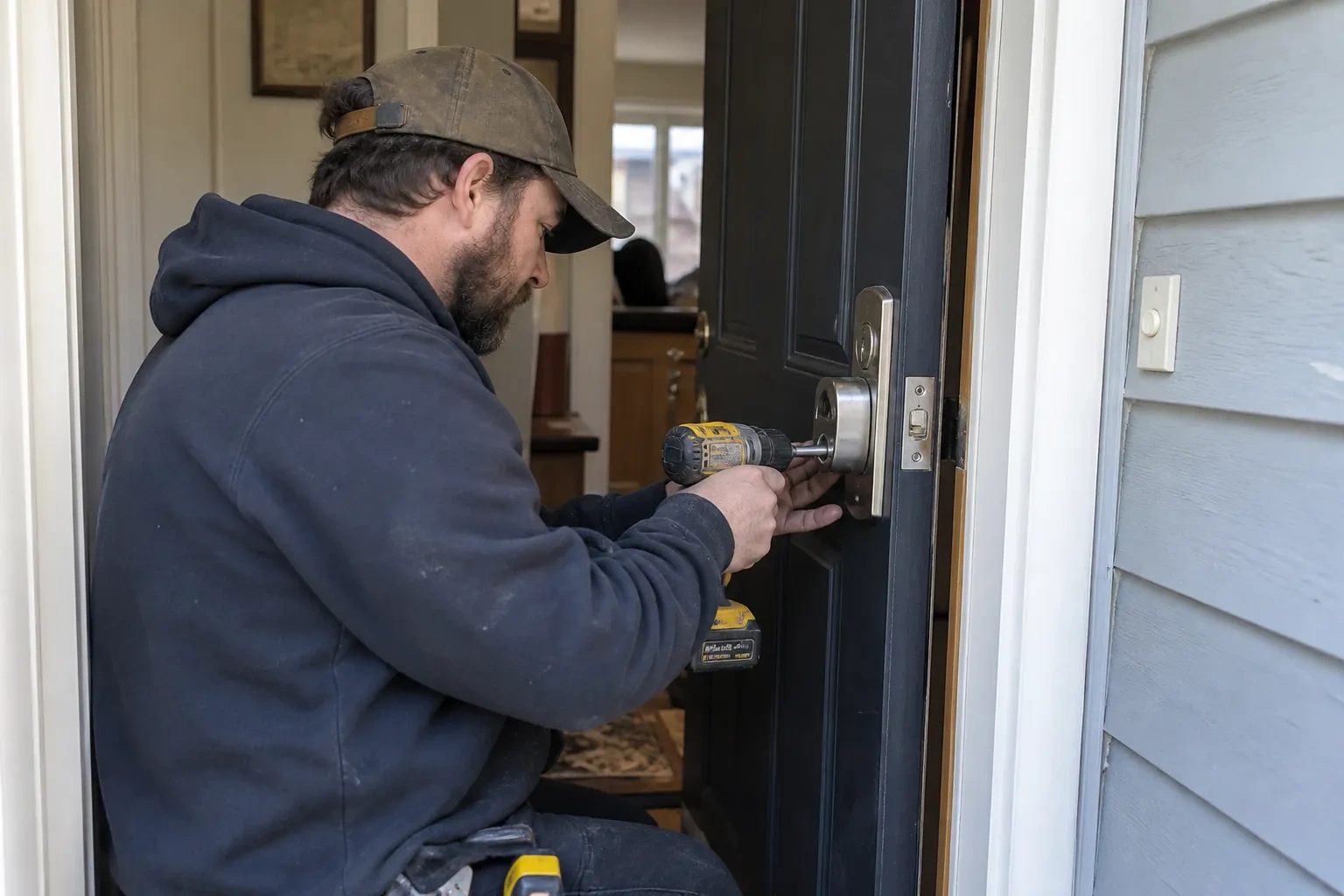
For a household bringing in its first real safe, the service covers everything between the empty spot on the floor and a working, anchored unit with a combination only the family knows. The locksmith walks through what the safe needs to hold, checks the floor or wall it will sit against, positions and levels it, and secures it with anchor bolts suited to that surface. The lock is set and cycled several times with the owner watching, so the last step of the visit is confirming, together, that it opens and closes exactly as it should.
How the visit goesBehind the filing cabinets sits a heavy floor safe nobody ever bolted down, left exactly as the last owner set it. It opens fine, but a determined pair of hands could simply tip it into a van.
Safe Installation & Servicing
How the visit goes
What the safe actually needs to hold
Before any hardware is chosen, the locksmith asks what will actually sit inside: cash from a till, jewelry, firearms, paper contracts, backup drives, or some mix of all of it. Each of those has a different enemy. Cash and jewelry are mainly at risk from tools and time, so a burglary rating matters most. Paper is mainly at risk from heat, so a fire rating matters most, and digital media needs a much lower internal temperature than paper to survive the same fire. Answering this question first is what keeps the rest of the visit from guessing.
Anchoring into a concrete floor
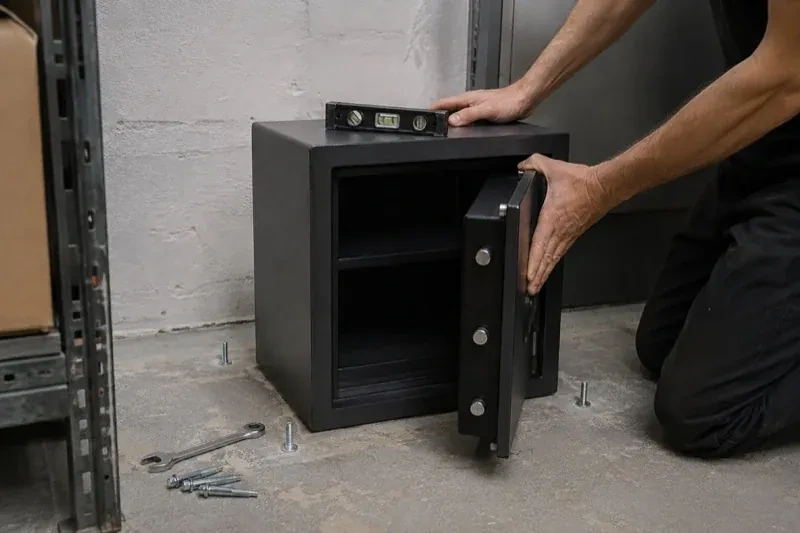
On a concrete floor, holes are drilled through the safe's pre-cut anchor points with a hammer drill and a masonry bit sized to the anchor hardware, and the dust is cleared from each hole so the anchor seats fully rather than on loose grit. Concrete anchor bolts are driven in and torqued to the hardware manufacturer's specification, tight enough to resist prying but not so tight that the anchor or the safe's own steel is stressed. The safe is tested afterward by hand to confirm it does not rock or shift.
Paperwork worth keeping somewhere other than inside the safe
The model number, the burglary and fire ratings, and a note of how and where the unit was anchored are all details worth keeping on file, ideally somewhere other than locked inside the safe itself. An insurer asking about coverage for cash or valuables will often want exactly this information, and having it ready saves a search through old boxes later. A few photographs taken during installation, showing the anchoring and the rating label, cover most of what gets asked for afterward.
Safe Installation & Servicing
In the van
Desiccant packets
Rated safe (burglary and fire)
Concrete anchor bolts
Mounting plate
Bolt-work lubricant
Safe Installation & Servicing
What affects the quote
Battery and accessory needs
An electronic lock needs a battery of the correct type on hand, and a fire-rated unit benefits from desiccant supplied at installation, both small additions to the visit.
Number of safes handled in one visit
A single unit is the simplest visit, while a property with a till safe, a document safe, and a smaller personal safe in another room involves more total work in one call-out.
Floor or wall construction
Solid concrete, a wood subfloor reaching into joists, and tile each call for a different anchoring approach and different hardware, and the substrate is confirmed before any drilling begins.
What to have ready
- Does an insurer or head office require a specific rating?
- When were the batteries last changed, if it is electronic?
- Is this a new safe or an existing one needing service?
Safe Installation & Servicing: questions
QuestionsHow often does the battery need replacing on an electronic lock?
Most electronic locks give a low-battery warning, usually a beep or flashing light, well before they actually stop working, and replacing the battery within that same week is the safer habit rather than waiting. Depending on how often the safe is opened, a battery commonly lasts somewhere between one and several years, and keeping a spare of the correct type near the safe avoids a search once the warning starts.
How do I prepare the room before a servicing visit?
Clearing a working space in front of the safe, moving anything stacked against or on top of it, and having a rough idea of when it was last serviced all help the visit start smoothly. If the combination or code is still known, having it on hand avoids needing to open the unit by other means first. Nothing more elaborate than that is generally needed beforehand.
What is the difference between a mechanical dial lock and an electronic keypad?
A mechanical dial has no battery and is set by hand to a private combination, turning through a sequence to release the bolt; it never runs out of power but takes a little practice to open. An electronic keypad accepts a numeric code and can support several separate codes for different people, but it depends on a battery that eventually needs replacing. Many owners choose based on how many people need access rather than one being simply superior to the other.