
Commercial · New Dundee
Access Control Installation in New Dundee
Head office wants a record of who opens the branch and when, tied to an actual name rather than a shared code scrawled on a sticky note taped under the till.
In plain words
Where a building has more than one controlled door, a networked system lets each opening run its own schedule: the front office unlocked for regular hours, a stockroom open to two people only, a loading dock released for a delivery window, with the management software tying those schedules together. A shared entrance in a multi-tenant building can carry each tenant's own credentials without giving one business access to another's suite, and the same platform keeps a combined log, so a manager checking last night's entries never has to walk the building door by door.
How the visit goesAnother employee left and the keys never came back. You changed the locks again, cut copies for everyone who stayed, and paid for a job that repeats itself the next time someone quits, taking a working key out the door with them.
Access Control Installation
How the visit goes
Reading the door and the frame
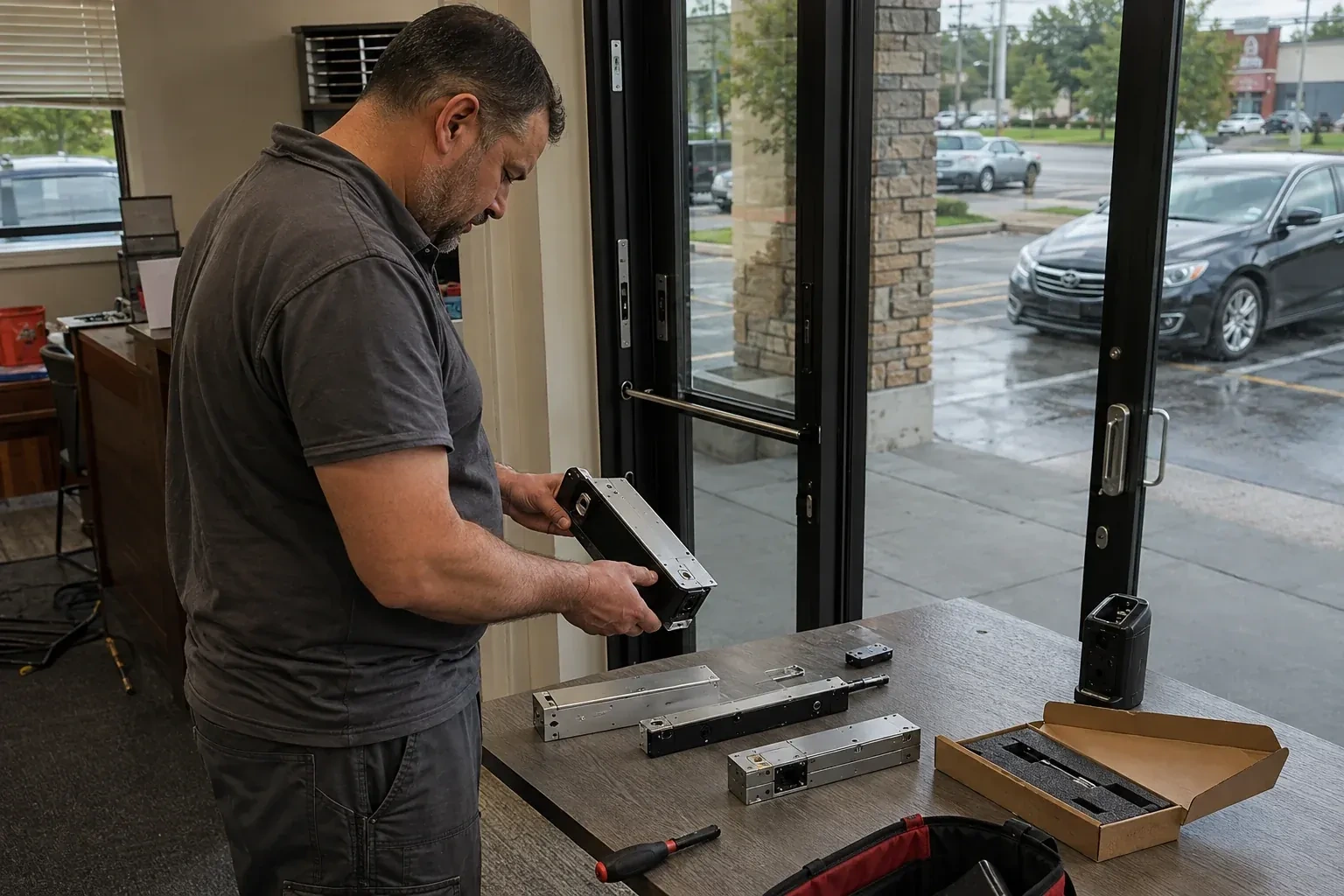
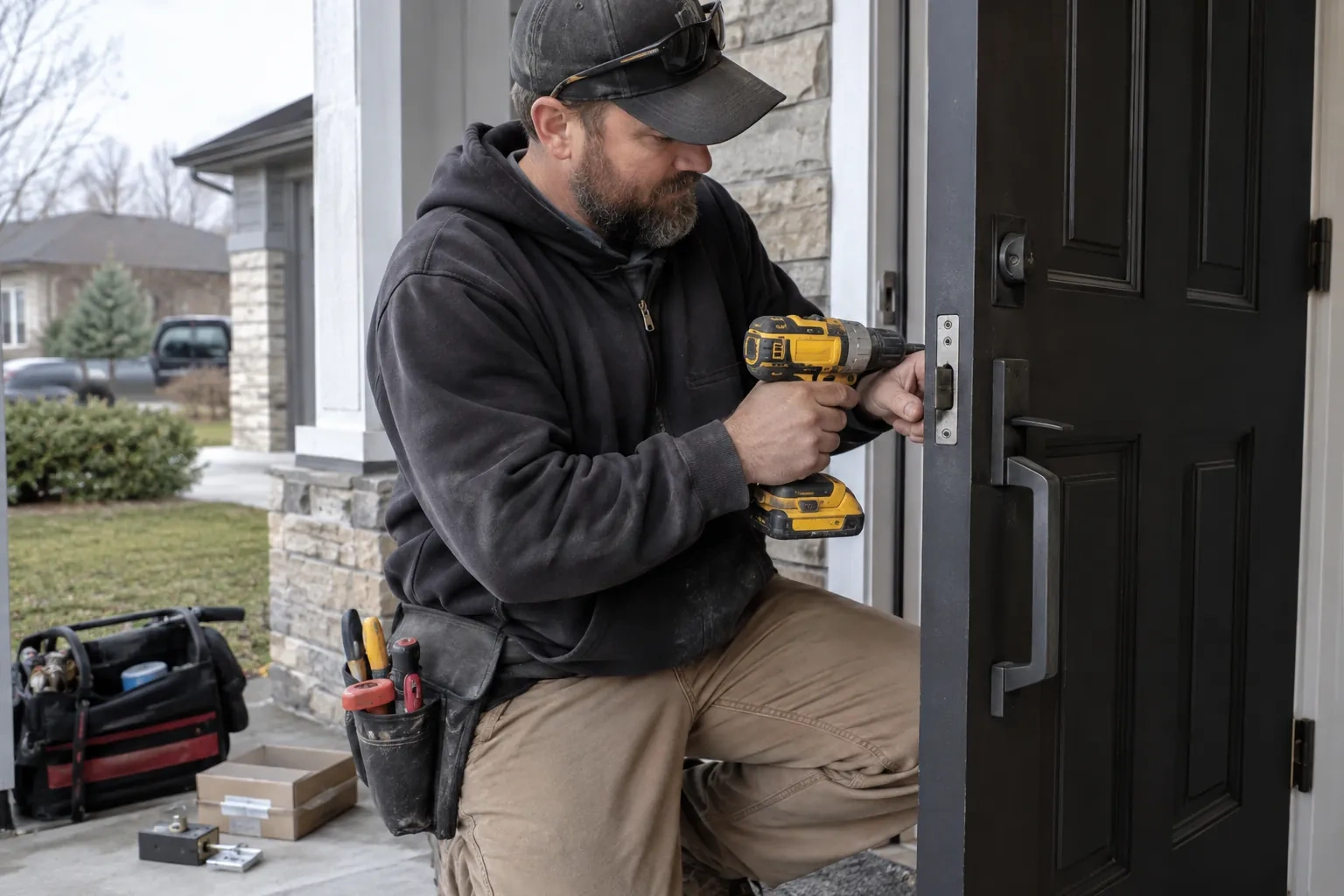
Every opening gets a physical look before it gets any wiring. The locksmith checks what the door and frame are made of, which way the door swings, whether an electric strike will seat cleanly in the existing frame, and whether the door sits on a fire separation, which changes what can be added to it. A hollow metal frame, a wood door, and an aluminum storefront door each take different hardware, and a door that already sits loosely in its frame is noted before an electric strike or a magnetic lock is chosen for it, since alignment decides how reliably the lock releases.
Commissioning day: training the people who will run it
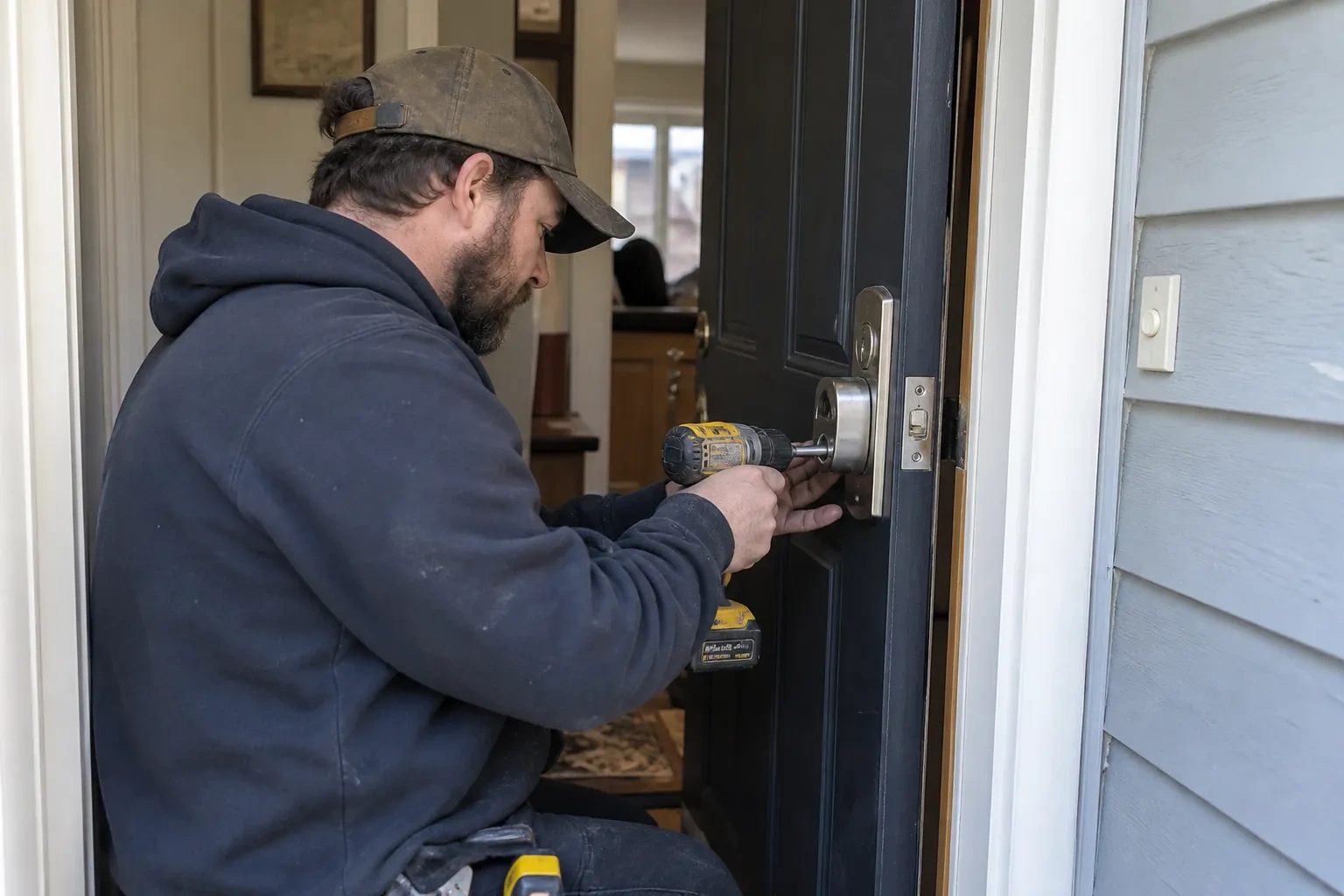
The last step is not technical: it is sitting down with whoever will administer the system and walking through adding a person, revoking a lost card, pulling an entry log for a specific door and date, and changing a schedule for an upcoming holiday or event. The locksmith answers questions on the spot rather than leaving a manual to be read later, confirms the administrator account works with full access, and leaves contact information for anything that comes up once the system has settled into daily use.
Reading the entry log
Every controller keeps a record of which credential was presented at which door and when, and, where a door position switch is fitted, whether the door actually opened; that log is available to the administrator whenever it is needed, not only after something has gone wrong. Pulling a recent day's entries for the stockroom, checking whether the loading dock was opened outside its scheduled window, or confirming a contractor's credential was only used on the days they were on site are ordinary lookups rather than a special request, though the record shows the credential used rather than proof of who held it. Reviewing the log occasionally, rather than only when there is a problem, is a genuinely useful habit.
Access Control Installation
In the van
Access control panel
Request-to-exit devices
Low-voltage cable
Card and fob readers
Credential cards and fobs
Access Control Installation
What affects the quote
How much door and frame preparation is needed
A frame that already suits an electric strike needs less preparation than one that must be mortised, reinforced, or matched with a different strike body, and an older or non-standard door can add its own preparation.
Power supply and backup sizing
A power supply and battery backup have to be sized to the number of doors and locks they support, and a building with several openings on one controller needs a larger supply than a single standalone unit.
How many credentials and what type
Cards, fobs, keypad codes and mobile credentials each involve different issuing steps, and a system enrolling a handful of managers is a shorter task than one enrolling an entire staff across several shifts.
What to have ready
- Is this a single business, or a shared, multi-tenant building?
- Roughly how many people will need a credential to enter?
- Do you already have an alarm or camera system in place?
Access Control Installation: questions
QuestionsWhat happens to the doors if the power goes out?
Outage behaviour depends on how that opening was built: battery backup can be sized to carry the reader, the lock and the controller through a typical outage, so a brief power loss need not lock anyone out or, on a fire-alarm-tied opening, lock anyone in, but that backup and any mechanical key override are specified per opening rather than assumed for every door. Fail-safe hardware unlocks once power has been out longer than the backup lasts; fail-secure hardware stays locked, and what opens it depends on the hardware chosen.
What credential types are available: cards, codes, fobs, phones?
A proximity card or fob held near a reader, a code typed on a keypad, or a mobile credential read from a phone are all in common use, and a single building can mix them by door or by person. Cards and fobs are simple to issue and switch off individually; a keypad needs no card to lose but a shared code eventually gets passed around; a mobile credential ties entry to a device the person already carries.
Do we still need physical keys after this is installed?
On hardware that supports it, yes: a conventional cylinder sits alongside the electronic reader, cut to work like any other key on the property, though some access-controlled locks are built without one. Where it is fitted, it is meant as a fallback rather than the everyday way in: if a battery dies, a controller faults, or the power stays out longer than the backup lasts, the door still opens by key while the issue is sorted out.
Related services
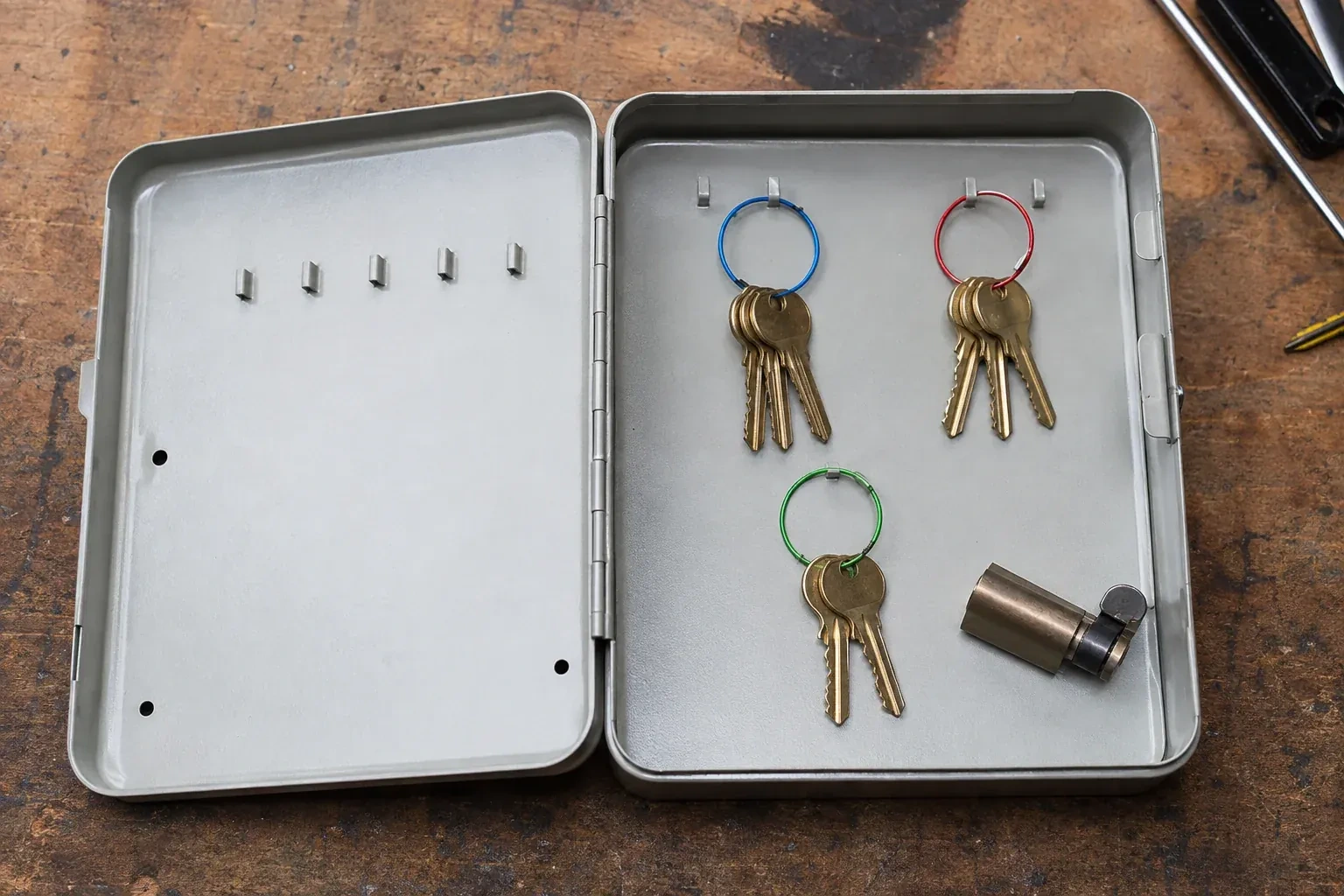
- Master Key System DesignAfter a busy shift the manager counts the keys coming back in and loses track of who still has one.
- Panic & Exit HardwareThe fire inspector's note is blunt: the banquet hall's second exit still turns on a deadbolt, and the crowd it is rated to hold needs a door that opens under one motion, no key involved.
- Commercial-Grade Lock ReplacementA new tenant moved into the unit next door, and the property manager just found three different cylinders on three doors, none of them cut to the same key.