Commercial · New Hamburg
Access Control Installation in New Hamburg
Head office wants a record of who opens the branch and when, tied to an actual name rather than a shared code scrawled on a sticky note taped under the till.
In plain words
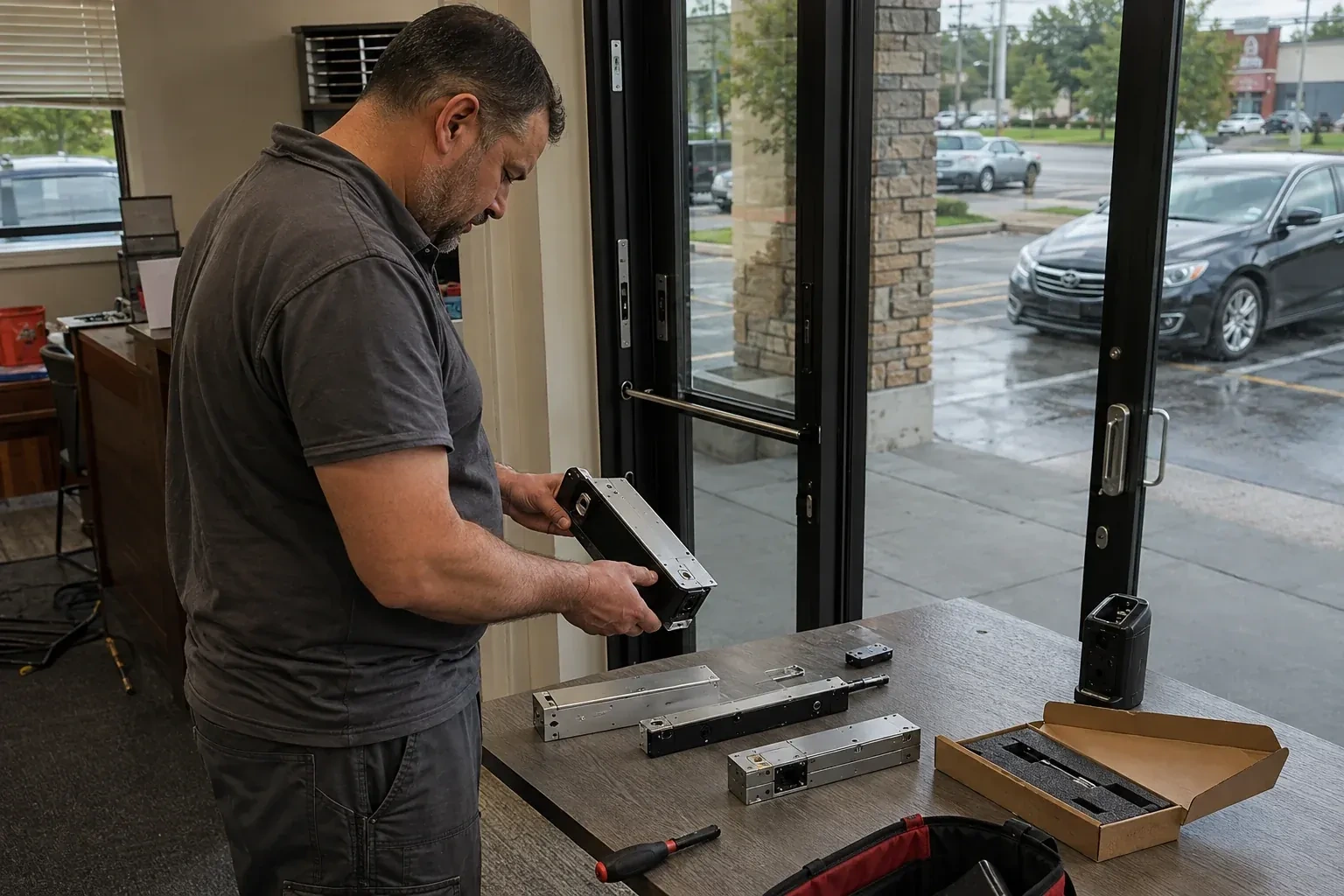
An exit door does not stop being an exit once it is wired into an access control system. A magnetic lock on that route is paired with a request-to-exit device so anyone leaving is never held up looking for a code, and it is tied into the fire alarm so an alarm signal releases the door on its own. The installation is planned around the building's exits from the start rather than added around them afterward, so the system controls who comes in without complicating how people get out.
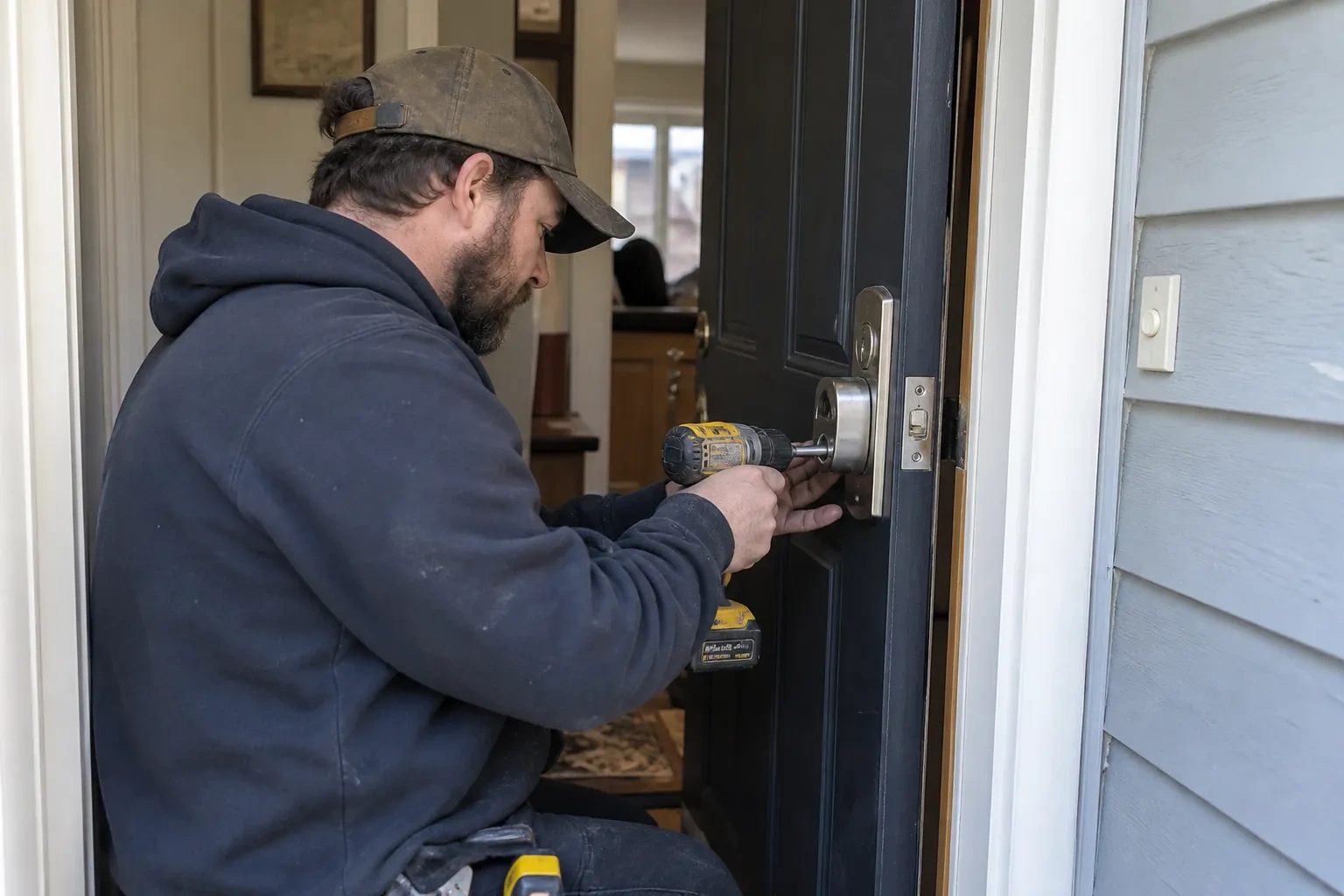
How the visit goesThe keypad on the side door has started sticking on cold mornings, codes get shared instead of reset, and half the staff still remember a code you meant to retire two hires ago.
Access Control Installation
How the visit goes
Checking the network before relying on it
A networked controller usually needs a live network connection to report events and accept schedule changes, so where that option is on the table, the survey includes a look at the building's existing network: is there a switch port near where the controller will sit, does the building's technology policy allow another device on the network, and does a networked system suit the business better than several standalone readers that need no network at all. Answering this before ordering hardware avoids discovering, midway through the job, that the simpler standalone option was the better fit all along.
Keying a mechanical override into the same system
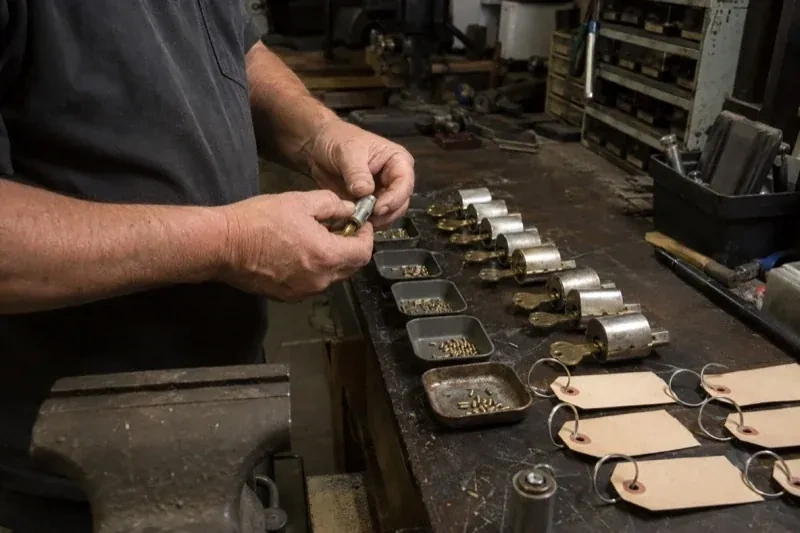
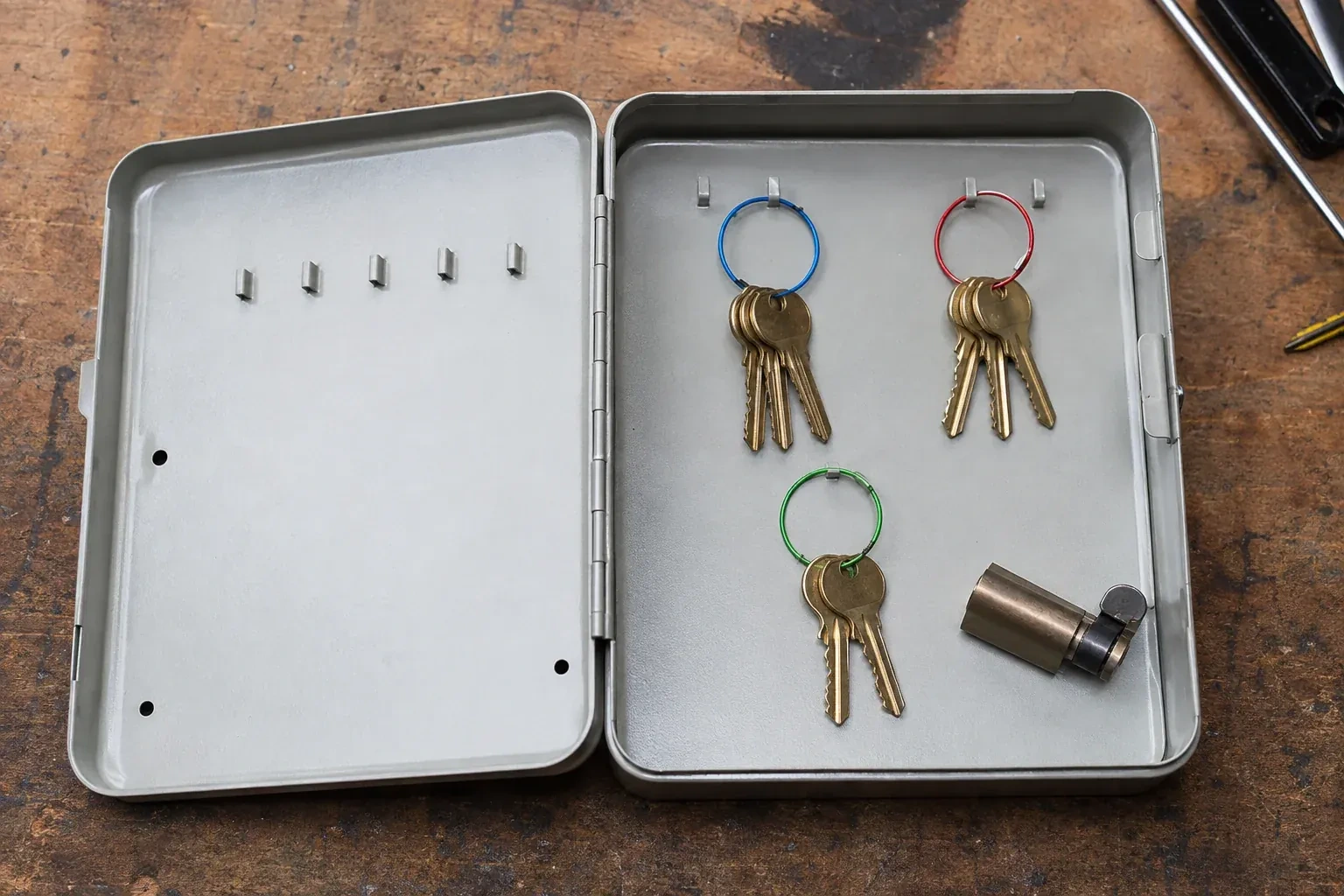
Where the selected hardware supports one, the locksmith fits a conventional cylinder alongside the electronic reader, cut to work with the rest of the building's keys rather than sitting apart as an odd one out; some access-controlled hardware is built without a key cylinder at all. On a door getting the override, the locksmith confirms it operates the latch or bolt cleanly with the electronic hardware in place, and notes who on staff will hold that key. On that door, a dead battery, a controller fault, or a power outage becomes an inconvenience rather than a locked business, since it still opens the ordinary way while the issue is sorted out.
Keeping the mechanical override where it belongs
Where a controlled door has a mechanical override, that key is worth treating with the same care as any master key: held by a named person or two, not left in a drawer everyone can reach, and used mainly as a fallback rather than a daily habit. Because that key bypasses the electronic record entirely, using it routinely quietly undoes the audit trail the system was installed to provide, on any door where one is fitted. Keeping it for genuine emergencies is what keeps the electronic system the normal way in, and the key the backup it was meant to be.
Access Control Installation
In the van
Access control panel
Request-to-exit devices
Low-voltage cable
Card and fob readers
Credential cards and fobs
Access Control Installation
What affects the quote
How many credentials and what type
Cards, fobs, keypad codes and mobile credentials each involve different issuing steps, and a system enrolling a handful of managers is a shorter task than one enrolling an entire staff across several shifts.
Coordinating a shared or multi-tenant entrance
A shared lobby or parking entrance in a multi-tenant building needs agreement between the property manager and each tenant on which credentials belong where, and that coordination adds time beyond a single business's own doors.
How many schedules and access levels are needed
A building with one schedule for everyone is quicker to configure than one splitting doors, hours and roles into several access levels, since each combination has to be set up and then tested on its own.
What to have ready
- Do you already have an alarm or camera system in place?
- Which doors do you want to control with the new system?
- Is there an existing keypad or card system on any door now?
Access Control Installation: questions
QuestionsWhat happens to the doors if the power goes out?
Outage behaviour depends on how that opening was built: battery backup can be sized to carry the reader, the lock and the controller through a typical outage, so a brief power loss need not lock anyone out or, on a fire-alarm-tied opening, lock anyone in, but that backup and any mechanical key override are specified per opening rather than assumed for every door. Fail-safe hardware unlocks once power has been out longer than the backup lasts; fail-secure hardware stays locked, and what opens it depends on the hardware chosen.
What credential types are available: cards, codes, fobs, phones?
A proximity card or fob held near a reader, a code typed on a keypad, or a mobile credential read from a phone are all in common use, and a single building can mix them by door or by person. Cards and fobs are simple to issue and switch off individually; a keypad needs no card to lose but a shared code eventually gets passed around; a mobile credential ties entry to a device the person already carries.
Do we still need physical keys after this is installed?
On hardware that supports it, yes: a conventional cylinder sits alongside the electronic reader, cut to work like any other key on the property, though some access-controlled locks are built without one. Where it is fitted, it is meant as a fallback rather than the everyday way in: if a battery dies, a controller faults, or the power stays out longer than the backup lasts, the door still opens by key while the issue is sorted out.
Related services
- Master Key System DesignAfter a busy shift the manager counts the keys coming back in and loses track of who still has one.
- Panic & Exit HardwareThe fire inspector's note is blunt: the banquet hall's second exit still turns on a deadbolt, and the crowd it is rated to hold needs a door that opens under one motion, no key involved.
- Commercial-Grade Lock ReplacementA new tenant moved into the unit next door, and the property manager just found three different cylinders on three doors, none of them cut to the same key.