Change or rekey · New Hamburg
Lock Rekeying in New Hamburg
The builder handed over your new home with a stack of identical keys, and you know the framing crew, the painters and the flooring installers all used a construction key during the build.
In plain words
For landlords and tenants, rekeying is the tidy way to handle a change of occupancy. A departing tenant may have copied a key or simply forgotten to return one, and a fresh pinning means the incoming tenant is the only person holding a working key. Tenancy rules in this province expect a landlord who changes locks to give the tenant a replacement key and a tenant to have the landlord's consent before changing them, so a locksmith asks who is requesting the work and makes sure both sides end up with a key. A small record of the doors and key count keeps everyone clear.
How the visit goesThe whole key ring went missing somewhere between the grocery store and the bus. You got back in with the spare, but a set of keys is out there, and you would sleep better knowing they open nothing.
Inside the lock
What a rekey changes
01
The lock you already have
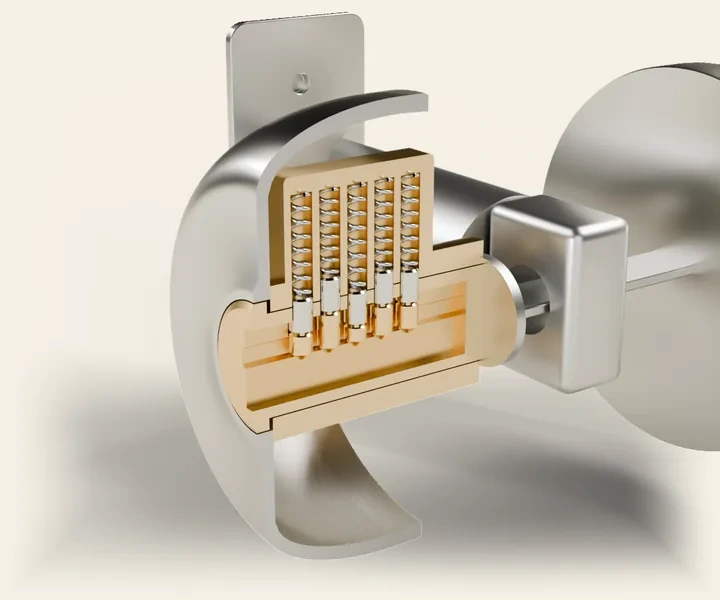
02
Inside the cylinder
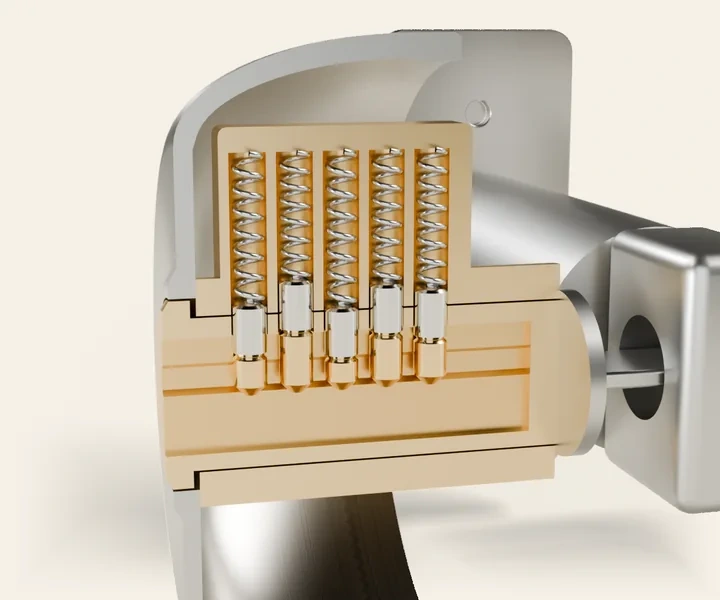
03
Pins, springs and the shear line
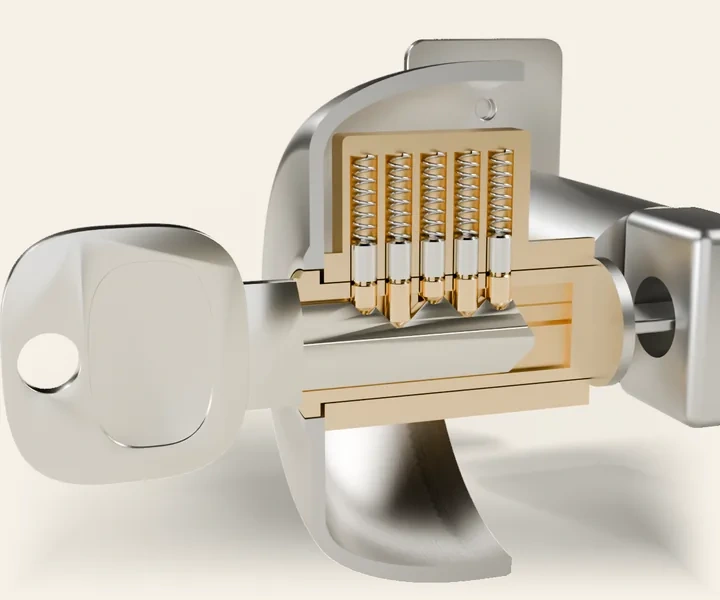
04
A new key, new pins
Lock Rekeying
How the visit goes
Who is entitled to change the locks
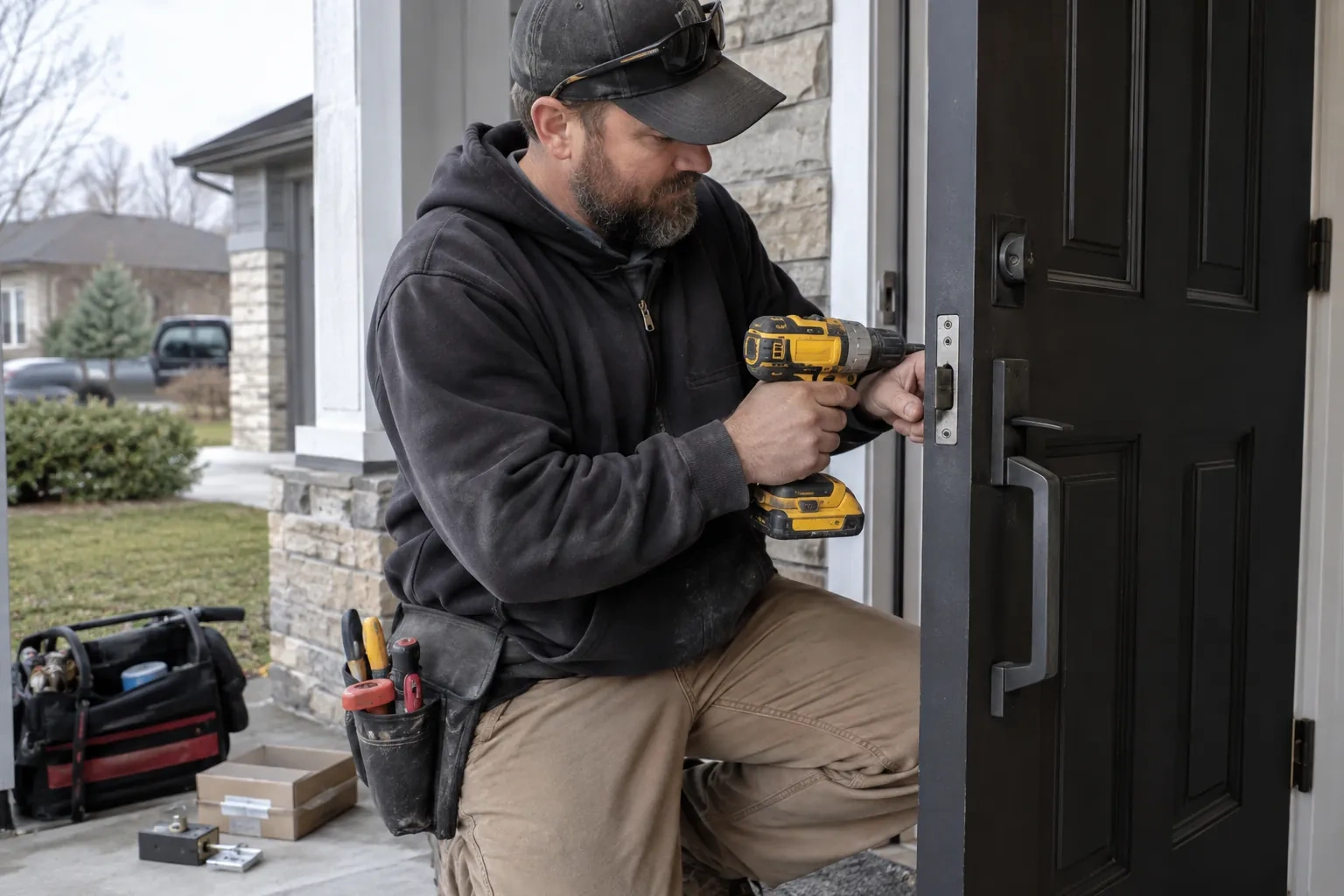
Rekeying decides who can enter a home, so the first check is about the person asking. A homeowner shows photo identification and something tying them to the property, such as a tax bill, a closing document or a utility statement. A property manager brings authorization from the owner. A tenant is asked whether the landlord has agreed to the change and will receive a copy of the new key, because tenancy rules here expect both sides to hold one. Where a unit is in a condominium, the locksmith asks whether the building has a rule about suite-door locks. None of this is an obstacle; it is the part of the job that protects the home being worked on.
Cutting the new key and gauging the depths
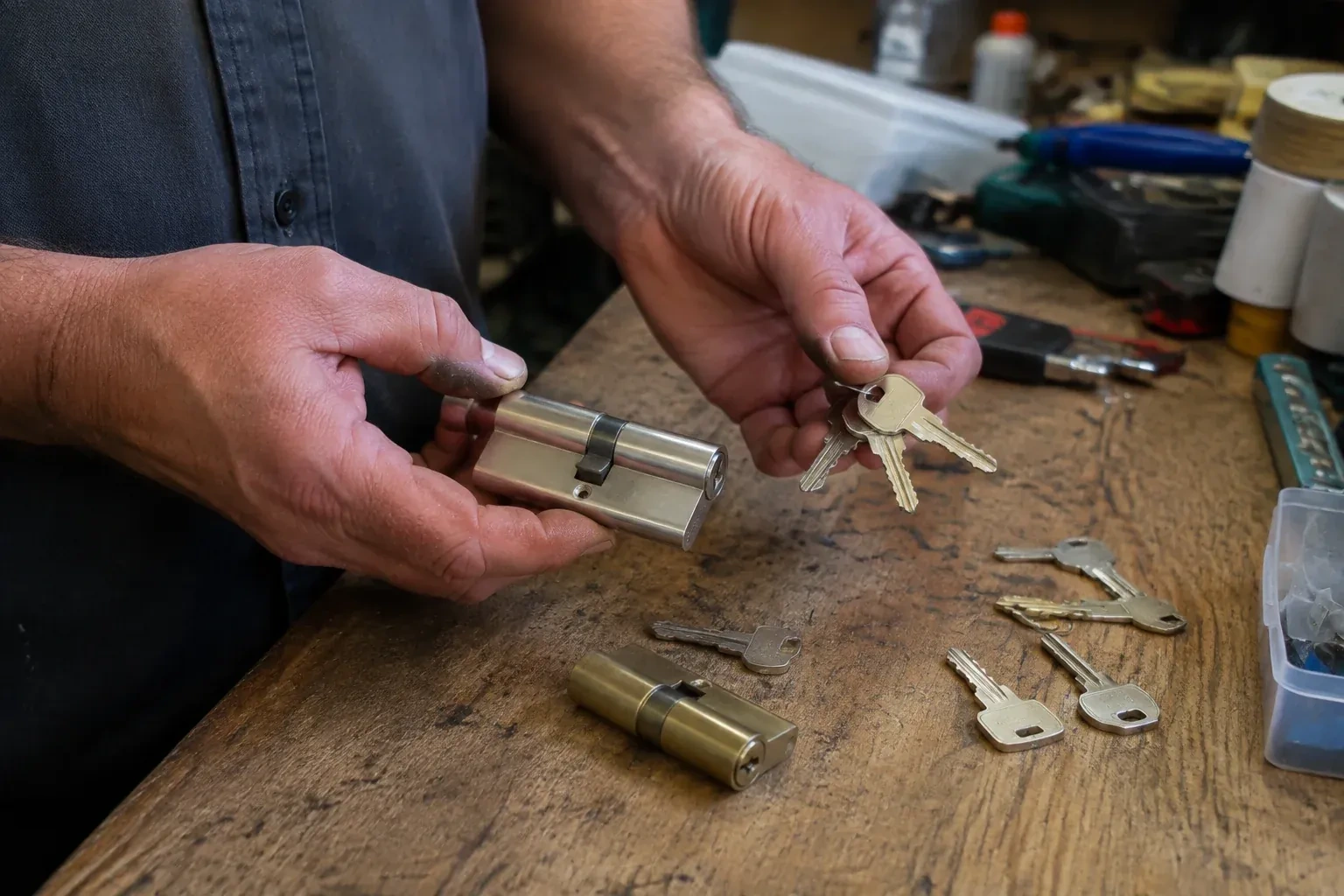
On this cylinder type, the new key comes first, then the pins to match it. The locksmith cuts a fresh key from a blank on a code cutter or duplicator, choosing a combination that is not close to the old one, and reads each cut with a key gauge to find its depth on the manufacturer's scale. Bottom pins of the matching lengths are picked from a graded pin kit and dropped into the plug chamber by chamber, so that when the new key is inserted every pin top sits exactly at the shear line. A key cut from a clean blank and pins matched to it by gauge is what gives a rekeyed lock that crisp, new feel.
Handing keys out with a little method
Rekeying gives you a clean start on who holds a key, and a few habits keep it clean. Give a key only to people who need one regularly, and know who they are. If a dog walker, a cleaner or a contractor needs access for a season, a lockbox with a code you can change afterwards is simpler than a key you have to ask for back. Tag spares with a colour or a number rather than the address. When a key does leave your control, a lost ring, a departing tenant, a relationship that has ended, that is the trigger to rekey again, and the next visit is simpler because the doors are already on one system.
Lock Rekeying
In the van
Key tags and keying record
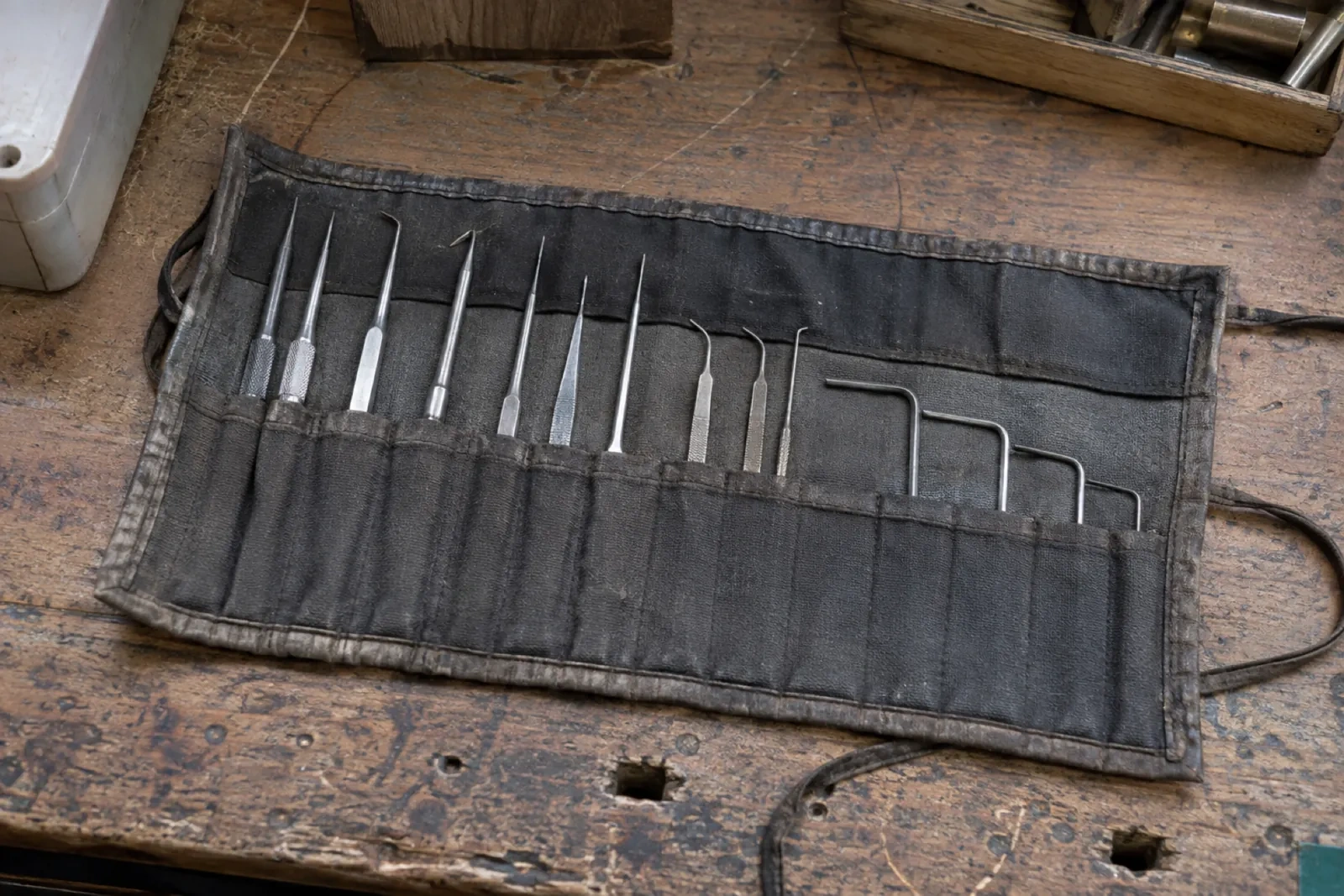
Pinning tweezers and tray
Replacement cylinder for odd keyways
Reset tool for user-rekeyable cylinders
Code cutter or key duplicator
Lock Rekeying
What affects the quote
No working key for a door
When a cylinder must be shimmed, decoded or picked open before it can be repinned because no key exists for it, that extra step is included in the quote for that door.
Access to each door being rekeyed
A rekeying visit goes smoothly when every door is reachable without delay: an empty unit, a cleared hallway, or someone available to let the locksmith into each room. Locked common areas, tenants who are out, or furniture blocking a cylinder all add time the locksmith accounts for on site.
One key group or several
Keying every door alike is the simplest plan. Setting up separate keys for a basement suite, an office or a shed adds a group to pin and label, and the quote shows that as separate work.
What to have ready
- Is there a shed, gate, mailbox or padlock you would like on the same key?
- Which doors do you want rekeyed, and have you counted the door from the garage?
- Do you own the home, rent it, or manage it for someone else?
Lock Rekeying: questions
QuestionsCan the entry door of my condo suite be rekeyed?
Often, but check with your property management first. Condominium corporations have a right to enter a unit on reasonable notice, and without notice in an emergency, and many buildings ask that suite doors stay on a system the corporation can open or that a key be lodged with management. Lobby, garage and locker-room doors belong to the corporation and are theirs to manage. A locksmith will ask about your building's rule and work within it.
I rent. Can I have my locks rekeyed?
Yes, with your landlord's agreement, which is what the tenancy rules here expect before a tenant changes a lock. Most landlords are glad to consent when a key has gone missing or a former roommate has moved out, and the locksmith will want to hear that the landlord knows and will be holding one of the new keys. The rekey itself runs the same as for an owner, and a short note listing the doors done is handy to pass to the landlord.
My house is older and has a mortise lock. Can that be rekeyed?
Yes. A mortise lock, the kind with a large case set into the edge of the door, uses a threaded cylinder held by a set screw reached from the door's edge. The cylinder unthreads, is pinned like any other and screws back in. Where a very old lock uses a bit key or a lever mechanism instead of a pin cylinder, the locksmith will explain the options, which may include fitting a modern cylinder into the existing case so the door keeps its original hardware.
Related services
- Lock Replacement & UpgradeThree teenagers, a dog walker, a cleaner and one house key that keeps going missing.
- Vintage Mortise Lock ServiceSomeone painted the door years ago without removing the hardware.
- Smart Lock InstallationYou have just taken possession of the house and the previous owners handed over a keypad deadbolt with a code nobody wrote down and an app account you cannot get into.