Lockouts · New Dundee
Business Lockout Service in New Dundee
It is ten to nine, three staff are on the sidewalk with their coffees, and the key that has opened the glass front door for six years will not turn.
In plain words
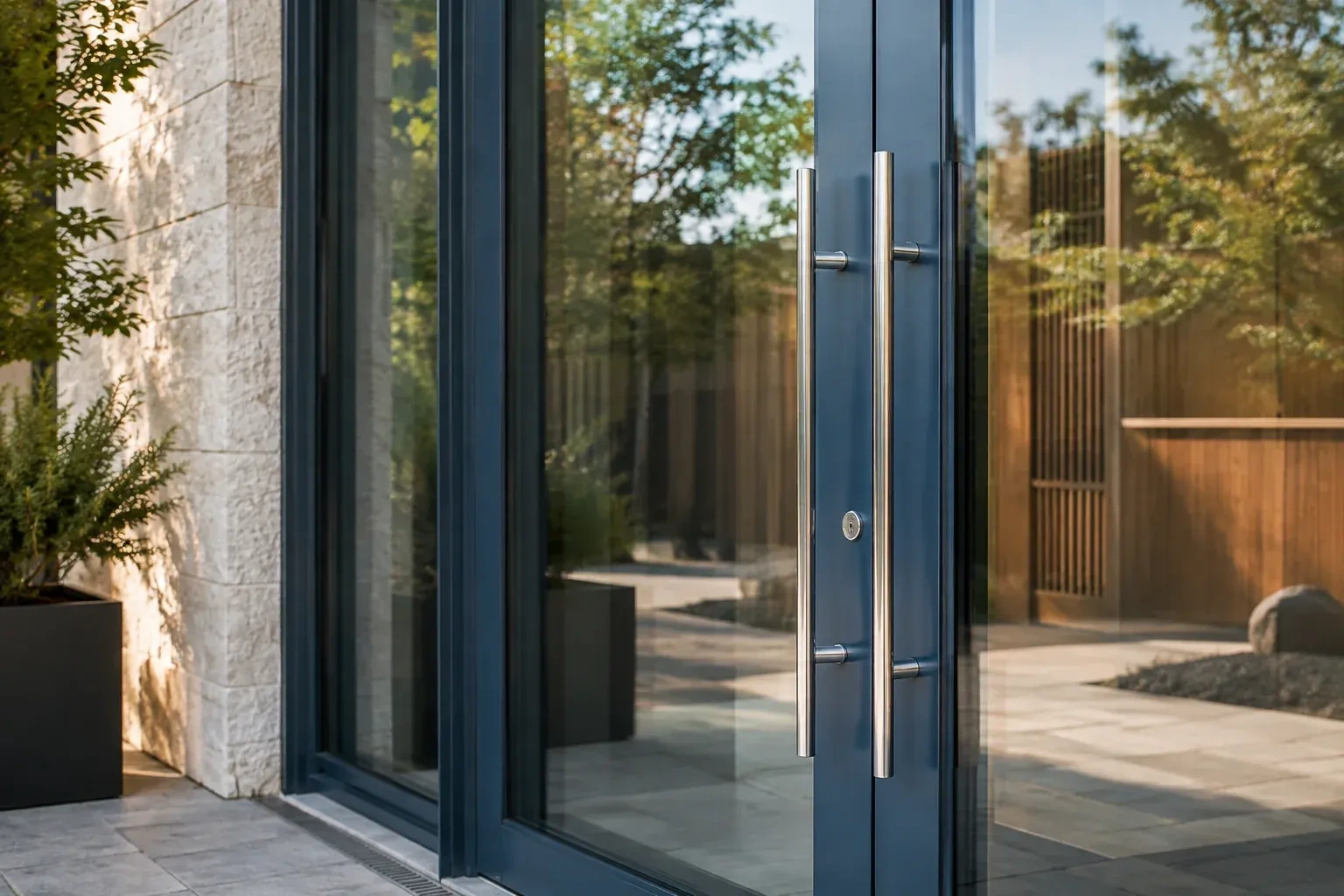
Commercial doors carry hardware that most homes never see, and reading it correctly is the first skill of a business lockout. An aluminium storefront door usually has a narrow mortise cylinder driving a hookbolt deadlock or a paddle-operated deadlatch. An office suite is more likely to have a lever lockset that stays locked from the corridor side, sometimes with a removable core. A rear door may carry an exit device with a keyed trim outside, and a steel door in a plaza often hides a full mortise lockset. Each of these opens differently, and choosing the technique that suits the mechanism is what keeps the hardware intact.
How the visit goesThe heavy glass door has been scraping the threshold for weeks. This morning the key turns, you can hear the bolt trying to move, but it is jammed hard in the strike and the door stays shut no matter how the handle is pulled.
Business Lockout Service
How the visit goes
How the door hangs and closes
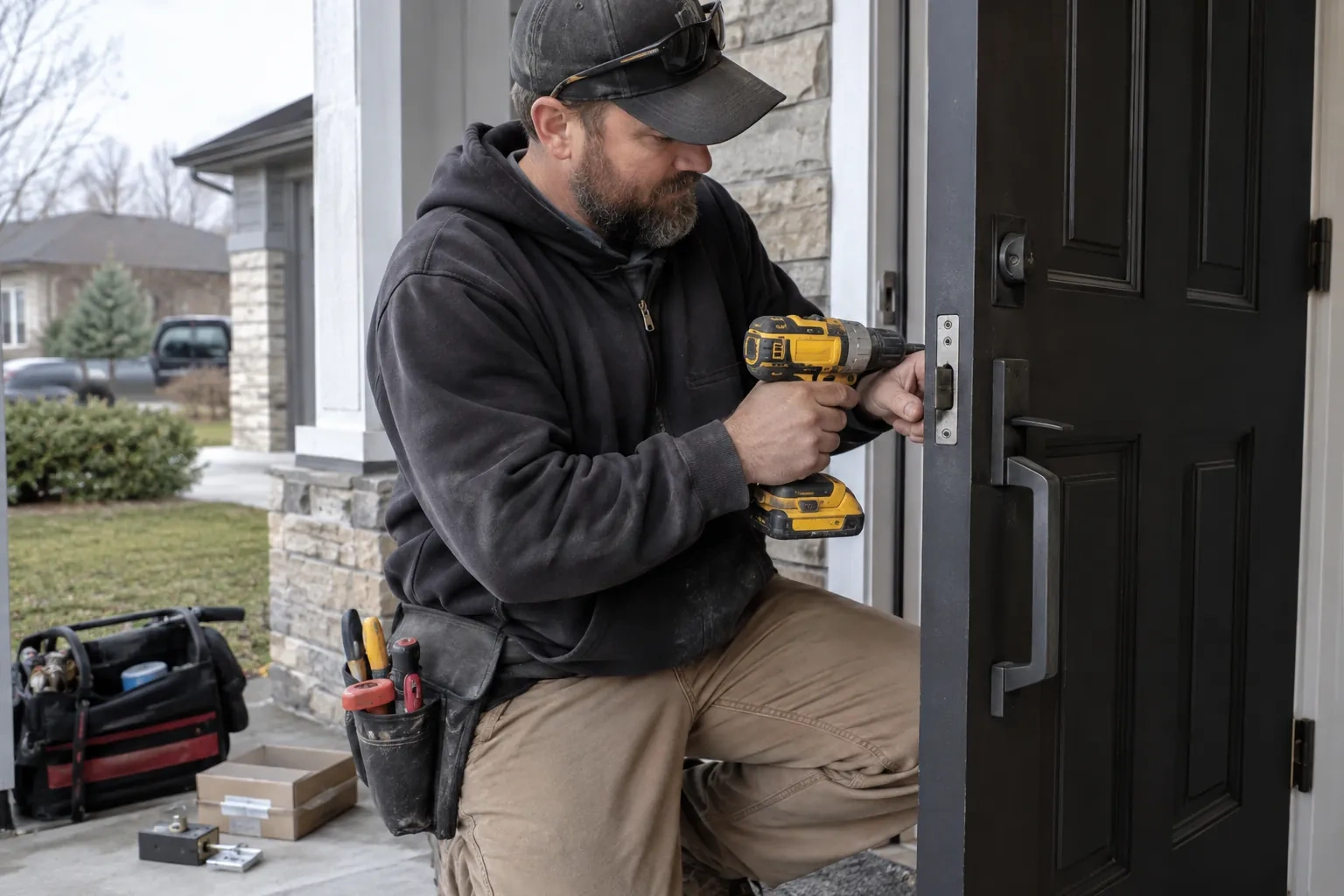
Commercial doors are heavy and busy, so the locksmith reads the door as carefully as the lock. A glass door is checked at its pivots or continuous hinge for drop and play, and at the threshold for scrape marks that show it has sagged. The closer is checked for a slow or stiff sweep that leaves the door short of the strike. The gap along the lock edge tells whether the bolt is entering its pocket square or catching its lip. A hand on the door while the key is turned often reveals that the bolt is bound rather than the cylinder failed, which changes the fix from lock work to lifting and adjusting the door.
Lever locksets and removable cores
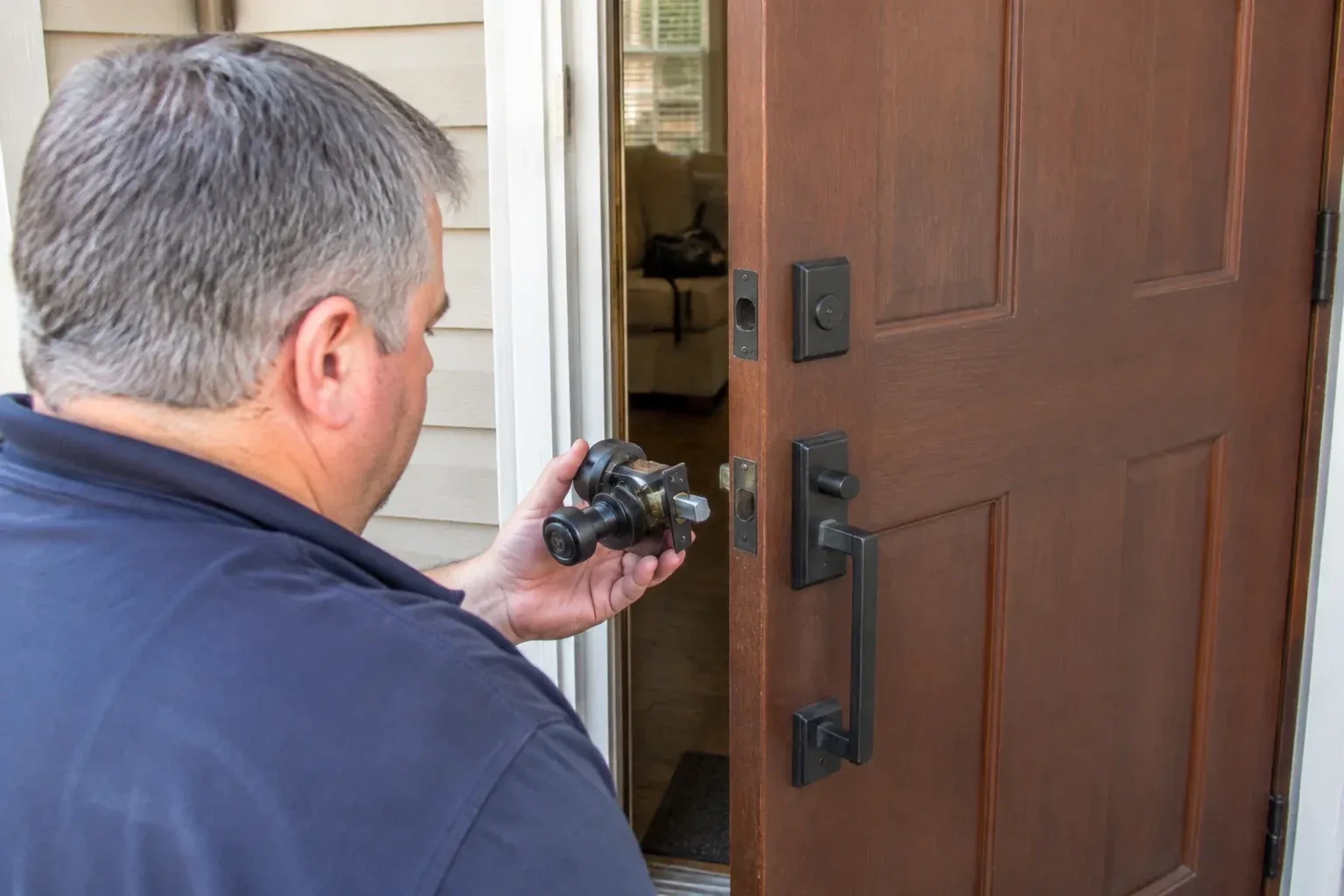
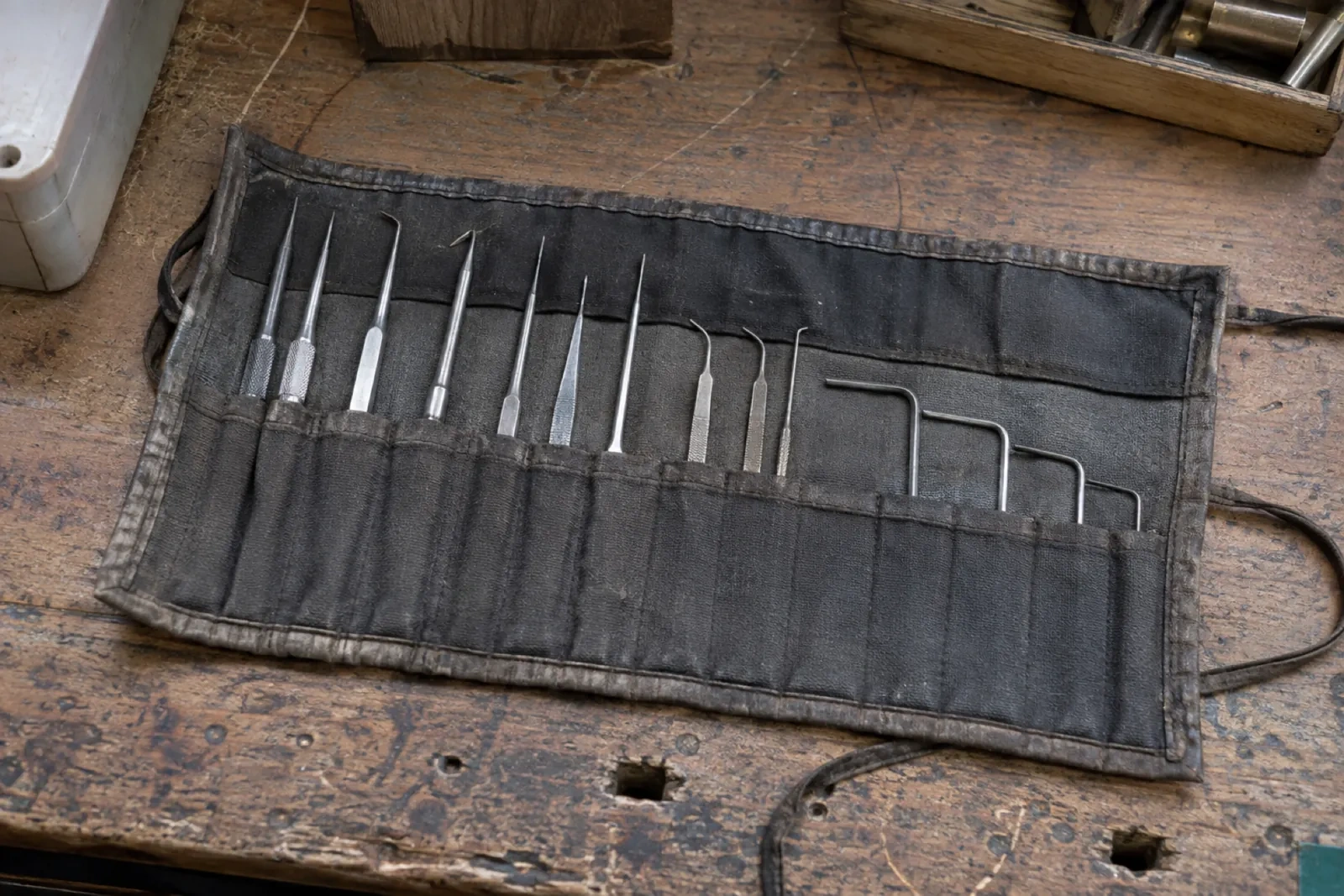
Office and back-of-house doors usually carry a cylindrical lever lockset in a storeroom function, locked from the outside at all times with the lever free inside. The latch has a deadlocking plunger, so the locksmith picks the cylinder in the lever face rather than reaching for a shim. In buildings with interchangeable cores, a control key held by the property manager or head office lets the small figure-eight core slide out and a temporary core go in, which is the gentlest opening there is. Where picking is not straightforward and no control key is available, the locksmith works through the lockset's own key-operated release path, then confirms the spring cage that keeps the lever level is seated correctly.
A keyholder plan so one absence never closes you
Most business lockouts trace back to a single keyholder, and the visit is the natural moment to fix that. Two named people should be able to open the premises, with a third who can be reached. A combination lockbox in a discreet spot, its code known to the opening staff and changed when someone leaves, covers the day the keyholder is stuck in traffic. For electrified doors, a second administrator on the access system means a forgotten code is an inconvenience, not a closure. Writing the opening and closing routine on one page, with the alarm company's number and the locksmith's, turns the next surprise into a short phone call.
Business Lockout Service
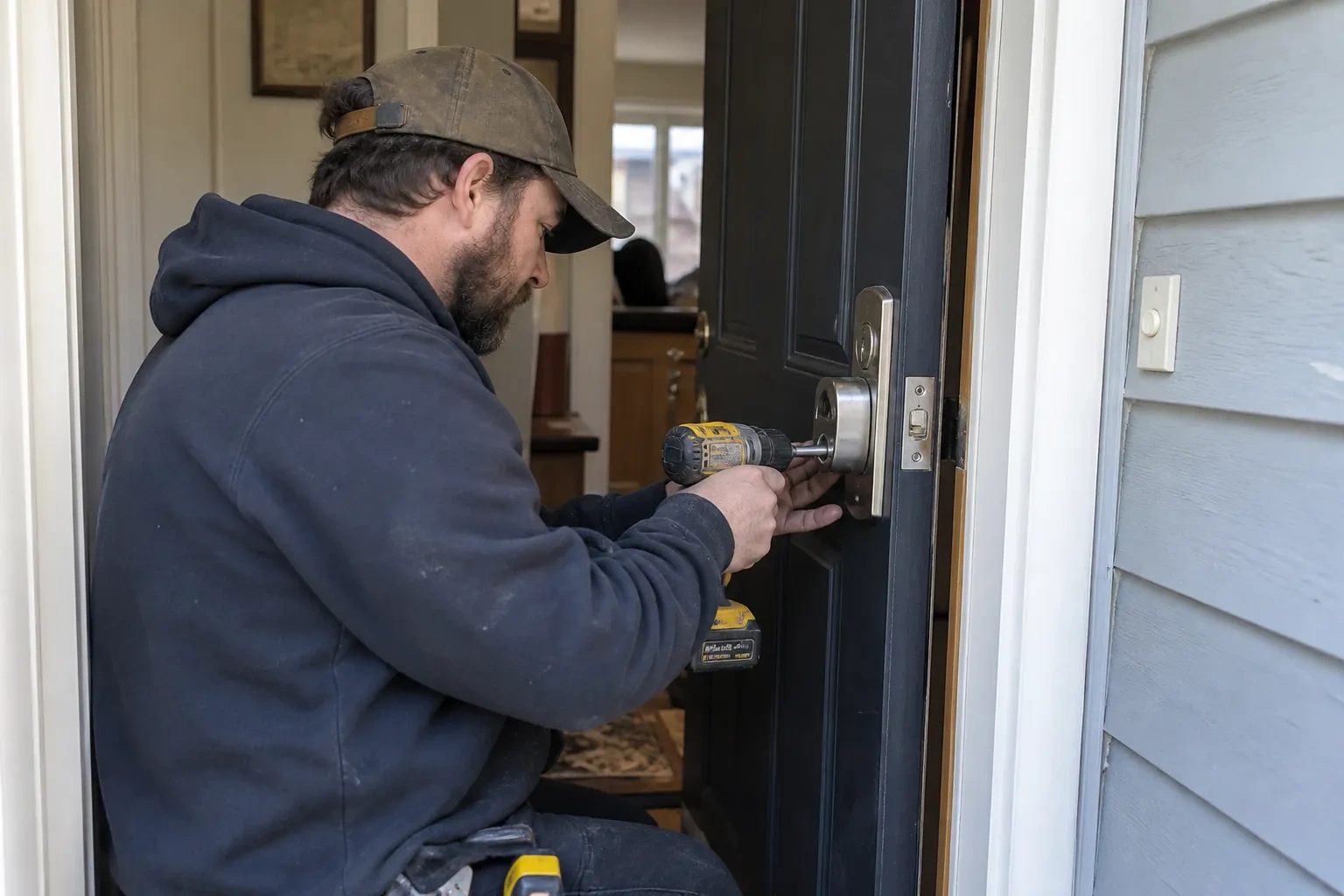
In the van
Replacement mortise and rim cylinders
Storefront deadlock and deadlatch bodies
Strikes, pivot shims and closer adjustment tools
Control keys and core-removal tools
Exit device trim cylinders and dogging keys
Business Lockout Service
What affects the quote
Access control and alarm coordination
Restoring power to a strike, opening an override cylinder, re-enrolling fobs and waiting for an alarm station or access provider to respond are each small tasks the quote names separately.
Keys cut and recorded
Each new key is cut and counted individually. Two for the owners and four for the opening staff is a different line from one spare, and restricted blanks are priced above ordinary ones.
Damage from earlier attempts
A paddle bent by a pry bar, a stile scratched by a screwdriver or a cylinder wrenched by pliers may need repair as well as opening, and the locksmith points out what was already there before quoting it.
What to have ready
- Has the door been dragging, scraping the threshold or failing to latch at closing recently?
- Is anyone able to reach the owner, head office or property manager to confirm the request?
- Has anyone already tried to force or pry the door?
Business Lockout Service: questions
QuestionsWe have just taken over a unit and have no keys for the old locks. Is that a lockout?
It is treated as one, with the same authority check: your new lease and identification settle it. The locksmith opens the previous occupant's locks, then rekeys or replaces them so keys still floating around from the last tenant stop working. It is also the moment to decide how the unit will be keyed: one key for every door, separate keys for the cash office and stockroom, or cores that suit a growing staff.
How long does a business lockout take?
It depends on the hardware and what else is wired to it. A standard storefront cylinder or office lever on a well-hung door is often a short job once authority is confirmed. A high-security cylinder, a frozen lock, a dropped door or a dead access controller adds time, and so does rekeying several doors afterwards. The locksmith gives you a realistic idea on the phone once you describe the door and the situation.
I am an employee, not the owner. Can you still open the door for me?
Yes, with the owner or a manager in the loop. Tell the locksmith who can confirm you work there and how to reach them. A call to the business owner, the regional manager or the property manager, ideally on a number that can be looked up rather than one you supply, settles it. Staff on an opening shift arrange this on the phone before the locksmith arrives so nothing waits at the door.
Related services
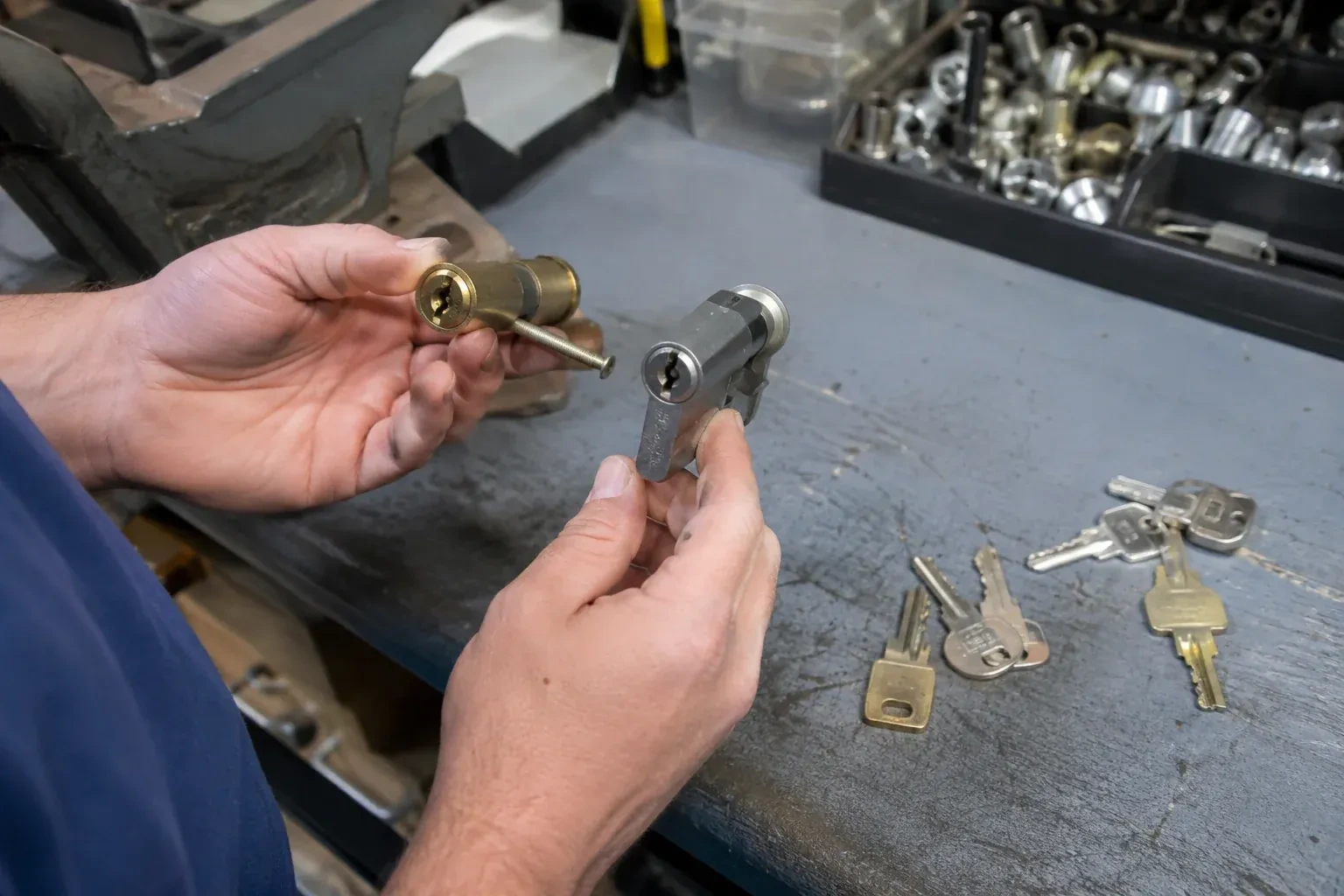
- Broken Key ExtractionThat key had been bending a little for years, and you kept straightening it.
- Break-In Damage Lock RepairPolice have come and gone, the occurrence number is on a sticky note, and you are standing in a cold hallway looking at a splintered frame, wondering how the house gets locked before everyone tries to sleep.
- Seized & Jammed Lock OpeningThe old mortise lock on the front door of the house turns the key halfway and stops with a dull clunk.