Car keys · Blandford-Blenheim
Transponder Key Programming in Blandford-Blenheim
The new key slides into the ignition and turns exactly the way the old one did, but the engine only cranks.
In plain words
There are really two separate keys hiding inside one piece of metal and plastic: the cut, which is entirely mechanical and opens doors and turns cylinders, and the code, which is electronic and tells the immobilizer to allow the engine to run. A key can be perfectly cut and still leave a car cranking without starting if the code was never written. Programming is the part of the job that handles the code, using equipment built to read and write the exact system fitted to that vehicle.
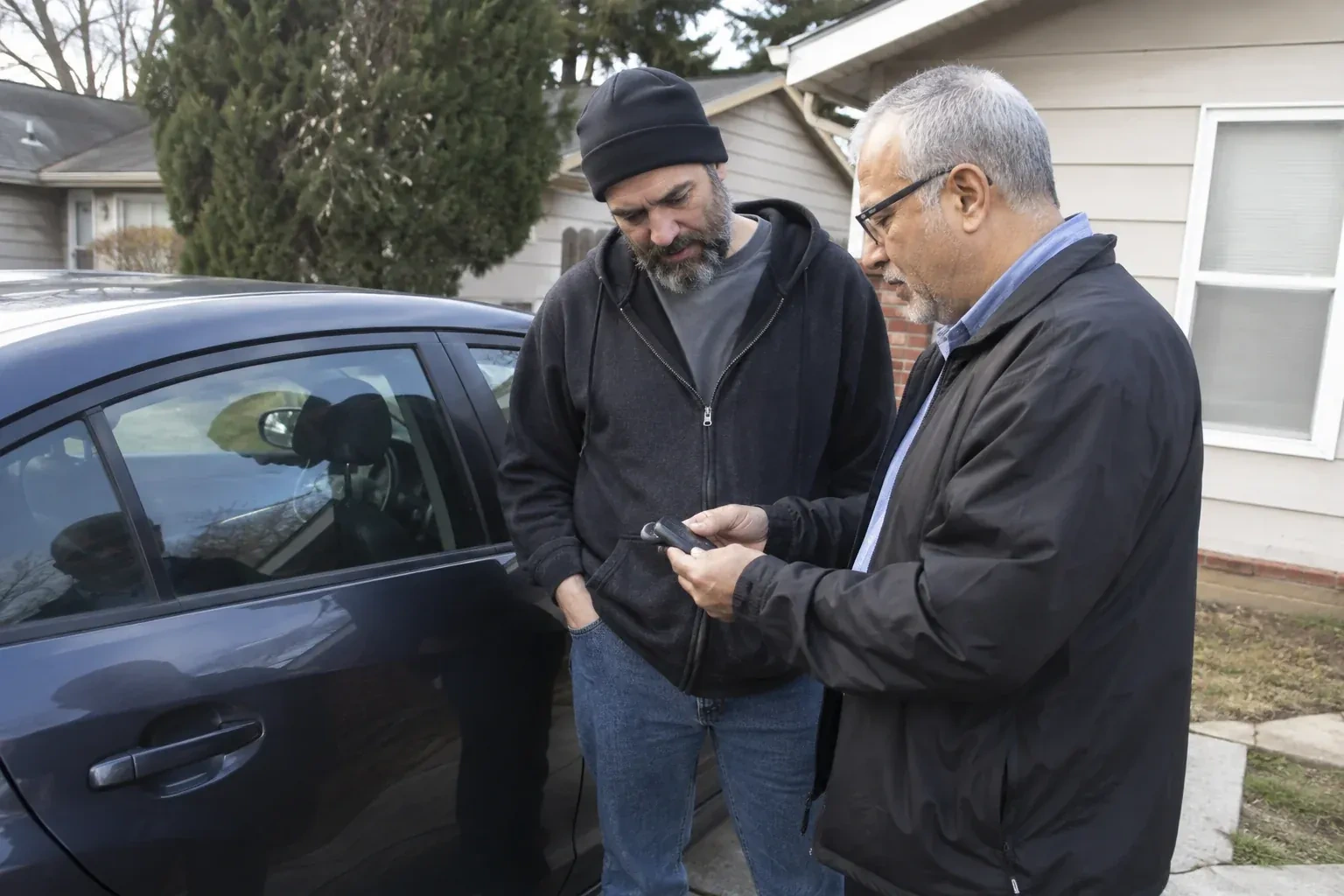
How the visit goesThe blade snapped off flush with the door lock last winter, and the shop that cut a replacement only matched the metal shape. The fob still locks and unlocks the doors from across the driveway, but the engine cranks over and over without ever catching.
Transponder Key Programming
How the visit goes
Whether the lock and the immobilizer agree
A key has two jobs: turning the mechanical lock and satisfying the electronic immobilizer, and the two are checked separately before any programming starts. A blade can be cut perfectly and still fail the second test if the wrong chip family ends up in its head. Confirming both together, rather than assuming a good mechanical fit means the electronics will follow, is what keeps a finished key from turning the lock politely while leaving the engine exactly as unresponsive as it was.
Programming through the diagnostic port
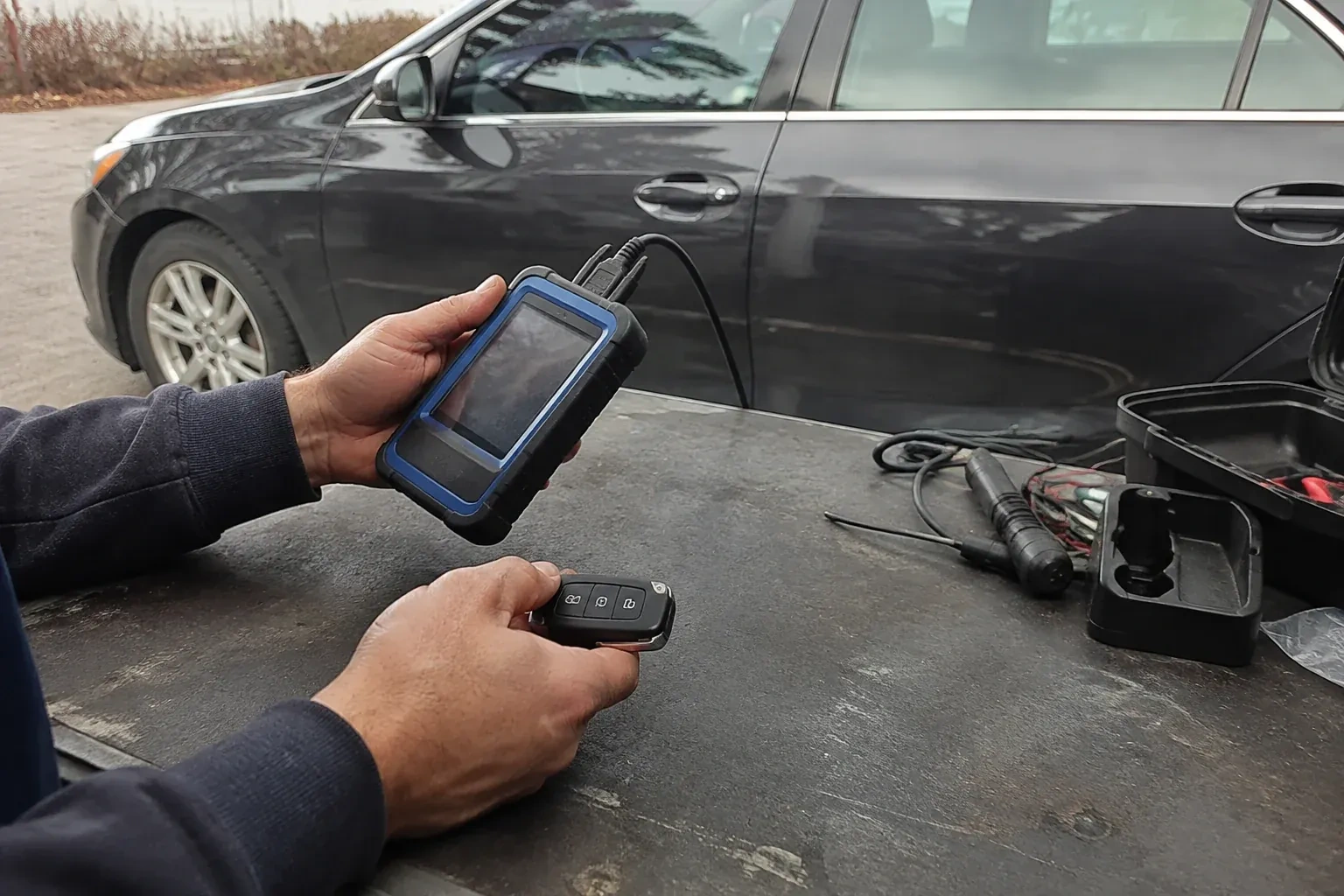
On most vehicles, the new chip's identity is written into the immobilizer through the onboard diagnostic port using equipment built for that vehicle's own protocol. The programmer talks to the vehicle's module in its own language, adds the new key without erasing the others unless asked, and confirms the write was accepted before the tool disconnects. This is the routine path for a spare, an extra key, or a straightforward replacement where at least one working key is still available to authorize the addition.
Looking after the chip
The chip inside a key head has no moving parts and asks for very little, but it does not tolerate being separated from the blade by force. A key that gets bent, snapped, or pried at with tools meant for a different job can lose its chip along with its shape, and a chip cut in half no longer answers anything. Carrying the key on a ring rather than loose in a pocket, and keeping it away from repeated hard impacts, is most of what looking after it involves.
Transponder Key Programming
In the van
Security-access module
Diagnostic laptop or tablet
Proximity smart key
Bench programming adapter
Fob battery
Transponder Key Programming
What affects the quote
Age and availability of the correct blank or chip
Older or less common vehicles sometimes use a blank or chip family that takes longer to source, particularly for a model that has been out of production for some years, which affects how the visit is scheduled.
Time of the appointment
An appointment during regular daytime hours is scoped differently from one outside them, and the locksmith states which applies when the visit is booked so there is no surprise about it on arrival.
How the vehicle's key list is reached
Some vehicles allow direct access through the onboard diagnostic port, while others gate that list behind a manufacturer-level security session that takes additional steps to establish. Which situation applies to a given vehicle affects how the visit is scoped.
What to have ready
- Is the key a basic blade, a remote-head, or push-button proximity?
- How many working keys would you like when this is finished?
- How many keys currently work?
Transponder Key Programming: questions
QuestionsWhat's the difference between cutting a key and programming it?
Cutting shapes a blank to match the lock, so it turns the mechanical cylinder in the door or ignition. Programming is a separate step where the chip inside the key head is taught to the vehicle's immobilizer, so the engine agrees to start. A key can be cut perfectly and still fail to start the car if that second step was skipped, which is the single most common source of confusion in this service.
Can I have a spare key made before I actually need one?
Yes, and on many vehicles it is one of the more straightforward visits in this service, since a working key already on hand can authorize the new one; a few models instead call for two working keys or a different programming route. The spare is cut, its chip is written in, and both keys are tested before the locksmith leaves, so the spare is proven rather than simply handed over untested.
Do I need paperwork from the dealer, or a code from them?
Not usually. Programming equipment reads and writes the vehicle's key list directly in most cases, without needing anything from the dealer. Many recent vehicles gate that access behind a manufacturer-level security session instead, which the locksmith handles as part of the visit rather than asking the owner to obtain anything in advance.
Related services
- Car Key ReplacementAfter fifteen years the blade has worn to a smooth sliver.
- Spare Car Key DuplicationA lockout last month ended with a locksmith opening the door and going home, and the same single key has been carried ever since with nothing behind it.
- Key Fob ProgrammingThe car changed hands last week, and the paperwork included exactly one fob for a household with two drivers.