Car keys · St. Agatha
Key Fob Programming in St. Agatha
The car changed hands last week, and the paperwork included exactly one fob for a household with two drivers.
In plain words
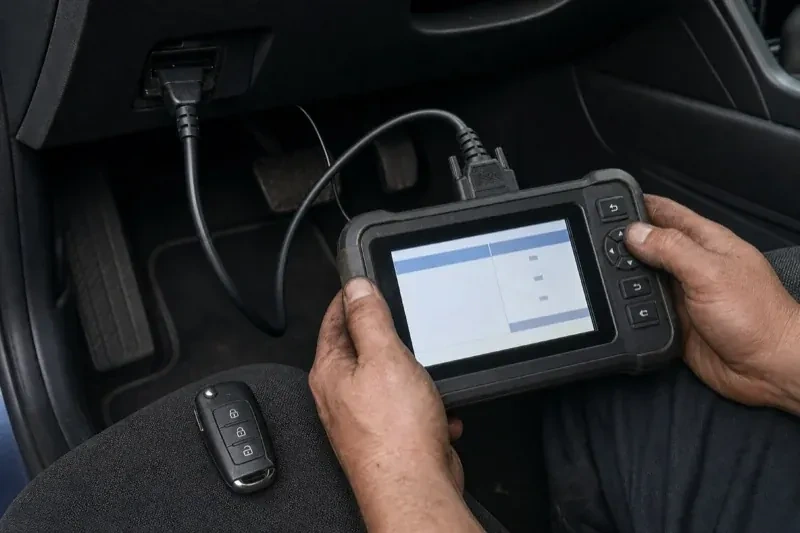
A new, unregistered replacement fob is, electronically, a blank slate until it has been matched to one specific vehicle; a used fob is checked rather than assumed the same, since some OEM smart keys become permanently unusable once reset or removed from a vehicle. Programming reads the vehicle's identifying information, confirms the new fob is a compatible part, and writes it into the vehicle's accepted list. From that point the new fob behaves the same as a factory original, answering the same buttons and, where equipped, letting the engine start without the fob leaving a pocket.
How the visit goesA fob went missing weeks ago somewhere between a coat pocket and a parking lot, and a spare has covered the gap since. Everything still opens and starts without trouble, which is exactly the concern: wherever that missing fob ended up, it may still work too.
Key Fob Programming
How the visit goes
Counting every fob already in the house
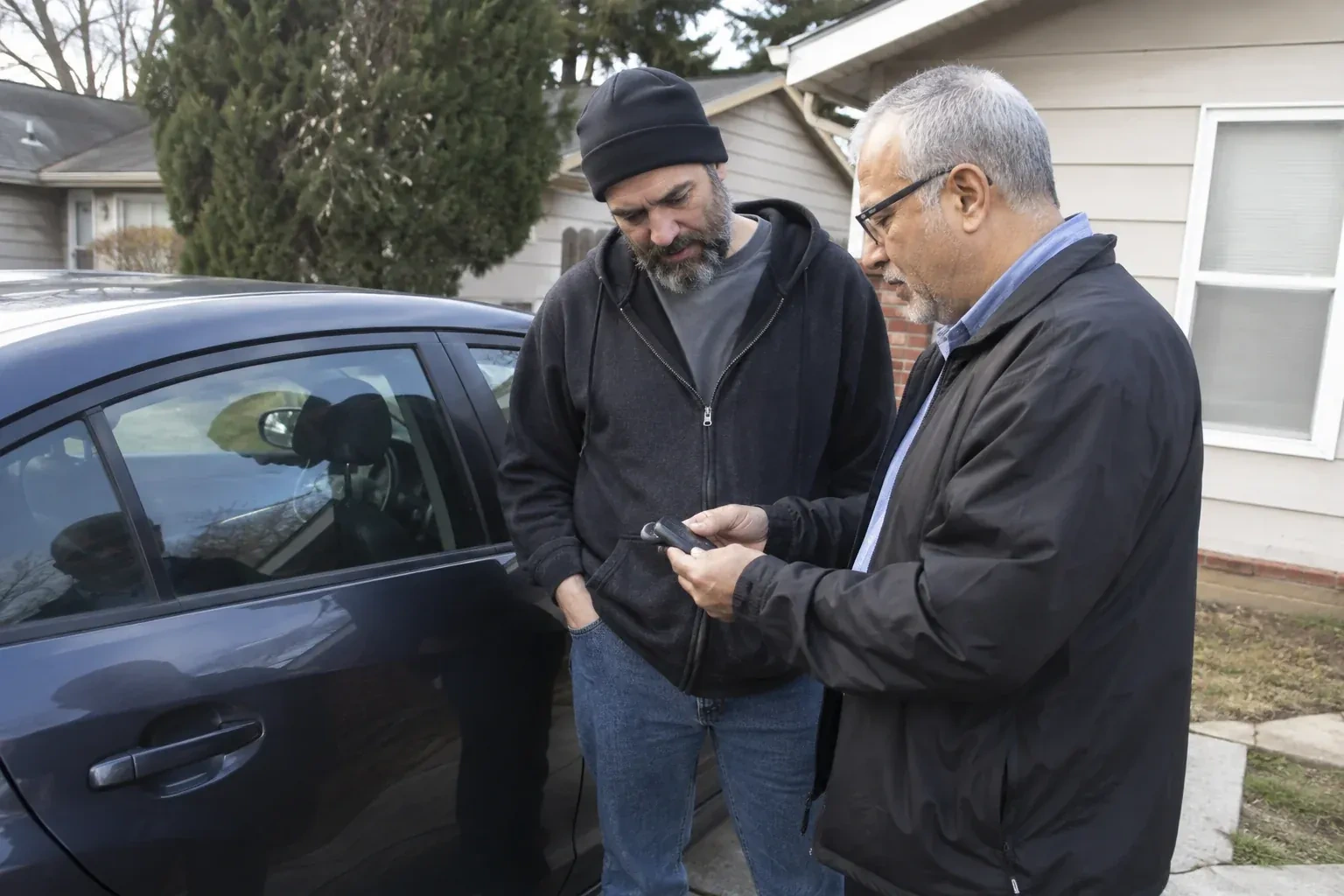
The visit starts with an honest count of what fobs exist for this vehicle right now, working or not, present or missing. A household that believes it has two fobs sometimes turns out to have three once a coat pocket or a junk drawer gets checked, and that count changes the plan. Any fob confirmed lost or unaccounted for gets flagged for removal from the vehicle's memory once the new one is added, so the visit ends with every remaining fob known and accounted for rather than an open question.
Registering the fob to its vehicle
With the vehicle and the fob identified, the registration procedure runs through a diagnostic connection built for that specific system, most often the same port used for other vehicle diagnostics. The exact sequence that model calls for is followed step by step, since the order and the timing between steps varies from one manufacturer to the next. When the procedure completes, the fob is now part of the vehicle's accepted list rather than an unrecognized piece of plastic with buttons on it, and it is treated as a working key from that point forward.
Leaving with fobs that have been proven, not assumed
The visit ends with every fob in hand tested against the vehicle rather than handed over on faith: each has locked, unlocked and started the car in front of the person receiving it. Anyone in the household who will carry a fob knows which one is theirs and that it has already done its job at least once. A short note of what was registered, and on what date, is worth keeping somewhere so a future visit or an insurance question has something concrete to refer to.
Key Fob Programming
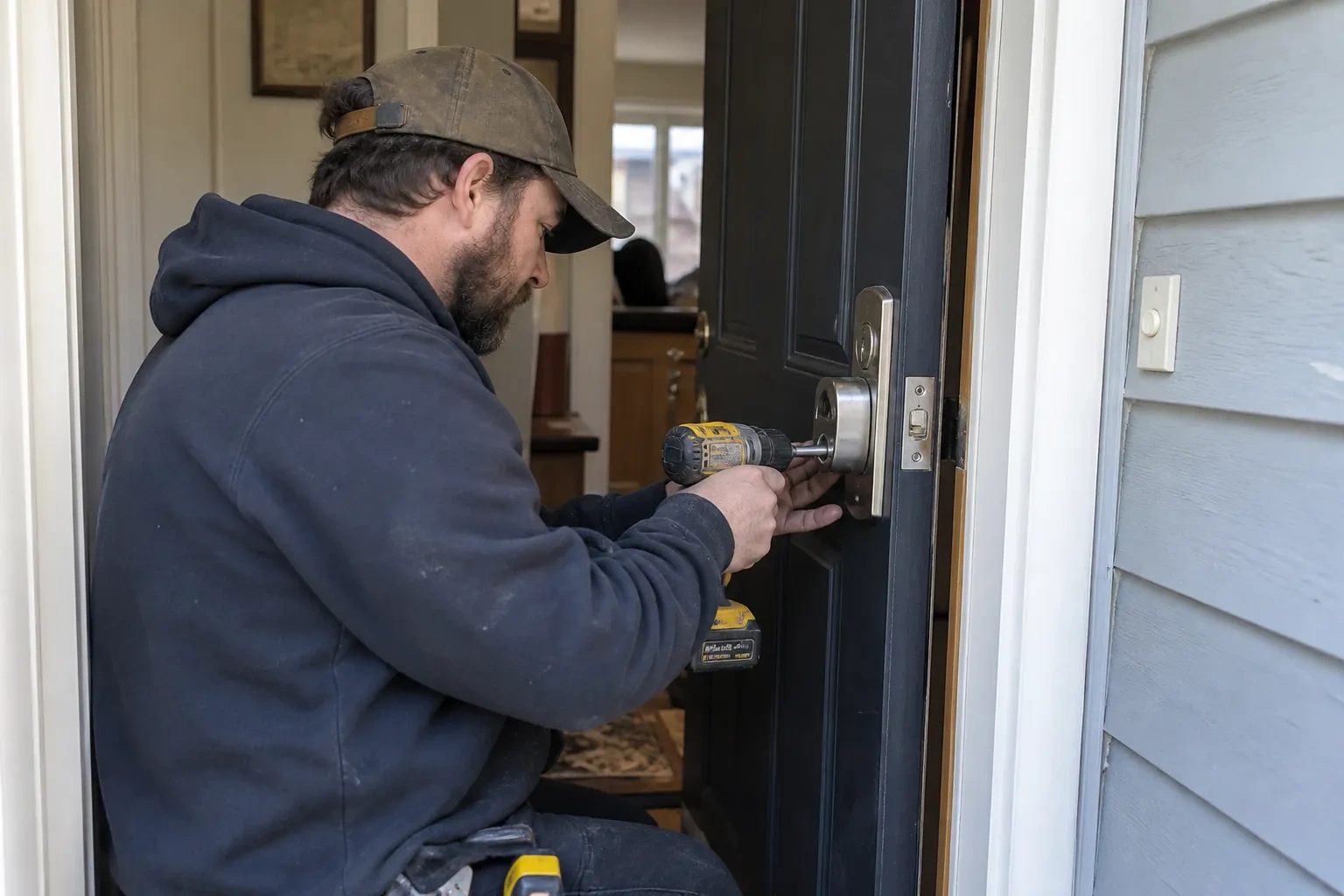
In the van
Manufacturer security access code
Replacement or supplied key fob
Diagnostic port interface cable
Mechanical key blank
Key cutting machine
Key Fob Programming
What affects the quote
Removing a lost fob from the vehicle's memory
Deregistering a fob's electronic authorization, following that model's procedure, when it is genuinely missing rather than simply replaced, is part of the visit and is reflected accordingly.
Adding a fob versus starting from nothing
Registering an additional fob while others still work is a shorter procedure than working through that vehicle's own all-keys-lost route, commonly a full key-memory reset and sometimes an app or service credential instead, after every fob has gone missing; the quote reflects which situation actually applies.
How many fobs are being registered
One additional fob for one driver is a smaller job than registering fobs for an entire household or a small fleet, and the number of fobs involved shapes the quote.
What to have ready
- Has any fob been dropped, cracked or gotten wet recently?
- Was the vehicle bought used, and how many fobs came with it?
- Is a new driver being added to the vehicle's key list?
Key Fob Programming: questions
QuestionsWhat is the difference between a remote, a transponder key and a proximity fob?
A basic remote only operates the locks and alarm from a distance while a separate metal key still starts the engine. A transponder key combines a cut blade with a chip the immobilizer reads before allowing a start. A proximity fob goes further: it authorizes entry while it is nearby, though most vehicles still need the handle touched, gripped or pressed to actually unlock, and it starts the engine with a push button, with no key insertion needed day to day. Each type is programmed differently.
Is fixing a lost key different from just adding a spare?
Yes. Adding a spare while every existing fob still works only involves registering the new one. A lost key involves that same registration plus removing the missing fob's authorization following that vehicle's own procedure, since leaving it active means whoever has it can still use it; some vehicles also relearn the fobs you keep, and a mechanical blade in the lost fob is ruled out by rekeying the matching lock. The two situations share a first step but not a last one.
How do I stop all my fobs from wearing out around the same time?
Replacing coin-cell batteries as soon as a fob's range starts to feel shorter, rather than waiting for it to go completely dark, is the simplest habit. Keeping fobs off a keyring crowded with heavy metal keys reduces wear on the case and buttons as well. Since fobs from the same purchase batch often age together, a fading one is worth treating as an early warning for the others.
Related services
- Car Key ReplacementAfter fifteen years the blade has worn to a smooth sliver.
- Spare Car Key DuplicationA lockout last month ended with a locksmith opening the door and going home, and the same single key has been carried ever since with nothing behind it.
- Transponder Key ProgrammingThe new key slides into the ignition and turns exactly the way the old one did, but the engine only cranks.