High security · Haysville
High Security Locks in Haysville
You run a home office with client files and equipment, and your insurer has asked what kind of lock is on the door.
In plain words
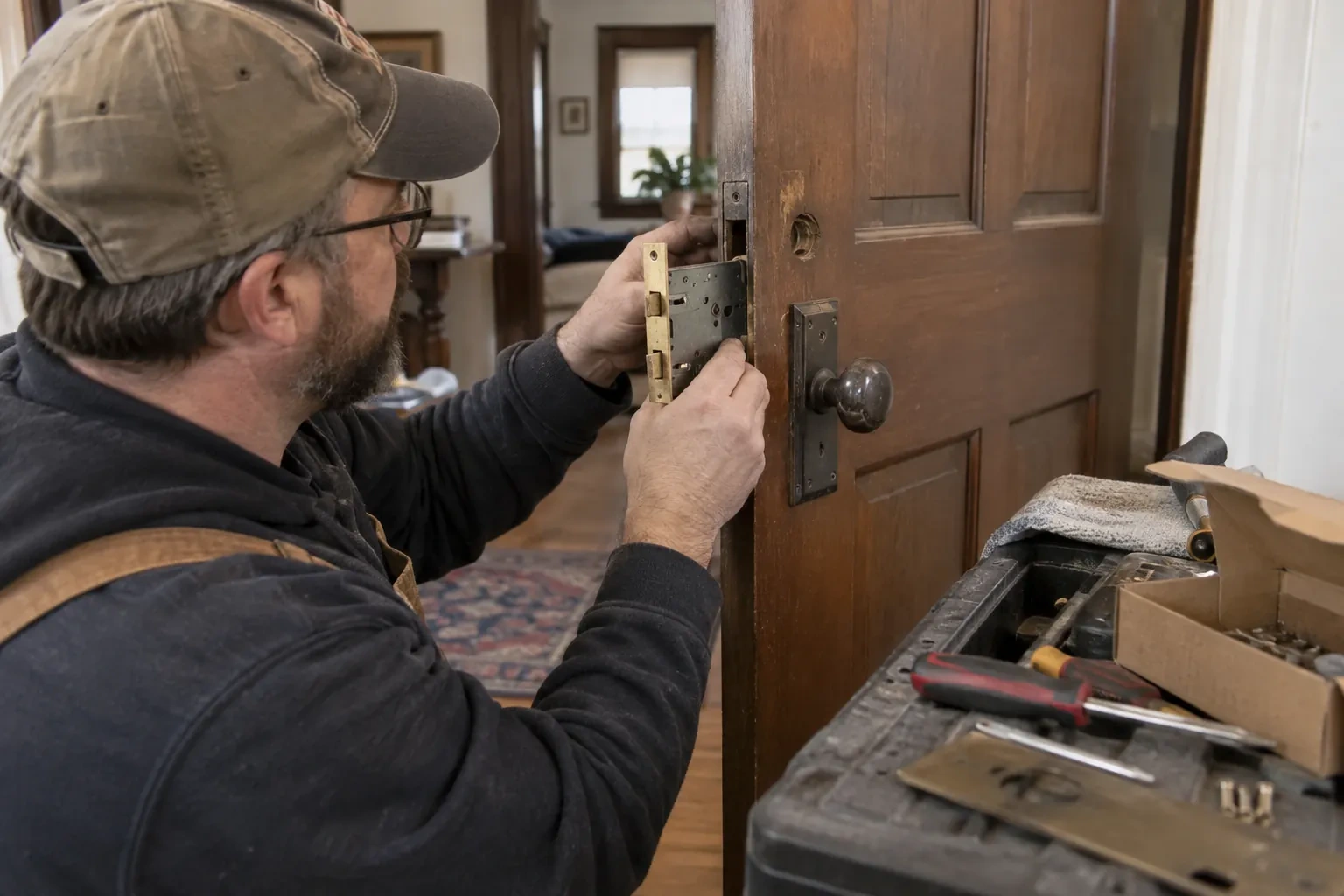
Upgrading to high security rarely means new doors or a big disruption. Many high security cylinders retrofit into the existing deadbolt or lever, so the door preparation stays as it is and only the cylinder and keys change. A heavier deadbolt uses the same bore as the old one in most cases. The strike and hinge screws are swapped for long ones that bite into the framing. The visible difference afterwards is small; the practical difference is that the door resists the tools and tricks that defeat ordinary hardware, and that nobody can copy your key without you knowing.
How the visit goesYou run a home office with client files and equipment, and your insurer has asked what kind of lock is on the door. The honest answer is the builder's knob lock and a light deadbolt from when the house was new.
High Security Locks
How the visit goes
The bolt, the pocket and the strike
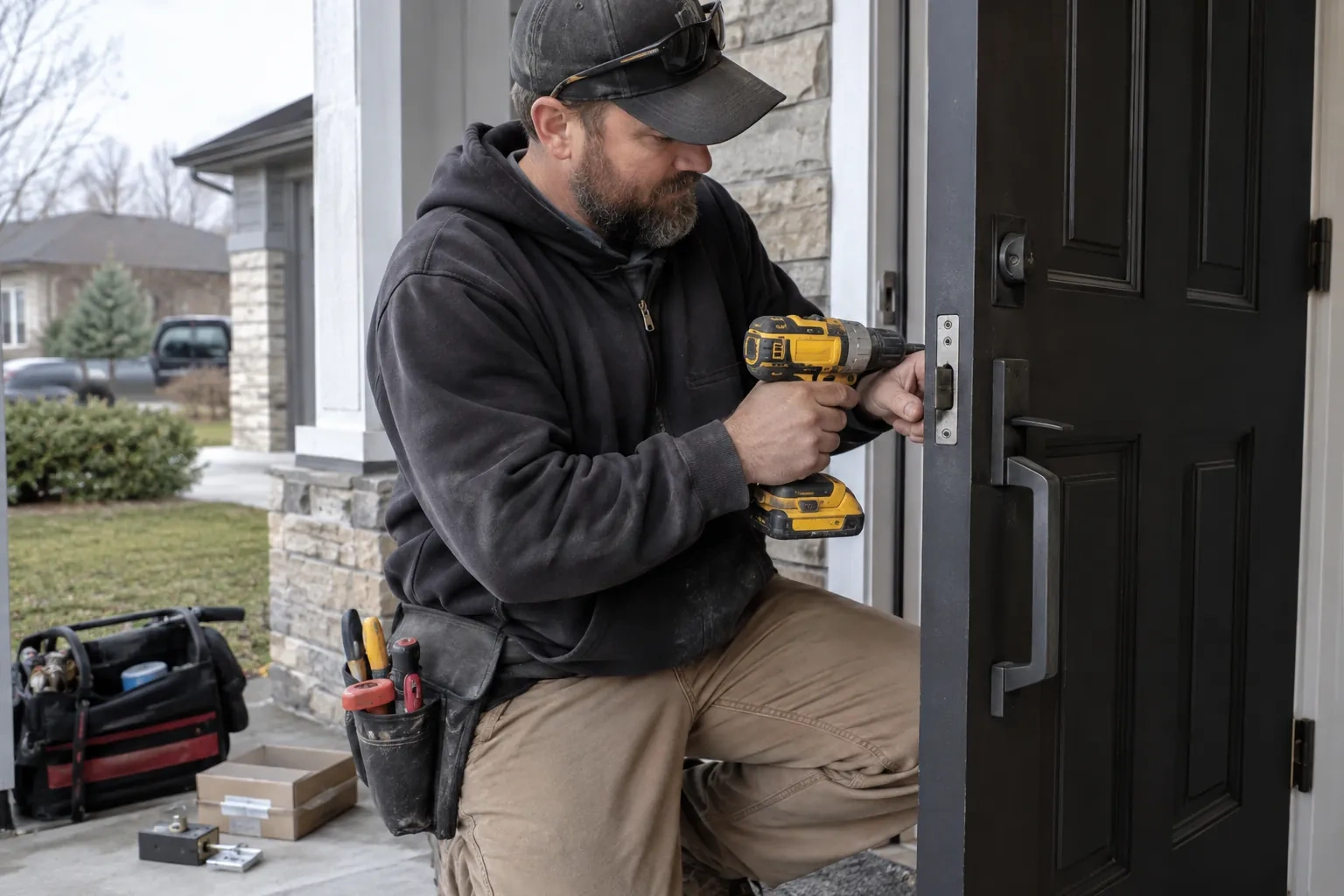
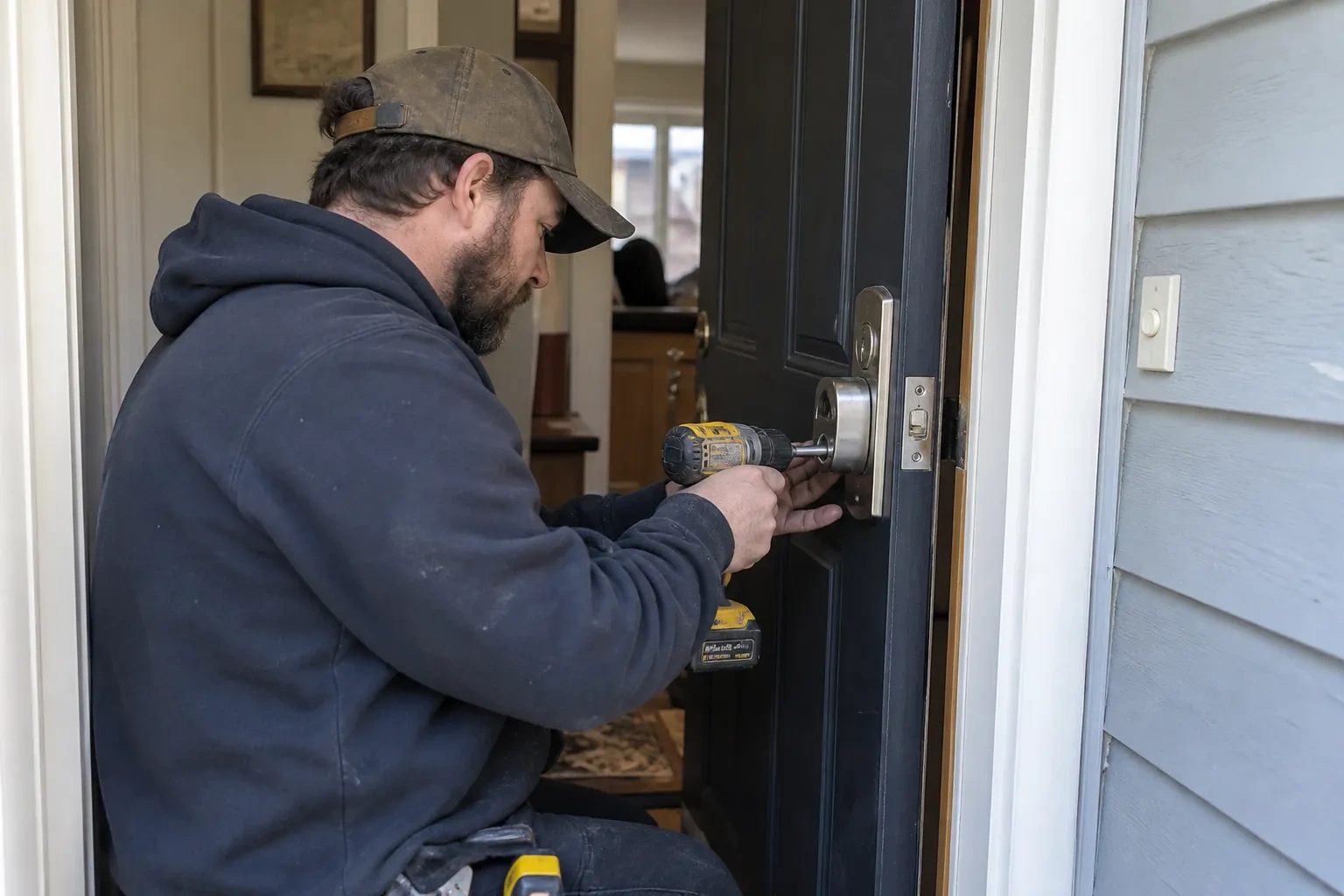
A deadbolt is only as good as how far it reaches and what it reaches into. The locksmith measures the throw of the bolt with the door closed, checks that it fully extends without the door being lifted or pushed, and looks at the pocket it enters in the jamb. A shallow pocket, a stamped strike plate and screws barely longer than a thumbnail are the usual finding on a builder-grade door. Then the frame is examined for splits, soft wood and gaps behind the jamb, since a kick lands on the strike, not on the cylinder.
Heavy hardware for commercial doors
Storefront, warehouse and office doors take heavy-duty lock bodies rather than residential deadbolts. Depending on the door, that means a commercial deadbolt or mortise lock with a hardened cylinder guard, a free-spinning collar that defeats wrenches, and a laboratory-rated cylinder inside it. Narrow aluminium doors get a deadlock made for their stile. The locksmith fits the lock to the existing preparation where it is standard, adjusts the strike in the frame, and confirms that any exit device or closer on the same door still works exactly as before so people leave easily while the door holds from outside.
Looking after a precision cylinder
High-security cylinders are finer mechanisms than the pin tumblers they replace, and a little care keeps them turning sweetly. Use only the dry lubricant the locksmith recommends, once or twice a year and sparingly, and never household oil, which gathers grit around the finger pins and sidebar. In cold weather, if the key resists, warm it in your hand or use a de-icer rather than forcing it. Insert the key fully before turning. Keep a spare key indoors so a bent or worn key is retired rather than pushed on. Treated this way, the cylinder outlasts the door around it.
High Security Locks
In the van
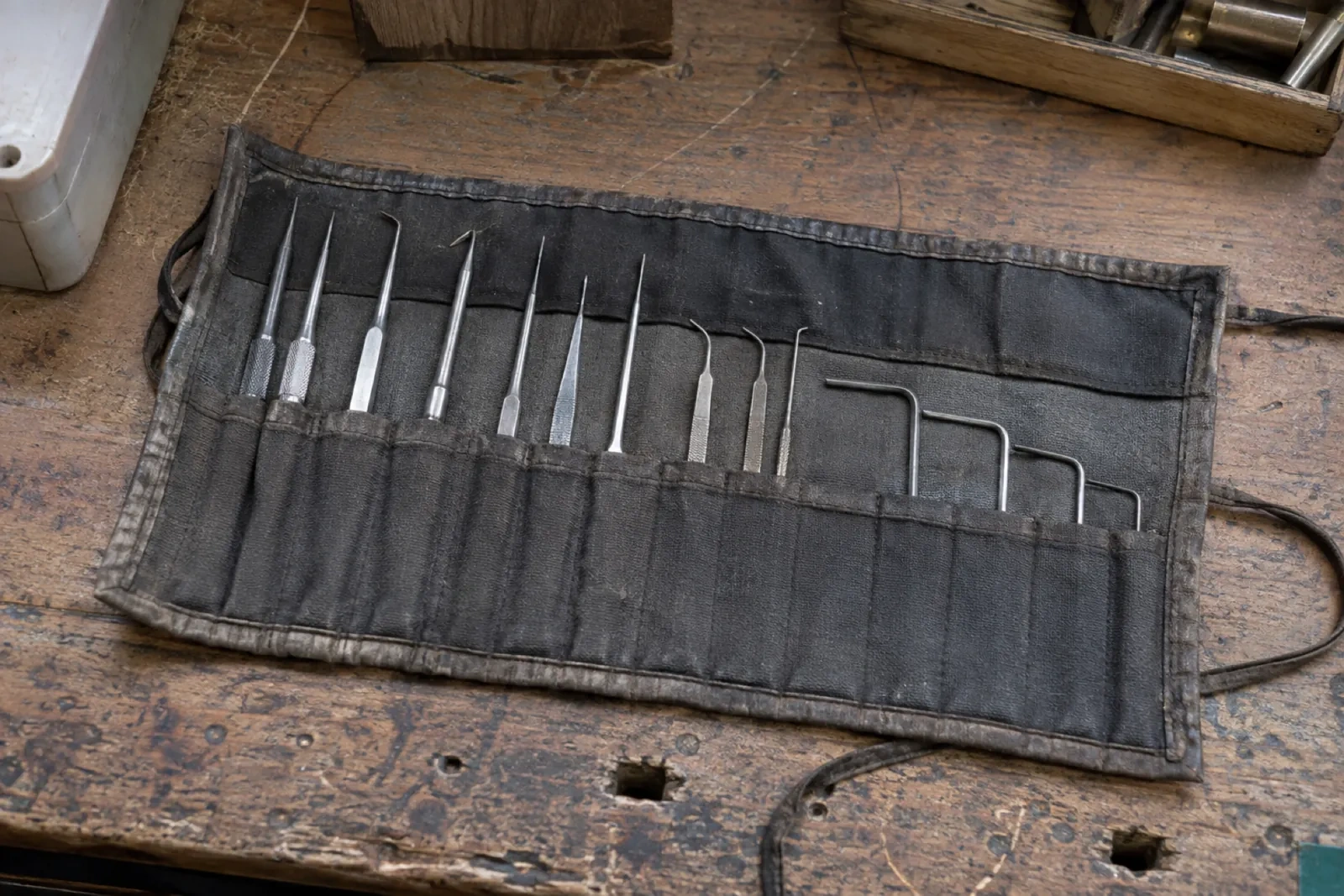
Pinning kit and plug follower
Three-inch strike and hinge screws
Box strike
Code key cutting machine
Hardened cylinder guard ring
High Security Locks
What affects the quote
Documentation and registration
Setting up the key register, recording signatories and providing a written schedule of cylinders and keys is real work on a business system and is listed rather than hidden.
Condition of the door itself
A solid door that hangs true takes hardware straight away. A dropped, swollen or hollow door may need hinge work, shimming or a recommendation to replace the slab before the lock is worth fitting.
Retiring the old keyway
If other doors stay on the old key for now, they may need rekeying so an unknown copy has nowhere to go; that is additional cylinder work alongside the upgrade.
What to have ready
- Is there a window or sidelight within reach of the lock?
- Which locks are on the door now: knob only, knob and deadbolt, a mortise lock or a lever?
- Has the door ever been forced, or has a key been lost or not returned?
High Security Locks: questions
QuestionsWill my door look different afterwards?
Barely. A high security cylinder sits in the same place as the old one and is usually distinguished only by a different keyway shape and sometimes a hardened collar. A graded deadbolt is a standard-looking deadbolt in your chosen finish. The reinforced strike is longer than the plate it replaces and the wrap-around reinforcer, if used, shows as a neat metal band on the door edge. The difference is felt when you lock up, not seen from the street.
Do high security locks need special maintenance?
Only light care. Use the dry lubricant the locksmith recommends once or twice a year, never oil, which gathers grit around the finger pins and sidebar. Keep the keyway free of debris and insert the key fully before turning. In winter, warm a resisting key in your hand or use a de-icer rather than forcing it. Check hinge and strike screws each season so the door stays aligned. Treated this way the cylinder lasts for decades.
Why does the locksmith care so much about the strike plate?
Because that is where a kicked door fails. The bolt is strong, but it sits in a pocket in the jamb held by a thin plate and short screws, and a boot splits the wood around it. A reinforced strike or box strike fastened with three-inch screws into the wall framing spreads the blow along the frame. It is the least visible part of the upgrade and often the one that does the most.